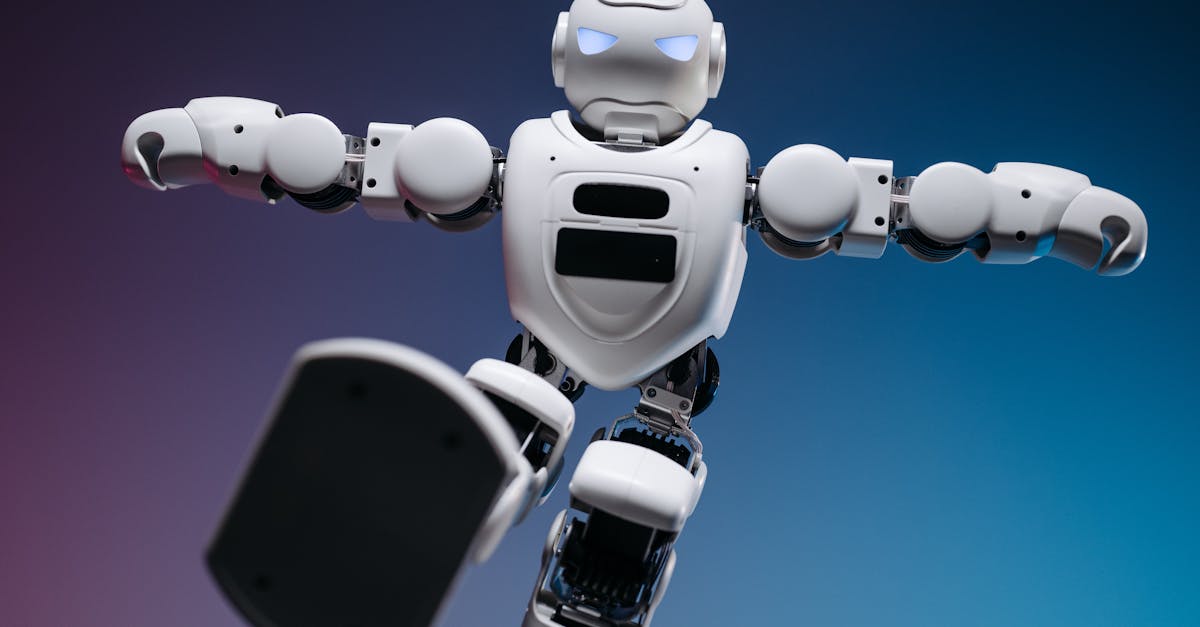
Sim-to-Real: Crossing the Reality Gap in Humanoid Robotics with Isaac Sim and MuJoCo

The Illusion of Perfection in Simulation
The humanoid robotics industry has entered a phase where the narrative has shifted from "can it move?" to "can it learn?". This shift has placed immense reliance on Sim-to-Real (Sim2Real) transfer learning. While marketing materials often depict robots learning complex tasks in perfectly rendered environments before instantly deploying them to the real world, the engineering reality is far more grounded. This article evaluates the current state of simulation engines, specifically NVIDIA Isaac Sim and Google DeepMind MuJoCo, and analyzes the tangible constraints of crossing the "reality gap".
Sim-to-Real is not a magic wand; it is a statistical bridge. It involves training neural networks in a virtual environment (the sim) and transferring the policy weights to physical hardware. The goal is to reduce the data collection cost. However, the fidelity of the simulation engine directly correlates with the success rate of the deployment. If the physics engine in the sim does not accurately model friction, mass distribution, or sensor noise, the robot will fail when it encounters the real world.
Engine Wars: Isaac Sim versus MuJoCo
Two primary engines dominate the conversation regarding humanoid training: NVIDIA Isaac Sim and Google DeepMind's MuJoCo. They serve different purposes in the development pipeline.
NVIDIA Isaac Sim: Built on the Omniverse platform, Isaac Sim leverages the PhysX physics engine. It prioritizes photorealism and scene complexity. Developers can model lighting, materials, and deformable objects with high fidelity. This is crucial for visual-based policies where the robot must "see" the world. However, running Isaac Sim at scale requires significant hardware resources. It is not a lightweight tool; it is a heavy compute task.
Google DeepMind MuJoCo: Multi-Joint dynamics with Contact. MuJoCo is differentiable and computationally efficient. It is faster than Isaac Sim for simulating physics steps. This allows for millions of training steps to be completed in shorter timeframes. However, its rendering capabilities are less focused on visual photorealism compared to Omniverse. It focuses on the physics accuracy of the contact points.
For a robotics startup, the choice is often between fidelity and speed. Isaac Sim offers better visual grounding for camera-based systems, while MuJoCo offers faster iteration for control policies. Industry analysis suggests that leading labs often use a hybrid approach: MuJoCo for rapid policy iteration and Isaac Sim for final validation.
The Reality Gap Challenge
Even with high-fidelity engines, the "Reality Gap" persists. This is the discrepancy between simulation parameters and real-world physics. Common failure points include:
- Friction Coefficients: A simulated floor might have a static friction coefficient of 0.6. In reality, dust or humidity might reduce this to 0.4, causing a slip.
- Sensor Noise: Real-world cameras have latency, compression artifacts, and thermal noise. Simulators often generate clean data.
- Actuator Latency: Motors have electrical and mechanical delays. Simulations often assume instantaneous response.
- Deformable Objects: Soft materials (like the fabric on a chair or a plastic bag) are notoriously difficult to simulate accurately.
When a humanoid robot like Figure AI's Figure 01 or Tesla's Optimus performs a task in simulation, it is often following a pre-optimized path. In the real world, the robot must handle perturbations. A robust Sim2Real pipeline includes "domain randomization," where the simulation environment is varied (lighting, colors, object positions) to ensure the robot learns generalization rather than memorization.
Shipping Hardware vs. Announcements
The most critical metric for this technology is not the announcement of a new model, but the availability of shipping hardware trained via these simulators. We grade claims by deployment.
Figure AI: Reports indicate significant use of simulation for training their upper body manipulators before integrating them into the full-body prototype. Their partnerships with NVIDIA highlight the reliance on high-end GPU clusters.
Tesla Optimus: Elon Musk has publicly stated that Tesla is using simulation for training vision and control models. However, independent verification of the ratio of Sim-to-Real data remains opaque. We observe that Tesla's Dojo supercomputer is likely used for the training backend, but the specific physics engine (NVIDIA vs. proprietary) is not explicitly detailed in public spec sheets.
Agility Robotics (Digit): Focuses heavily on legged dynamics. They utilize custom physics stacks but acknowledge the need for real-world reinforcement learning (RL) to fine-tune sim-trained policies.
The trend is clear: pure simulation training is insufficient. Real-world data is required for the final 10% of performance tuning. This is known as the "sim-to-real gap closure".
India Context: Cost and Availability
For Indian robotics startups and research labs, the cost of running these simulations is a primary barrier. Sim-to-Real is not free. It requires high-performance computing (HPC).
Hardware Costs: Running Isaac Sim at scale requires NVIDIA GPUs (A100 or H100). The landed cost of an NVIDIA H100 GPU in India can range between INR 8 lakh and INR 12 lakh depending on vendor margins and import duties. An A100 is slightly lower, around INR 5 lakh to INR 7 lakh. This excludes the cost of the host server, RAM, and storage.
Cloud Alternatives: Many Indian startups utilize cloud providers like AWS, Azure, or Google Cloud. A single A100 instance on cloud can cost INR 1,500 to INR 2,500 per hour. Training a humanoid policy can require thousands of hours of simulation time. The monthly burn rate for simulation infrastructure can easily exceed INR 5 lakhs to INR 10 lakhs for a small team.
Software Licensing: While MuJoCo has open-source versions, the commercial version (MuJoCo Pro) requires a license. NVIDIA Isaac Sim is free for research but requires a license for commercial deployment of certain features. These licensing costs are often overlooked in initial business plans.
Local Infrastructure: High-bandwidth internet is required to stream simulation data to central training clusters. In many Indian industrial zones, network latency can hinder the real-time transfer of large training datasets.
Conclusion: A Tool, Not a Solution
Sim-to-Real is the backbone of modern robotics, but it is not a substitute for physical testing. The narrative that a robot can be trained entirely in simulation and then deployed without calibration is a myth. The reality is that simulation accelerates the training process, reducing the number of real-world failures, but it cannot eliminate the physical world's unpredictability.
For the Indian robotics sector, the path forward involves careful budgeting for compute hardware. Relying on cloud GPUs for long-term training is expensive. Building a localized high-performance cluster is capital intensive. The winners will be those who can balance the cost of simulation against the cost of physical damage to hardware.
As the industry moves forward, the metric of success will shift from "simulated performance" to "real-world reliability." Until the hardware is shipping in volume, the simulation data remains a promising, but unverified, proxy for capability.
References
- NVIDIA. (2023). NVIDIA Isaac Sim Documentation. Retrieved from NVIDIA Developer.
- DeepMind. (2023). MuJoCo: Multi-Joint dynamics with Contact. Retrieved from GitHub.
- Tesla. (2023). Tesla AI and Robotics Overview. Retrieved from Tesla Investor Relations.
- Figure AI. (2023). Figure 01: A New Era of Humanoid Robotics. Retrieved from Figure AI Blog.
- Agility Robotics. (2023). Digit Product Specifications. Retrieved from Agility Robotics.
- NVIDIA India. (2024). NVIDIA India Reseller Network. Retrieved from NVIDIA India.
✓ Key takeaways
- •Hands-on view of Sim-to-Real: Crossing the Reality Gap in Humanoid Robotics with Isaac Sim and MuJoCo inside our Sim-to-Real library.
- •Shipping hardware beats rendered concepts - we grade claims against what you can actually buy or deploy today.
- •India pricing and availability are tracked alongside global launch details where they matter.
References
Related articles
More in Sim-to-Real →