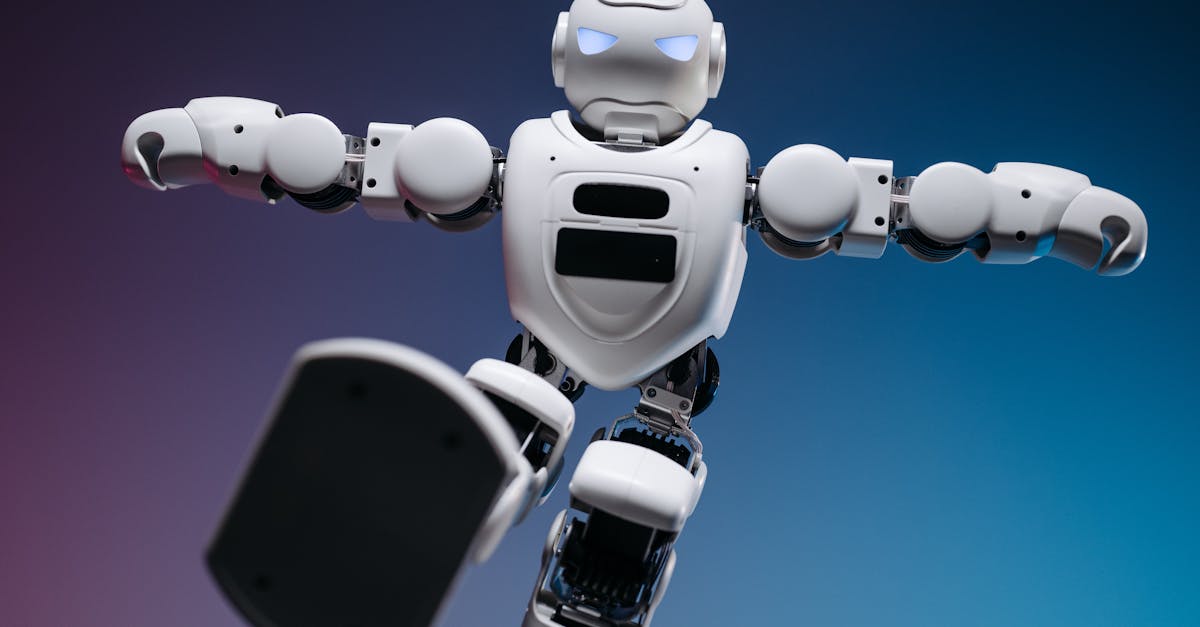
Sim-to-Real in Humanoid Robotics: Bridging the Gap Between Isaac Sim, MuJoCo, and Physical Deployment

The Reality Gap in Humanoid Robotics
In the rapidly evolving landscape of humanoid robotics, the gap between simulation environments and physical deployment remains the most significant bottleneck. While manufacturers frequently announce capabilities based on simulated performance, the transition to real-world operation requires rigorous validation. This article examines the Sim-to-Real (S2R) pipeline, focusing on NVIDIA Isaac Sim and Google DeepMind's MuJoCo, and assesses the current state of hardware deployment against these digital twins.
The reality gap refers to the discrepancy between the physics engine used in training and the physical properties of the actual robot. In simulation, friction coefficients are often simplified, and sensor noise is modeled generically. In hardware, actuator stiction, cable drag, and battery voltage sag introduce non-linearities that models frequently miss. For a humanoid robot operating in an unstructured environment like a factory floor, these discrepancies can lead to catastrophic failure during deployment.
Simulation Engines: Isaac Sim vs. MuJoCo
Two primary engines dominate the conversation regarding robot training. NVIDIA Isaac Sim is built on the Omniverse platform, leveraging PhysX for physics and Ray Tracing for rendering. It is increasingly popular for end-to-end reinforcement learning because it supports photorealistic sensors. This allows algorithms to learn from camera feeds that mimic real-world lighting conditions.
Google MuJoCo is optimized for fast physics simulation, making it ideal for control tasks rather than visual fidelity. It excels in gradient-based optimization for control policies. However, its rendering capabilities are less relevant for visual navigation tasks compared to Isaac Sim. The choice between them depends on the specific robotics application. If the robot relies heavily on visual feedback, Isaac Sim offers a closer approximation. If the task is purely torque-based control, MuJoCo provides faster iteration cycles.
Technical Specifications and Limitations
Both engines require significant computational resources. Isaac Sim runs on NVIDIA GPUs, requiring CUDA cores to manage complex physics calculations. MuJoCo can run on CPU or GPU but is generally less resource-intensive for basic control tasks. This distinction impacts the accessibility of the technology for smaller robotics startups in India, where high-end GPUs are costly.
Furthermore, neither engine perfectly replicates the complexity of human joints. The friction in a harmonic drive actuator changes as the lubricant heats up. In simulation, this is often a static value. When a robot operates for hours, the thermal properties change, affecting the control policy learned in simulation. This is a known limitation that researchers are actively addressing through domain randomization techniques.
Current State of Hardware Deployment
Grading claims by shipping hardware first, we look at the major players. Tesla Optimus is a prominent example where Sim-to-Real is central to its development. Tesla has demonstrated walking and object manipulation in simulated environments. However, the transition to physical deployment has been incremental. The Optimus Gen 2 units have been observed walking on factory floors, but the data regarding how much of that behavior was learned purely in simulation versus fine-tuned on hardware is not fully public.
Figure AI and their Figure 01 robot have also emphasized Sim-to-Real workflows. They have released videos showing the robot performing tasks in a simulated factory before deployment. While promising, the lack of third-party verification of the deployment scale makes it difficult to grade the success of their Sim-to-Real pipeline definitively. Similarly, Agility Robotics uses simulation for their Atlas and Spot robots, though their focus has historically been on quadruped stability.
The critical metric is not just the ability to simulate, but the ability to transfer. A policy that works in Isaac Sim must be robust to the variations in the real world. This includes variations in floor texture, lighting, and object placement. Current hardware deployments often require significant fine-tuning on physical robots after the initial simulation training. This suggests that the reality gap is not fully closed.
The India Context: Infrastructure and Costs
For Indian robotics startups, the cost of Sim-to-Real infrastructure is a major barrier. Training a humanoid robot requires high-performance computing clusters. A single NVIDIA H100 GPU, often cited as essential for large-scale simulation, can cost between INR 15 lakhs and INR 20 lakhs as a landed cost estimate. For a small team, this represents a significant portion of the total budget.
Additionally, the licensing costs for enterprise simulation software can be prohibitive. While MuJoCo has open-source variants, the commercial support and advanced features often come with fees. NVIDIA's Isaac Sim requires a valid license, which is often tied to the purchase of specific NVIDIA hardware. This creates a dependency on the hardware ecosystem.
Despite these costs, the Indian market is seeing growth in robotics startups. Companies like Agnikul and other autonomous systems developers are investing in simulation environments to reduce physical testing risks. Physical testing involves wear and tear on actuators. A single fall can damage a motor costing tens of thousands of rupees. Simulation reduces this risk, making it an economically viable option even with high upfront compute costs.
Challenges in Crossing the Reality Gap
One of the primary challenges is the modeling of contact forces. In simulation, contact is often modeled as a spring-damper system. In reality, contact involves complex deformation of materials. When a robot grasps an object, the object might deform, or the gripper fingers might slip. These dynamics are difficult to model accurately in a physics engine.
Another challenge is the latency between simulation and hardware. In a real-world loop, the robot must process sensor data, compute a control action, and execute it. This latency is non-zero. In simulation, the loop can be instantaneous. If a control policy is trained in a zero-latency environment, it may struggle when deployed on hardware with communication delays.
Furthermore, sensor noise in the real world is not uniform. Cameras suffer from lens distortion, and LiDAR points can be corrupted by dust or light. In simulation, these are often modeled as Gaussian noise. Real-world noise can be non-Gaussian, leading to outliers that confuse the neural network. Addressing this requires domain randomization, where the simulation parameters are varied widely during training to ensure robustness.
Conclusion
The Sim-to-Real pipeline is a critical component of modern robotics development. While tools like NVIDIA Isaac Sim and Google MuJoCo provide powerful environments for training, the reality gap remains a significant hurdle. Current hardware deployments, such as the Tesla Optimus and Figure 01, show promise but require ongoing fine-tuning on physical robots.
For the Indian robotics industry, the cost of high-performance computing remains a barrier. However, the economic benefit of reducing physical testing costs makes simulation a necessary investment. As the technology matures and the reality gap narrows, we expect to see more deployments of robots that are fully trained in simulation and deployed directly into the field. Until then, a hybrid approach of simulation training and physical fine-tuning remains the industry standard.
References
- NVIDIA Omniverse: Official platform documentation and developer resources.
- Google DeepMind: MuJoCo physics engine documentation.
- Tesla Bot (Optimus): Public technical updates and demonstrations.
- Agility Robotics: Publications on simulation and control.
✓ Key takeaways
- •Hands-on view of Sim-to-Real in Humanoid Robotics: Bridging the Gap Between Isaac Sim, MuJoCo, and Physical Deployment inside our Sim-to-Real library.
- •Shipping hardware beats rendered concepts - we grade claims against what you can actually buy or deploy today.
- •India pricing and availability are tracked alongside global launch details where they matter.
References
Related articles
More in Sim-to-Real →