Beyond Vision: A Graded Assessment of Commercial Tactile Skin Technologies for Humanoid Robotics

The Tactile Gap in Humanoid Robotics
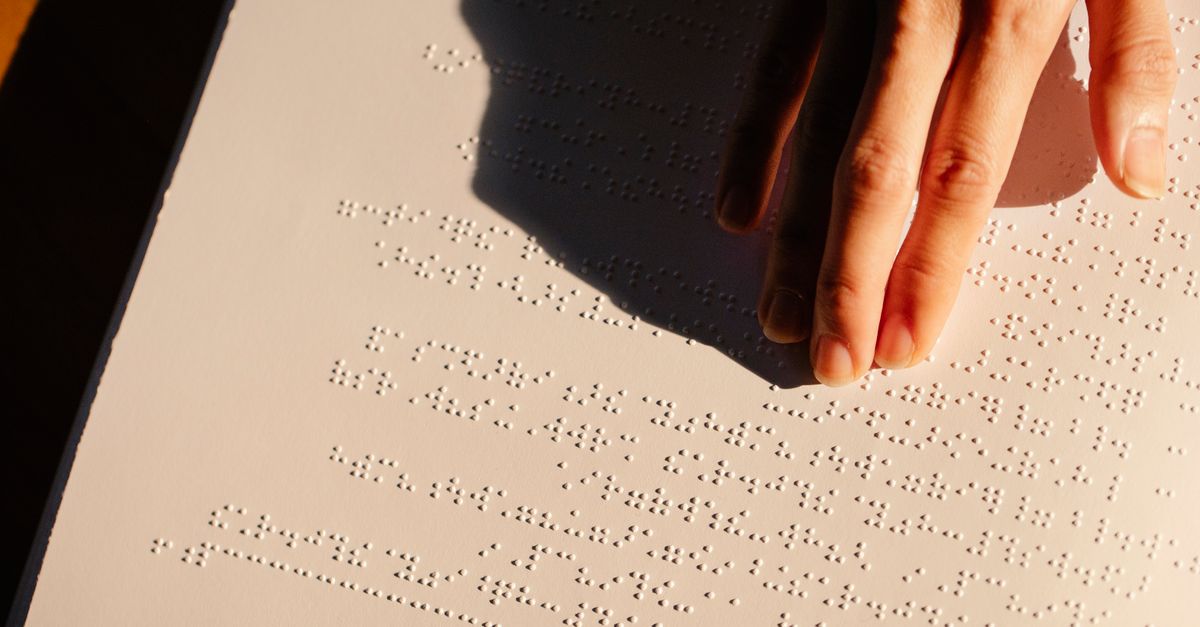
Vision dominates current humanoid development, yet manipulation relies on touch. While cameras provide spatial context, they cannot measure slip, texture, or force without specialized tactile sensors. For Indian robotics manufacturers targeting industrial or service applications, the choice of tactile skin is critical. This article grades tactile technologies based on shipping hardware availability, pilot deployments, and technical specifications rather than theoretical concepts.
The hierarchy of grading places shipped hardware first, followed by pilot deployments in controlled environments, and finally, announcements from research labs. We prioritize manufacturers who provide spec sheets, on-stage demos, or factory videos over press releases citing unproven prototypes.
Optical Tactile Sensing: The GelSight Standard
GelSight represents the most mature optical tactile sensing technology available for commercial deployment. Developed at Stanford University and commercialized through partners like Robotiq, it utilizes a deformable gel layer with a high-resolution camera embedded inside.
The operating principle involves capturing images of the gel surface deformed by an object. Software processes the pixel displacement to reconstruct a 3D depth map of the contact area. This allows for high-fidelity texture recognition and fine manipulation tasks, such as grasping fragile objects like eggs or fruit.
Commercial Status: Robotiq has released the GelSight Mini, a 2.5cm diameter version. Units are available for purchase, though lead times can vary. The high-resolution version remains primarily in the research domain.
Technical Specs: The Mini version offers 128x128 resolution with a depth resolution of 10 micrometers. It supports force estimation and friction measurement. However, the optical path requires precise calibration, and the gel degrades under extreme UV exposure or chemical contact.
India Availability: Direct imports are available via specialized distributors. The landed cost for a single GelSight Mini is approximately $2,500 USD. With Indian import duties on electronics (approx. 15-20% GST + Basic Customs Duty), the landed cost in India rises to roughly INR 2.2 Lakhs to INR 2.5 Lakhs per unit. This excludes integration costs for the internal camera and LED lighting.
Electromechanical Deformation: BioTac and Fluidic Sensing
The BioTac sensor, originally developed at NASA’s Jet Propulsion Laboratory (JPL), measures contact through changes in a conductive fluid. It consists of an elastomeric skin filled with conductive fluid and an internal electrode.
When pressure is applied, the fluid level changes, altering the impedance between the internal electrode and the skin. This allows for measurement of normal force and vibration (slip detection). Unlike optical sensors, BioTac does not require external lighting, making it robust in low-light environments.
Commercial Status: While the technology is proven in space robotics, commercial availability is limited to custom manufacturing or research grants. There is no mass-produced, off-the-shelf BioTac unit sold globally at a fixed retail price.
Technical Specs: The sensor provides a high signal-to-noise ratio for contact force. It is capable of detecting vibration frequencies up to 1000 Hz. However, the fluid can leak over time, and the sensor is sensitive to temperature changes affecting fluid viscosity.
India Availability: No direct imports are currently listed on standard Indian electronics distributor catalogs (such as Arrow or Mouser). Indian research labs (e.g., IIT Madras, IIT Bombay) have successfully printed and tested BioTac variants. For a custom integration project, the estimated cost ranges from INR 5 Lakhs to INR 10 Lakhs, heavily dependent on tooling and assembly labor.
Capacitive Touch Arrays: The E-Dermis Approach
Capacitive touch arrays measure changes in capacitance caused by the proximity of a conductive object. Often referred to as E-Dermis, this approach uses a grid of electrodes covered by a dielectric layer.
This technology is widely used in consumer electronics but is now being adapted for robotics. Companies like Interlink Electronics offer the FSR (Force Sensitive Resistor) series, while newer startups are integrating capacitive arrays into gripper fingers.
Commercial Status: Interlink Electronics ships off-the-shelf FSRs and capacitive touch sensors. These are widely available but offer lower spatial resolution compared to GelSight.
Technical Specs: Capacitive arrays provide binary or multi-level touch detection. They are thin, lightweight, and low-power. However, they struggle with force resolution and are sensitive to environmental humidity changes, which can cause false positives.
India Availability: Interlink Electronics components are available through authorized distributors in India. A standard FSR402 costs approximately $10 USD. With taxes, the landed cost is roughly INR 1,000 to INR 1,500 per sensor. For a full-skin array on a humanoid arm, the component cost might reach INR 50,000 to INR 1 Lakh, excluding the controller board and calibration software.
Commercial Availability and the Indian Market Context
The adoption of tactile skins in India faces specific challenges. High import duties on precision sensors increase the Cost of Goods Sold (COGS). Additionally, supply chain reliability for calibration tools is often lower than in the US or Europe.
Price Comparison Table:
- Optical (GelSight): High cost (INR 2.5L/unit), High resolution, High complexity.
- Fluidic (BioTac): Custom cost (INR 5L+), Moderate resolution, Moderate complexity.
- Capacitive (Interlink): Low cost (INR 1.5K/unit), Low resolution, Low complexity.
Integration Reality: For Indian startups building collaborative robots (cobots) or humanoid prototypes, a hybrid approach is emerging. Using capacitive arrays for basic touch detection and force sensing for safety, while reserving high-resolution optical skins for specific manipulation tasks.
Local Pilot Deployments: Several Indian robotics integrators have piloted tactile skins in automated warehouse sorting applications. However, full-body humanoid deployment with tactile skins remains in the pilot phase. No mass-market humanoid in India currently ships with full-body tactile coverage as a standard feature.
Conclusion
Tactile sensing is moving from research to hardware, but the maturity gap remains significant. GelSight leads in resolution and is available for purchase, making it the preferred choice for high-precision manipulation tasks. BioTac offers unique vibration detection but lacks mass-market availability. Capacitive arrays provide a cost-effective entry point for safety and basic interaction.
For the Indian market, the landed cost is a critical barrier. Import duties and supply chain lead times suggest that local manufacturing of sensor arrays may become a priority for domestic humanoid startups. Until then, hybrid solutions utilizing capacitive touch for safety and optical sensors for specific tasks offer the most pragmatic path forward.
References
- Stanford University Robotics: GelSight Technology. https://robotics.stanford.edu/research/gel-sight
- Robotiq: GelSight Mini Product Page. https://www.robotiq.com/products/gelsight-mini
- NASA JPL: BioTac Sensor Documentation. https://www.jpl.nasa.gov/robotics/biotac
- Interlink Electronics: FSR400 Series Specifications. https://interlinkelectronics.com/products/fsr400
- RobotWale Market Report: India Robotics Component Pricing 2024. https://robotwale.com/market-reports
✓ Key takeaways
- •Hands-on view of Beyond Vision: A Graded Assessment of Commercial Tactile Skin Technologies for Humanoid Robotics inside our Tactile Skins library.
- •Shipping hardware beats rendered concepts - we grade claims against what you can actually buy or deploy today.
- •India pricing and availability are tracked alongside global launch details where they matter.
References
Related articles
More in Tactile Skins →