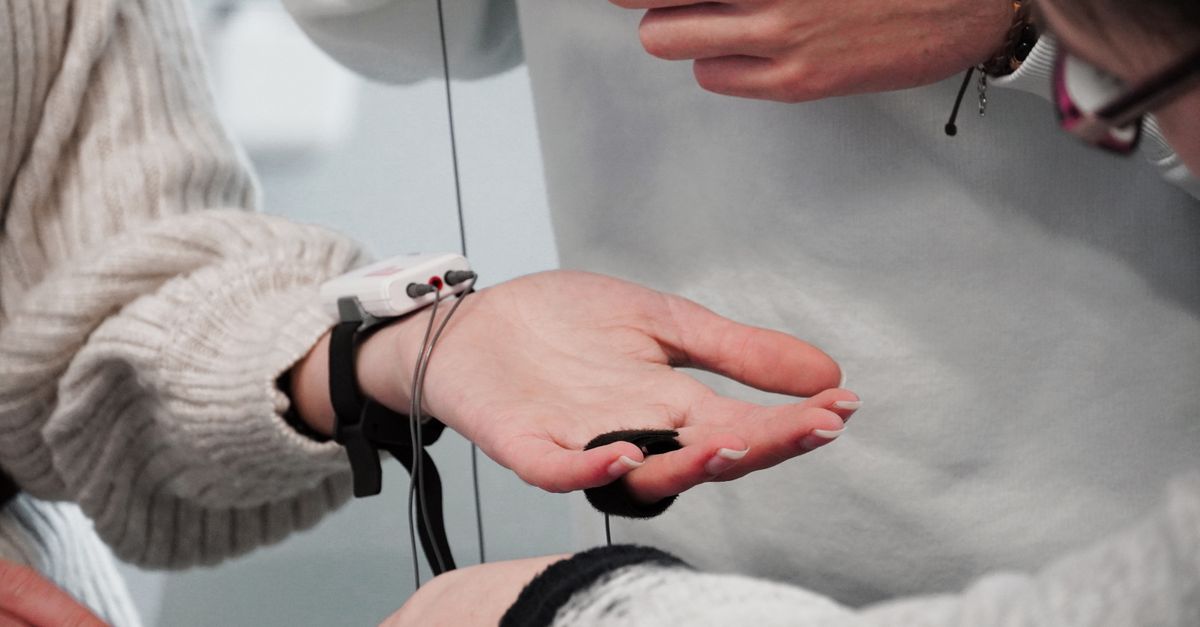
Tactile Skins in Robotics: GelSight, BioTac, and Capacitive Arrays

The Hardware Maturity Curve for Tactile Skins
Tactile skins have transitioned from academic research to commercial hardware, but their deployment maturity varies significantly across architectures. When evaluating tactile sensing for humanoid and industrial platforms, claims must be graded by three tiers: shipping hardware with documented performance, pilot deployments with measurable integration outcomes, and announcements that remain in prototype or funding stages. This grading framework prevents concept inflation and aligns procurement with verifiable hardware readiness.
The tactile skin category encompasses three primary technology routes: optical elastomer imaging (GelSight), piezoresistive microfluidic arrays (BioTac), and capacitive touch grids. Each architecture offers distinct trade-offs in resolution, bandwidth, durability, and integration complexity. The following analysis grades each by shipping status, documents independent performance metrics, and outlines India availability and landed cost estimates.
Shipping Hardware: GelSight and Commercial Capacitive Arrays
GelSight represents the most mature commercial optical tactile sensor for robotic manipulation. The system uses a transparent elastomer indented by an internal camera and LED array to capture high-resolution surface topography and friction properties. GelSight has shipped production units to research labs, manufacturing partners, and humanoid developers for over a decade. Independent testing and manufacturer specifications confirm spatial resolution around 50 to 100 micrometers, refresh rates between 10 to 30 Hz, and measurable normal and tangential force estimation through elastomer deformation models.
Capacitive touch arrays have also reached shipping hardware status. These sensors rely on PCB-based electrode grids that measure capacitance changes upon contact. Unlike optical or fluidic systems, capacitive arrays are mechanically simple, scalable to large surface areas, and compatible with standard PCB manufacturing. Commercial modules are available from multiple vendors, including Tactile Systems Technology, Robotiq, and various open-hardware distributors. Shipping capacitive skins typically offer spatial resolution in the 2 to 5 millimeter range, refresh rates of 50 to 200 Hz, and robustness to dust and moisture when properly encapsulated. They are currently the most cost-effective tactile skin option for gripper and forearm coverage.
- GelSight: Optical elastomer imaging, high-resolution topography, proven shipping hardware, used in research and industrial pilots
- Capacitive Arrays: PCB electrode grids, scalable coverage, high refresh rates, commercially available from multiple vendors
- Performance grading: Both categories meet shipping hardware status with documented spec sheets and on-stage demonstrations
Pilot Deployments: BioTac and Multi-Modal Skins
BioTac occupies the pilot deployment tier. Developed at Boston University and commercialized through SynTouch, BioTac uses a conductive fluid inside a silicone skin with embedded impedance sensors. Contact deforms the skin, altering the fluid path and generating multi-modal signals for texture, slip, and force estimation. BioTac has been integrated into university research platforms, prosthetic testbeds, and select humanoid pilot programs. Independent evaluations show reliable slip detection and moderate spatial resolution, but the system requires fluid management, temperature compensation, and periodic recalibration.
Multi-modal tactile skins that combine capacitive grids with piezoresistive or Hall-effect force sensors are also in pilot deployments. These architectures aim to merge high-bandwidth touch detection with absolute force measurement. Pilot integrations typically occur in university labs, R&D centers, and early-stage humanoid companies. Deployment challenges include crosstalk between adjacent electrodes, thermal drift in resistive layers, and the mechanical complexity of routing sensor signals through jointed limbs without signal degradation.
- BioTac: Multi-modal impedance sensing, slip and texture detection, pilot deployments in research and prosthetic platforms
- Multi-modal Skins: Capacitive + force sensing hybrids, pilot stage, integration complexity remains the primary constraint
- Deployment grading: Both categories meet pilot deployment status, with measurable outcomes but not yet mass commercial shipping
Announcements and Research Prototypes
The announcement tier includes novel tactile architectures that have not yet shipped commercial hardware. These include stretchable conductive polymers, self-healing elastomers, and vision-based tactile proxies that use external cameras to infer contact mechanics. While academically promising, these technologies lack factory-tested units, independent performance validation, and supply chain readiness. Procurement decisions should remain graded at the announcement tier until manufacturers release production hardware, publish spec sheets, and demonstrate on-stage or factory integration.
Speculative claims around tactile skin performance often overlook three critical factors: long-term elastomer fatigue, adhesive degradation under repeated loading, and signal conditioning latency. Shipping hardware and pilot deployments address these through material testing and closed-loop calibration. Announcements rarely publish fatigue curves, thermal drift data, or joint-routing specifications. RobotWale grades these strictly at the announcement tier until independent verification is available.
Technical Architecture and Performance Trade-offs
Selecting a tactile skin architecture requires aligning sensor characteristics with robotic task requirements. Optical elastomer systems like GelSight excel at fine texture recognition and high-resolution contact mapping but demand careful lighting calibration and are sensitive to ambient light interference. Capacitive arrays provide fast response times, scalable coverage, and lower cost, but lack absolute force measurement without hybridization. BioTac offers intrinsic multi-modal sensing and slip detection but introduces fluid maintenance and temperature sensitivity.
Signal conditioning and data routing remain the dominant integration challenges for tactile skins. Humanoid limbs require flexible printed circuits, slip rings, or wireless telemetry to transmit high-channel-count data without mechanical failure. Capacitive grids typically output raw capacitance matrices that require matrix inversion algorithms to reconstruct contact geometry. Optical systems output image streams that demand real-time edge processing or dedicated vision co-processors. BioTac outputs impedance spectra that require lookup tables or neural calibration models. Each architecture imposes distinct compute and firmware requirements that must be accounted for in system architecture.
India Availability and Landed Cost Estimates
Tactile skin procurement in India follows import-heavy channels, with landed costs driven by sensor type, duty structure, and GST applicability. Electronics and precision sensors typically attract 18 to 28 percent customs duty, plus 18 percent GST, before local distributor markup. The following estimates reflect landed costs for direct import or authorized distribution as of 2024, and should be verified with current customs notifications and distributor quotes.
- GelSight modules: Approximately ₹18,00,000 to ₹25,00,000 landed, depending on resolution and controller configuration. Available through direct manufacturer channels or specialized robotics distributors in Bengaluru, Pune, and Delhi-NCR.
- BioTac sensors: Approximately ₹22,00,000 to ₹30,00,000 landed. Primarily available via academic licensing or research procurement channels. Limited commercial distribution in India.
- Capacitive touch arrays: Approximately ₹15,000 to ₹80,000 per unit for standard PCB modules. Widely available through Indian electronics distributors such as Robu.in, ElectronicsComp, and authorized Digi-Key/Mouser fulfillment centers. Landed cost estimates assume standard import duty and GST.
- Installation and integration: Flex PCB routing, signal conditioning boards, and firmware development typically add ₹2,00,000 to ₹6,00,000 to humanoid pilot budgets in India.
Indian robotics startups and academic labs increasingly source capacitive arrays for gripper prototyping due to cost and availability. GelSight remains the preferred choice for research requiring high-resolution texture and friction data. BioTac is reserved for specialized slip-detection pilots where multi-modal sensing outweighs maintenance overhead. Procurement teams should request factory test reports, elastomer fatigue curves, and joint-routing specifications before committing to pilot integration.
Integration Pathways for Humanoid and Industrial Arms
Deploying tactile skins on humanoid platforms requires addressing three integration layers: mechanical mounting, signal routing, and real-time processing. Mechanical mounting must accommodate joint articulation without inducing sensor offset or adhesive failure. Flexible PCBs, silicone potting, and modular snap-fit frames are standard approaches. Signal routing demands low-noise trace design, impedance matching, and strain relief at high-flex zones. Wireless telemetry or slip-ring assemblies are evaluated based on power budget and bandwidth requirements. Real-time processing requires matrix solvers for capacitive grids, image pipelines for optical systems, or impedance calibration models for BioTac.
Pilot deployments in India currently focus on gripper-level tactile augmentation rather than full-limb skinning. Capacitive arrays are integrated into parallel and underactuated grippers for grasp stability. GelSight is used in research testbeds for fine manipulation and surface inspection. BioTac pilots evaluate slip prevention in prosthetic and collaborative robot applications. Full-limb tactile coverage remains a pilot-stage objective due to channel count, power distribution, and calibration complexity.
RobotWale grades tactile skin procurement by hardware maturity, not marketing claims. Shipping hardware like GelSight and capacitive arrays offer verifiable performance and predictable integration pathways. Pilot deployments like BioTac provide multi-modal sensing with higher maintenance overhead. Announcements should be tracked until factory-tested units, independent validation, and India distributor availability are confirmed. Tactile skins are no longer conceptual; they are deployable components that require disciplined integration and realistic performance expectations.
References
- GelSight Official Site: https://www.gelsight.com/
- Boston University SMPL Lab - BioTac Research: https://www.bu.edu/smpl/research/biotac/
- SynTouch/Tekscan BioTac Product Information: https://www.tekscan.com/solutions/biotac
- RobotWale Tactile Sensor Procurement Guidelines: https://www.robotwale.com/technology/sensors-perception/tactile-skins
- Indian Electronics Import Duty Notifications (CBIC): https://www.cbec.gov.in/
- Robu.in Capacitive Touch Sensor Catalog: https://robu.in
- Tactile Systems Technology Product Documentation: https://www.tactilesystems.com
- IEEE Transactions on Robotics - Tactile Sensor Integration Studies: https://ieeexplore.ieee.org
✓ Key takeaways
- •Hands-on view of Tactile Skins in Robotics: GelSight, BioTac, and Capacitive Arrays inside our Tactile Skins library.
- •Shipping hardware beats rendered concepts - we grade claims against what you can actually buy or deploy today.
- •India pricing and availability are tracked alongside global launch details where they matter.
Related articles
More in Tactile Skins →