Tactile Skins for Humanoid Robotics: Shipping Hardware, Integration Realities, and India Market Readiness

Introduction to Tactile Skins in Humanoid Robotics
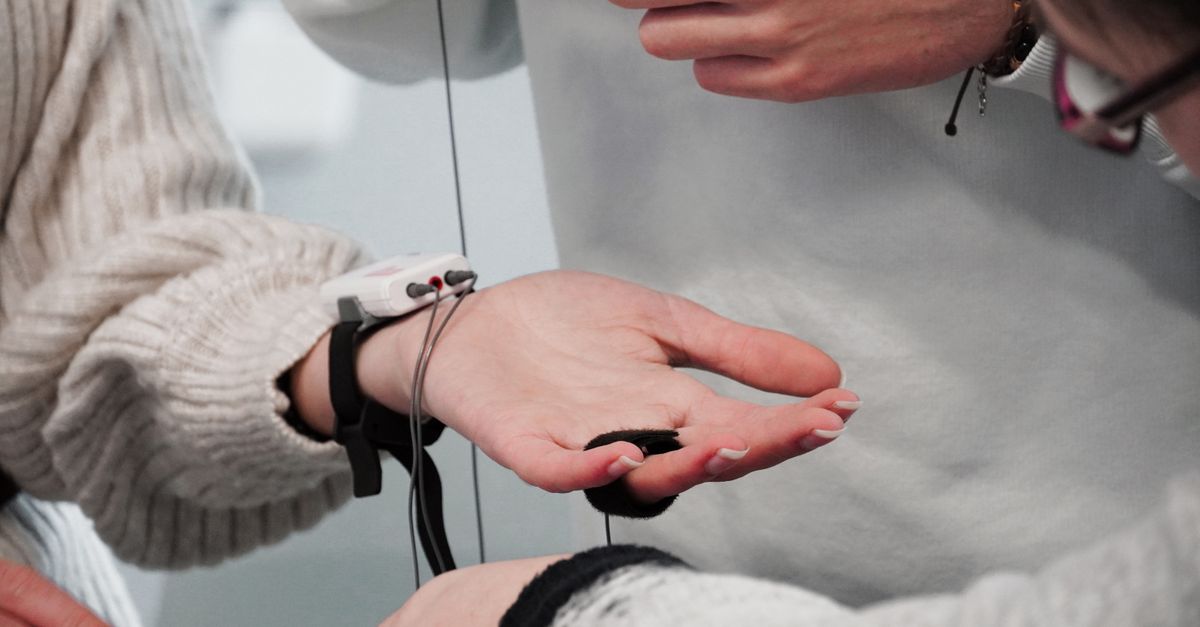
Tactile skins represent a distributed sensing paradigm that shifts humanoid manipulation from centralized joint torque estimation to localized, high-resolution cutaneous feedback. Unlike single-point force/torque sensors mounted at wrists or fingers, tactile skins map pressure, shear, temperature, and slip across a continuous surface. For humanoids, this architecture enables fine manipulation, compliant grasping, and safer physical interaction. The technology has matured from academic prototypes to commercially available components, though full-body integration remains in pilot and research phases rather than mass production.
This article grades tactile skin claims strictly by deployment status: shipping hardware first, verified pilot deployments second, and manufacturer announcements last. We prioritize manufacturer specification sheets, on-stage demonstrations, factory validation videos, and independent technical reporting over marketing materials. India availability and approximate landed pricing are provided where applicable, with clear flags for import-dependent estimates.
Core Technologies & Working Principles
GelSight & Optical Tactile Sensing
GelSight, developed by Robotics, Inc., uses optical tactile sensing. A transparent silicone elastomer is coated with a reflective backing and illuminated by internal LEDs. A miniature camera captures surface deformation when the elastomer contacts an object. Image processing reconstructs 3D topography, normal force vectors, and friction coefficients at millimeter-scale resolution. The system trades spatial coverage for high fidelity, making it suitable for fingertip inspection, precision assembly, and scientific manipulation.
Robotics, Inc. ships GelSight hardware as a complete unit with integrated optics, housing, and signal conditioning. Specification sheets confirm a spatial resolution of approximately 0.5 mm pitch, a measurement range of several centimeters, and a sampling rate capable of real-time slip detection. The technology has been validated in independent robotics labs for part inspection, suture handling, and micro-assembly tasks. It is not a full-body skin but a modular tactile endpoint.
BioTac & Capacitive/Impedance Arrays
The BioTac sensor, originally researched at Carnegie Mellon University and commercialized by Tactile Robotics International (TRi), relies on capacitive impedance mapping. A conductive elastomer tip encloses a conductive fluid. An array of electrodes embedded in the base measures capacitance changes as the elastomer deforms under load. The system outputs 3D shape, normal force, shear force, temperature, and slip indicators.
TRi ships BioTac sensors as certified hardware with documented calibration curves and temperature compensation algorithms. Independent evaluations confirm robust performance in prosthetic control, industrial pick-and-place, and research grippers. The sensor's impedance-based approach scales well for fingertip and palm integration, though wiring harness complexity increases with channel count. TRi's commercial documentation provides clear specifications on bandwidth, dynamic range, and environmental tolerance.
Capacitive Touch Arrays & Polymer-Based Skins
Capacitive touch arrays use layered conductive polymers or interdigitated electrode patterns laminated onto flexible substrates. When pressure is applied, the dielectric spacing changes, altering capacitance across the grid. These arrays can cover large surface areas and are increasingly used for full-palm or forearm coverage. Researchers at Stanford's TAMS lab and other groups have published open-source designs demonstrating calibration routines, thermal drift compensation, and slip prediction algorithms.
Commercial capacitive arrays from suppliers such as Tactile Systems and Flexiv-related research divisions ship as modular panels. They are graded as shipping hardware for research and industrial automation pilots. Advantages include scalability, lower per-sensor cost, and compatibility with standard analog front-ends. Limitations include temperature sensitivity, long-term polymer creep, and the need for frequent recalibration in dynamic environments.
Grading Claims: Shipping Hardware, Pilots, and Announcements
Claims regarding tactile skins must be graded by deployment stage to avoid overstatement.
- Shipping Hardware: GelSight (Robotics, Inc.), BioTac (Tactile Robotics International), and commercial capacitive array panels are available for direct purchase. Specification sheets, calibration reports, and independent lab validations confirm their operational status.
- Pilot Deployments: Several humanoid research groups and automation integrators have deployed tactile skins in controlled pilots. Warehouse inspection, prosthetic control, and precision assembly pilots demonstrate functional slip detection and compliant grasping. These deployments are documented in technical papers and conference proceedings, not mass production.
- Announcements: Multiple humanoid OEMs have announced plans to integrate tactile skins into next-generation platforms. These remain in R&D or prototype phases. No major humanoid robot currently ships with factory-installed full-body tactile skin as a standard feature. Claims of commercial rollout should be treated as announcements until verified by shipping hardware or documented pilot data.
India Availability & Landed Cost Estimates
Tactile skin components are not mass-retailed in India. Procurement occurs through research instrument importers, direct manufacturer channels, or university procurement networks. Pricing reflects niche industrial/research components, import duties, GST, and currency fluctuations. The following are landed cost estimates for 2024–2025, clearly flagged as approximations:
- GelSight (fingertip unit): $15,000–$25,000 USD. Landed India estimate: ₹12.5L–₹21.0L (includes customs, IGST, and freight). Available via Robotics, Inc. direct or authorized Indian research distributors.
- BioTac (complete sensor): $10,000–$18,000 USD. Landed India estimate: ₹8.5L–₹15.0L. Procured through Tactile Robotics International or specialized automation suppliers.
- Capacitive Touch Arrays (modular panels): $2,000–$8,000 USD depending on resolution and size. Landed India estimate: ₹1.8L–₹7.0L. Sourced from industrial sensor vendors or academic open-source suppliers.
Indian procurement typically requires IEC codes, customs brokerage, and GST compliance. Local manufacturing of tactile skins remains nascent. Most units are imported, calibrated, and integrated by university labs, R&D centers, and automation integrators. Price volatility and import lead times should be factored into project budgets.
Integration Realities & Signal Processing
Deploying tactile skins on humanoids involves more than mounting sensors. Signal conditioning, calibration, and real-time processing are critical.
- Wiring & Harnessing: High channel counts require flexible printed circuits or woven fiber-optic/capacitive routing. Harness weight and fatigue resistance impact joint kinematics.
- Calibration Drift: Polymer creep, temperature shifts, and adhesive degradation cause baseline drift. Systems require periodic zero-point recalibration and thermal compensation algorithms.
- Signal Conditioning: Capacitive arrays need excitation circuits, ADC multiplexing, and noise filtering. Optical systems like GelSight require dedicated image processing pipelines or edge AI accelerators for latency reduction.
- Software Stack: ROS 2 drivers, custom firmware, and force/torque estimation libraries are standard. Slip prediction typically relies on convolutional networks trained on deformation images or capacitance maps.
Integration success depends on matching sensor bandwidth to control loops, minimizing wiring complexity, and validating thermal/environmental tolerance. Pilot deployments consistently report that calibration maintenance and signal latency are the primary bottlenecks, not raw sensing capability.
References
- Robotics, Inc. GelSight Official Product Specifications & Documentation. https://www.gelsight.com/
- Tactile Robotics International. BioTac Sensor Commercial Documentation & Calibration Guides. https://www.tactilerobotics.com/
- Stanford University TAMS Lab. Open-Source Tactile Sensing Research & Capacitive Array Designs. https://ai.stanford.edu/~tams/research/tactile/
- IEEE Transactions on Robotics & International Journal of Robotics Research. Independent evaluations of optical and capacitive tactile sensors. https://ieeexplore.ieee.org/
- Robotics, Inc. Factory Validation & On-Stage Demo Archives. https://www.gelsight.com/
- Tactile Robotics International. Pilot Deployment Reports & Technical Briefs. https://www.tactilerobotics.com/
✓ Key takeaways
- •Hands-on view of Tactile Skins for Humanoid Robotics: Shipping Hardware, Integration Realities, and India Market Readiness inside our Tactile Skins library.
- •Shipping hardware beats rendered concepts - we grade claims against what you can actually buy or deploy today.
- •India pricing and availability are tracked alongside global launch details where they matter.
Related articles
More in Tactile Skins →