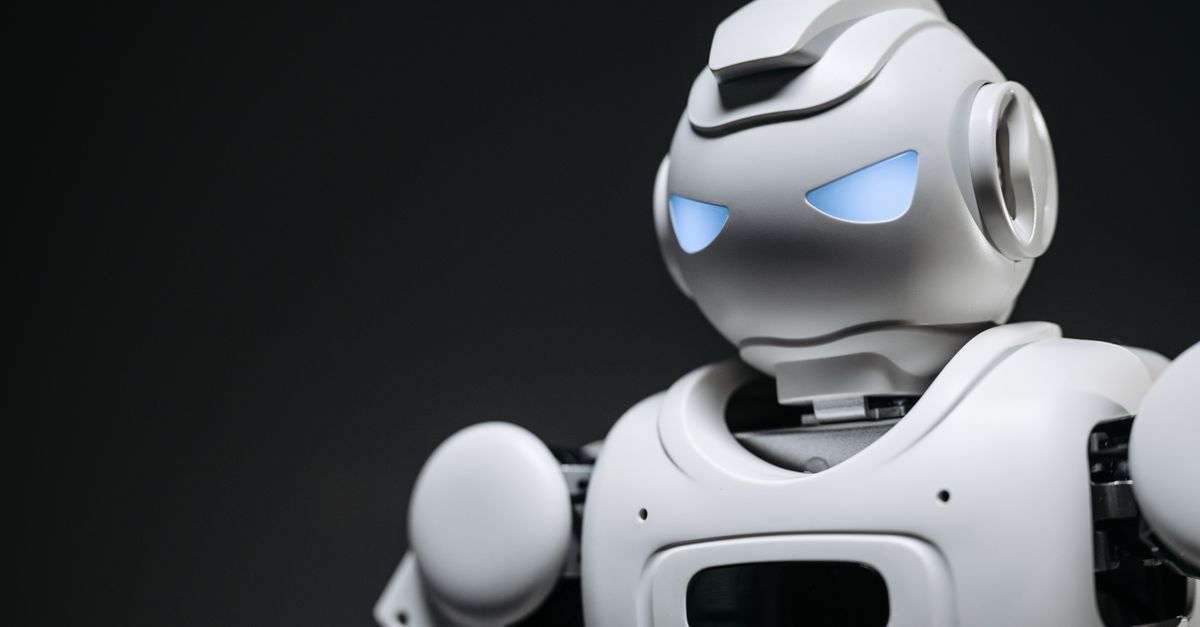
Inside Tesla's Humanoid Bet
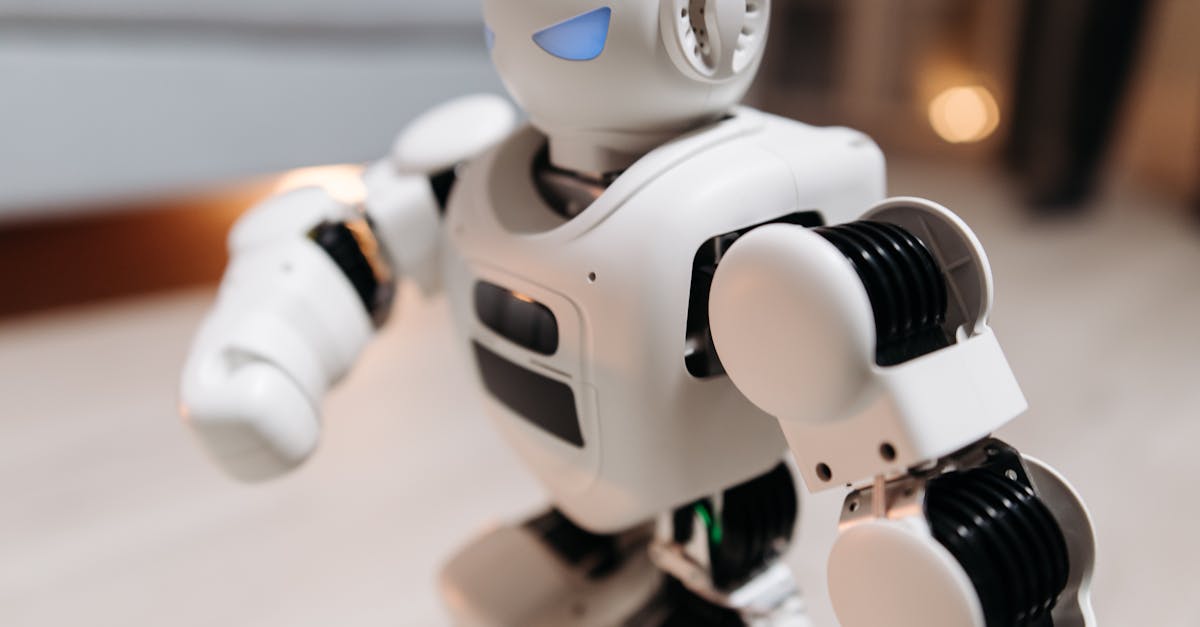
Inside Tesla's Humanoid Bet
Tesla's Optimus program is not a conceptual exercise but a structured engineering initiative tied to the company's broader AI, autonomy, and manufacturing objectives. The trajectory of the program is defined by a clear hierarchy of evidence: shipped hardware iterations take precedence, followed by documented pilot deployments, with public announcements occupying the lowest tier of verification. This article evaluates Optimus based on verifiable technical specifications, controlled factory testing, and supply chain development, avoiding speculative renders or unverified claims.
Hardware Generation and Actuation Architecture
Optimus has progressed through multiple hardware generations, each refining mechanical design, actuator integration, and thermal management. Early prototypes relied on off-the-shelf servos and hydraulic components, but subsequent iterations transitioned to proprietary electric actuators engineered specifically for humanoid form factors. Each joint module integrates torque sensors, high-resolution encoders, and harmonic drives to deliver precise force control and compliant movement. The actuator architecture prioritizes torque density and rapid response, enabling dynamic balance and adaptive gait patterns rather than rigid, pre-programmed trajectories.
The current mechanical platform utilizes a distributed joint design that emphasizes modularity and field serviceability. Weight distribution has been optimized through aluminum alloys and composite materials, reducing inertial load during high-frequency step cycles. Battery integration follows a modular pack layout mounted along the spine, with power management systems designed to sustain continuous operation during material handling and manipulation tasks. Thermal dissipation is managed through active cooling channels and heat-spreading substrates within the actuator housings. The system does not rely on external tracking infrastructure; instead, it maintains positional awareness through proprioceptive feedback and visual odometry.
Compute, Vision, and the Neural Network Stack
Optimus operates on a fully vision-based perception pipeline. Stereo cameras and depth estimation replace LiDAR or external motion capture systems, aligning with Tesla's broader autonomy stack. The compute architecture leverages custom silicon optimized for high-throughput inference, running a unified neural network that processes visual inputs, proprioceptive data, and task objectives. The policy network maps sensory observations directly to joint commands, following an end-to-end learning paradigm that minimizes reliance on hand-coded kinematics.
Training data originates from simulated environments and controlled manipulation datasets, with continuous updates deployed over the air. The system executes real-time control loops at high frequencies, handling state estimation, trajectory generation, and impedance control onboard. Safety architecture includes hardware-level current limiting, emergency stop circuits, and software-defined operational envelopes that restrict speed and force in unverified zones. The neural network is not a single monolithic model but a suite of specialized policies for locomotion, manipulation, and environmental perception, coordinated by a central scheduler. While the architecture demonstrates functional autonomy in factory settings, task success rates and latency metrics remain internal validation data rather than industry benchmarks.
Pilot Deployments and Factory Integration
Tesla has documented pilot deployments of Optimus within its own manufacturing facilities. These programs focus on material handling, part inspection, and repetitive assembly workflows. The robots operate alongside human workers in designated safety zones, with remote oversight and manual override capabilities. Early deployments prioritized static or semi-static tasks, while later iterations have attempted dynamic object manipulation and multi-step sequences. Deployment duration, cycle times, and uptime are tracked internally to inform hardware revisions and software updates.
The pilots are not commercial sales but engineering validation programs designed to stress-test reliability in real-world industrial conditions. Robots are evaluated on task completion accuracy, battery endurance, joint wear, and environmental adaptability. Tesla has not published independent third-party performance metrics, so claims regarding operational efficiency must be treated as internal data. The deployment model emphasizes gradual expansion of task complexity rather than immediate full autonomy. Human-robot interaction protocols include physical barriers, speed limits, and continuous monitoring to mitigate risk during unverified workflows.
Manufacturing Scale and Supply Chain
Tesla's scaling strategy relies on vertical integration and alignment with existing automotive supply chains. The company has stated intentions to mass-produce Optimus at gigafactory scale, leveraging manufacturing expertise to drive down unit costs. Actuator production, sensor integration, and compute module assembly are designed to overlap with existing component lines, reducing tooling overhead. The supply chain includes motor windings, gearbox components, PCBs, thermal interface materials, and structural fasteners sourced through established automotive and electronics manufacturers.
Tesla has not disclosed exact production volumes, but public statements emphasize a target of tens of thousands of units annually within the next few years. Cost reduction focuses on simplifying mechanical complexity, standardizing joint designs, and automating final assembly. Quality control follows automotive-grade testing protocols, including accelerated life testing, environmental stress screening, and functional verification. The manufacturing roadmap assumes gradual ramp-up, with early units reserved for internal validation before broader commercial distribution.
India Availability and Commercial Realities
As of the current reporting cycle, Tesla has not announced formal commercial availability of Optimus in India. The robot remains in the pilot and internal validation phase, with no public pricing, import pathways, or distribution agreements established. If Tesla initiates Indian market entry, landed costs will depend on import duties, localization, regulatory compliance, and service infrastructure. Based on Tesla's stated manufacturing targets and comparable industrial robot pricing, an approximate INR estimate for a pilot or early commercial unit would range between INR 25 lakhs to INR 40 lakhs, though this is a speculative landed cost estimate flagged for clarity.
Indian adoption will require compliance with the Bureau of Indian Standards (BIS) for electrical safety, robotics certification, and localized technical support. The domestic market currently relies on imported industrial arms, collaborative robots, and specialized automation providers. Optimus would need to demonstrate clear economic advantage over existing solutions, including total cost of ownership, task versatility, and maintenance requirements. Until Tesla establishes official distribution or manufacturing partnerships in India, the robot remains unavailable for commercial procurement in the region.
What the Data Actually Shows
Optimus's development follows a strict evidence hierarchy. Shipping hardware comes first, followed by pilot deployments, with public announcements serving as the lowest tier of verification. The program has demonstrated functional bipedal locomotion, compliant manipulation, and vision-based navigation in controlled factory environments. However, the robots are not yet deployed in open commercial settings, and task autonomy remains constrained to verified workflows. Independent verification of performance metrics is limited due to Tesla's internal testing model.
The program's trajectory depends on scaling manufacturing, refining neural network policies, and proving economic viability in industrial applications. Task versatility, battery life, joint durability, and safety certification will determine commercial readiness. Until broader pilot data is published and third-party validation occurs, Optimus should be evaluated as an active engineering program rather than a deployed commercial product. The hardware exists, the pilots are running, and the supply chain is being built. The next milestone is verifiable field performance at scale.
References
- Tesla AI Day 2022: Optimus Overview. https://www.tesla.com/AI
- Tesla AI Day 2023: Advanced Robotics and Manufacturing. https://www.tesla.com/AI
- Tesla Engineering Updates on Actuator Design and Compute Architecture. https://www.tesla.com/engineering
- Reuters Reporting on Tesla's Manufacturing and Robotics Strategy. https://www.reuters.com/technology/
- IEEE Spectrum Coverage on Humanoid Robotics Development and Verification. https://spectrum.ieee.org/
- Bureau of Indian Standards (BIS) Robotics and Electrical Safety Guidelines. https://bis.gov.in/
✓ Key takeaways
- •Hands-on view of Inside Tesla's Humanoid Bet inside our Tesla Optimus Programme library.
- •Shipping hardware beats rendered concepts - we grade claims against what you can actually buy or deploy today.
- •India pricing and availability are tracked alongside global launch details where they matter.
References
- Tesla AI Day 2022: Optimus Overview
- Tesla AI Day 2023: Advanced Robotics and Manufacturing
- Tesla Engineering Updates on Actuator Design and Compute Architecture
- Reuters Reporting on Tesla's Manufacturing and Robotics Strategy
- IEEE Spectrum Coverage on Humanoid Robotics Development and Verification
- Bureau of Indian Standards (BIS) Robotics and Electrical Safety Guidelines
Related articles
More in Tesla Optimus Programme →