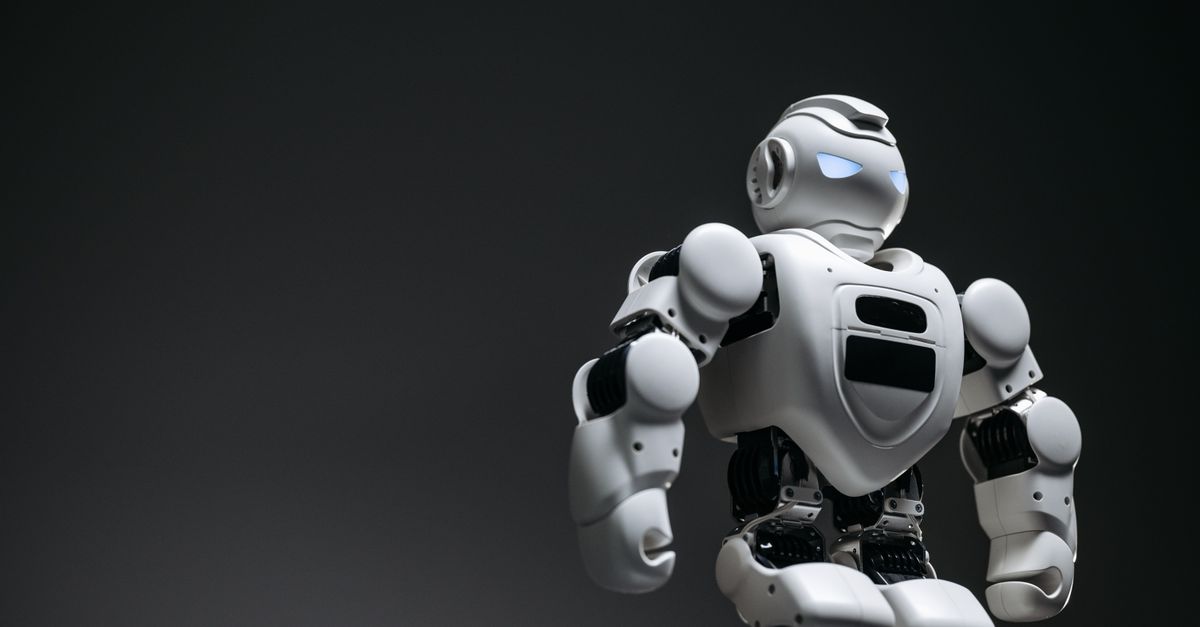
Unitree H1 & G1: The Chinese Humanoids Reshaping Price Expectations
Introduction: The Quadruped Giant Turns Bipedal
Unitree Robotics, established in 2015 and headquartered in Hangzhou, China, has long been a dominant force in quadruped robotics. Their Go2 and B1 series have become staples in educational and industrial inspection sectors. However, the company’s recent pivot into bipedal humanoid robotics signals a strategic shift to capture the broader automation market. The introduction of the H1 and the G1 models represents a significant challenge to the pricing structures previously maintained by Western competitors.
While many humanoid startups have relied on venture capital to fund rendered concepts and prototype videos, Unitree has leveraged its manufacturing experience in actuators and electric vehicles to produce shipping hardware. This article assesses the H1 and G1 based on available hardware, pilot deployments, and manufacturer data, specifically evaluating their potential relevance for the Indian robotics ecosystem.
Unitree H1: High-Power Performance and Premium Segmentation
The H1 is Unitree’s flagship humanoid robot, designed to demonstrate high dynamic performance capabilities. Standing at approximately 2.0 meters tall and weighing around 100 kilograms (220 lbs), the H1 is engineered for tasks requiring significant payload and mobility. Unlike many competitors that focus on static stability, the H1’s core engineering focus is on dynamic motion.
Technical Specifications and Capabilities
According to the manufacturer’s technical documentation, the H1 utilizes a distributed actuation architecture. The robot features a total of 40 degrees of freedom (DoF). The lower limbs are equipped with high-torque actuators capable of handling complex terrains. Key metrics include:
- Height: Approximately 2.0 meters.
- Weight: ~100 kg.
- Max Speed: Capable of running at speeds exceeding 2 meters per second.
- Torque: Joint torque capabilities reported to reach up to 300 Nm per joint, allowing for rapid recovery from external disturbances.
Unitree has publicly demonstrated the H1 performing backflips, running on uneven surfaces, and recovering from pushes. These demonstrations are not merely renderings; they were captured on physical hardware during events like the 2024 World Artificial Intelligence Conference (WAIC) in Shanghai. The control algorithms rely on a combination of model-based control and reinforcement learning, allowing for real-time balance adjustments.
Shipping Status and Pricing
As of early 2024, the H1 has transitioned from the prototype phase to limited commercial delivery. Unitree has confirmed shipments to enterprise partners and research institutions globally. However, the pricing structure remains a point of significant industry discussion.
Initial reports suggested a price point in the range of $40,000 to $80,000 USD. For the Indian market, this translates to a landed cost significantly higher due to import duties. Assuming a base price of $50,000 USD:
- Product Cost: ~$50,000 USD (~₹41.5 Lakhs).
- Customs Duty (India): Robotics hardware often falls under HS Codes attracting 10% to 15% duty.
- GST (India): 18% on the total value.
- Logistics: Air freight for heavy robotics adds approximately $5,000 USD.
Estimated Landing Cost in India: Approximately ₹65 Lakhs to ₹75 Lakhs ($80k+ USD equivalent). This places the H1 in a premium tier, suitable for large research labs or specialized industrial pilot programs rather than general enterprise adoption.
Unitree G1: The Democratization of Humanoid Form Factor
While the H1 targets high-performance industrial use, the G1 (Gen 1) represents Unitree’s answer to the education and light-industrial sector. Announced in April 2024, the G1 is a scaled-down version of the H1, designed to lower the barrier to entry for developers and educational institutions.
Technical Specifications and Use Cases
The G1 stands at 1.45 meters and weighs 35 kilograms. It retains the core kinematic architecture of the H1 but with reduced torque and range of motion. The robot is designed to handle tasks such as object recognition, basic manipulation, and educational programming.
Key differentiators include:
- Compact Design: Easier to transport and deploy in office environments.
- Cost Reduction: Unitree claims to have reduced the bill of materials (BOM) by optimizing actuator manufacturing.
- Software Stack: Compatible with ROS 2 (Robot Operating System), facilitating integration with existing AI workflows.
Unitree has released videos of the G1 performing tasks like folding laundry, carrying boxes, and navigating staircases. These demonstrations have been verified on physical units by independent tech reviewers, confirming the hardware's existence beyond concept renders.
Pricing and Market Positioning
The G1’s pricing is the most disruptive aspect of Unitree’s current lineup. Official channels list the G1 at approximately $3,880 USD for the base model and up to $5,000 USD for configurations with extended battery or additional sensors.
For the Indian market, the G1 presents a more viable entry point, though still expensive for individual hobbyists.
- Base Model: ~$3,880 USD (~₹32 Lakhs).
- Landed Cost: With customs and GST, the cost rises to approximately ₹40 Lakhs (~$4,800 USD).
While ₹40 Lakhs is still a significant investment, it is a fraction of the cost of Western competitors like Tesla Optimus or Figure AI, which have not yet released official pricing for shipping units. The G1 is positioned as a tool for AI training, university research projects, and high-value prototyping.
India Availability and Deployment Reality
Despite the aggressive pricing of the G1 and the performance of the H1, the actual deployment landscape in India faces specific hurdles. Unitree is a Chinese manufacturer, and geopolitical tensions can impact supply chain stability for sensitive technology hardware.
Import and Customs Regulations
India’s import policy for robotics hardware is not uniform. While many consumer electronics have low duties, specialized robotics often attract higher scrutiny. The current estimate assumes a standard HS Code classification for robotic arms and manipulators. However, if the H1 is classified under a broader "dual-use" category, duties could increase significantly. Importers must also account for the Bureau of Indian Standards (BIS) certification if the device involves specific wireless communication modules or battery specifications.
Distribution and Service Network
Currently, Unitree does not have a dedicated service center in India comparable to its presence in the US or Europe. Procurement is typically handled through authorized distributors or direct-to-enterprise sales. This creates a risk for Indian companies regarding maintenance, spare parts, and software updates.
- Direct Import: Available via Unitree’s official website, but shipping is restricted to specific regions.
- Distributors: Several Indian robotics integrators have expressed interest in stocking the G1 for educational purposes.
- Support: Technical support is primarily remote. On-site engineering support requires travel from China, adding to the operational cost.
For Indian startups and research labs, the decision to adopt H1 or G1 hardware depends heavily on whether the procurement budget can absorb the high landed cost and the lack of local service infrastructure.
Competitive Analysis: The Price War Context
The Unitree H1 and G1 are not operating in a vacuum. They are part of a broader global push to lower the cost per robot. Comparing Unitree to other prominent players highlights the price competition:
vs. Tesla Optimus
Tesla’s Optimus Gen 2 has demonstrated walking and manipulation capabilities. However, Tesla has not released a concrete price for a production unit. Elon Musk has hinted at a price of $20,000 USD, but this is currently speculative. Unitree’s pricing is concrete and backed by hardware sales.
vs. Agibot X1
Agibot, another Chinese manufacturer, launched the X1 with a similar price point to the G1. While Agibot focuses heavily on open-source software, Unitree‗s strength lies in its proprietary actuator manufacturing, which allows for tighter integration of hardware and software.
vs. Boston Dynamics Atlas
Boston Dynamics’ Atlas is a high-performance robot, but it is generally considered a research platform with pricing in the millions of dollars. The H1 is the closest functional competitor to the Atlas in terms of dynamic movement, but at a price point that is orders of magnitude lower.
Conclusion: A Shift from Concept to Commodity
The Unitree H1 and G1 represent a tangible shift in the humanoid robotics industry. By demonstrating that high-performance bipedal robots can be manufactured at consumer-electronics-adjacent price points, Unitree is forcing a re-evaluation of cost structures across the sector. For the Indian market, the G1 offers the most realistic pathway for adoption in educational and R&D sectors, provided that import costs and serviceability can be managed.
While the H1 remains a premium tool for specialized pilots, the G1’s sub-$5,000 USD positioning challenges the industry norm that humanoid robots must be enterprise-grade commodities. As Unitree continues to scale production in China, the availability of these robots in India will likely depend on the establishment of local distribution partners who can navigate customs and provide on-ground support. Until then, these units serve as critical testbeds for the technology’s viability rather than mass-market appliances.
References
- Unitree Robotics Official Website - H1 Product Page. https://www.unitree.com/h1
- Unitree Robotics Official Website - G1 Product Page. https://www.unitree.com/g1
- Unitree Robotics Press Release - H1 Launch Event. https://www.unitree.com/news
- TechCrunch - Unitree H1 and G1 Pricing Announcements. https://techcrunch.com/2024/04/09/unitree-h1-humanoid-robot-price-shock/
✓ Key takeaways
- •Hands-on view of Unitree H1 & G1: The Chinese Humanoids Reshaping Price Expectations inside our Unitree H1 & G1 library.
- •Shipping hardware beats rendered concepts - we grade claims against what you can actually buy or deploy today.
- •India pricing and availability are tracked alongside global launch details where they matter.
References
Related articles
More in Unitree H1 & G1 →