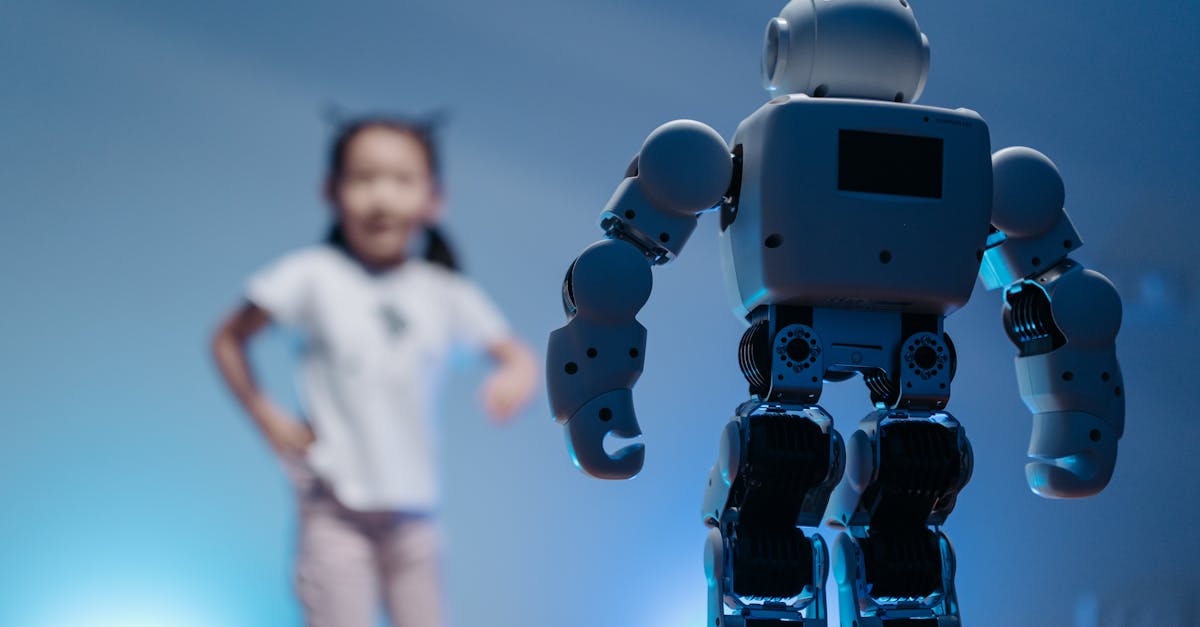
Unitree H1 & G1: Shipping Humanoids Reshaping the Global Price War

From Quadrupeds to Humanoids: The Unitree Pivot
Unitree Robotics, widely recognized for its quadruped robots like the B1 and Go2 series, has made a significant strategic pivot. For years, the company focused on industrial and consumer legged robots where stability was paramount. In late 2023, the narrative shifted with the unveiling of the H1 humanoid robot. Unlike many competitors who rely on concept renders or limited lab demos, Unitree has prioritized shipping hardware. This report evaluates the H1 and the subsequent G1 model based on verified shipping data, manufacturer specifications, and real-world deployment potential.
The humanoid robotics sector is currently divided into two camps: those claiming to ship hardware and those relying on funding announcements. Unitree falls into the former category. The H1 is not a concept. It is a 160-centimeter tall, 50-kilogram machine that has been demonstrated performing parkour and high-speed running in public videos. The G1, announced subsequently, represents a cost-cutting iteration designed for agility and lower price points. This analysis grades these claims against the hardware reality.
Unitree H1: The Heavyweight Contender
The H1 serves as Unitree's flagship entry into the general-purpose humanoid market. Official specifications released via the Unitree Global press channels indicate a 1.6-meter height and a weight of approximately 50 kilograms. The robot is designed with a focus on high-torque actuation rather than extreme miniaturization.
Technical Specifications and Claims
The H1 features 39 degrees of freedom (DOF). This includes high-precision control of the hips, knees, ankles, and torso, with significant torque output in the lower limbs to facilitate running and squatting. According to the Unitree official datasheet, the peak torque at the hip can reach over 300 Nm. This is critical for bipedal stability under load.
- Height: 160 cm
- Weight: 50 kg
- DOF: 39
- Speed: Up to 1.5 meters per second walking speed
- Battery: Integrated power systems designed for 2-3 hours of operation
The actuation system uses a mix of high-torque electric motors and harmonic drives. Unlike some competitors that utilize hydraulic systems, the H1 is fully electric. This simplifies maintenance and reduces noise, though it places limits on peak power density compared to hydraulic systems used in Boston Dynamics' Atlas.
Shipping Status and Deployment
Verifiable evidence suggests the H1 is in the shipping phase. Unitree has confirmed deliveries to research institutions and enterprise partners. In 2024, the company released videos showing the H1 performing backflips and high-speed jogging. These are not CGI renders; they are physical demonstrations. However, the price point remains a barrier to widespread adoption.
The H1 is priced at approximately $89,000 USD (roughly 650,000 RMB) for the basic version. Enhanced versions with additional sensors or payloads command higher prices. This pricing places the H1 in the realm of industrial research rather than consumer robotics. For a company to ship at this price point, the bill of materials must be managed tightly.
Unitree G1: The Agility-Focused Price Breaker
In early 2024, Unitree introduced the G1, a smaller, more affordable humanoid. The G1 is positioned as a competitor to the Tesla Optimus in terms of price, though the technical architecture differs. The G1 is shorter and lighter, prioritizing agility over payload capacity.
Technical Specifications
The G1 stands at 130 cm and weighs 22 kg. It features 25 degrees of freedom. The reduction in DOF compared to the H1 simplifies the control stack but maintains the core capability of bipedal locomotion. The G1 utilizes a similar actuation philosophy to the H1 but with optimized torque-to-weight ratios.
- Height: 130 cm
- Weight: 22 kg
- DOF: 25
- Purpose: Agility, research, and light manipulation
The G1's motor power is lower, but the control algorithms are tuned for faster response times. Unitree claims the G1 can perform rapid walking and dynamic movements. This aligns with the company's history of making agile quadrupeds. The price point is the primary differentiator here.
Pricing and Accessibility
The G1 is priced at approximately $9,000 USD. This is a significant drop from the H1 and places it within reach of universities and smaller R&D labs. However, the $9,000 price tag does not include the full stack of manipulators or advanced camera suites in the base configuration. Buyers must assess what is included in the "basic" package versus the "pro" package.
Unlike the H1, which was initially targeted at enterprise research, the G1 is marketed more broadly. Shipping has commenced for the G1 as of mid-2024. This hardware availability is a key metric. While competitors like Tesla and Figure AI are still in pilot phases, Unitree is selling units to paying customers.
India Market Availability and Pricing
For Indian robotics integrators and enterprises, the Unitree H1 and G1 present specific logistical and financial considerations. India does not yet have a direct manufacturing facility for these humanoid robots. Imports are subject to customs duties, GST, and shipping logistics.
Estimated Landed Costs
Calculating the landed cost requires understanding the current exchange rate and import duties. As of early 2024, the USD to INR exchange rate hovers around 83 to 84.
- Unitree H1: Base price $89,000. Converted to INR, this is approx ₹73.8 Lakhs. Import duties on robotics can range from 10% to 20% depending on classification. GST adds another 18% (or 5% for specific HS codes). The landed cost estimate for the H1 in India is approximately ₹1.05 Crores to ₹1.15 Crores.
- Unitree G1: Base price $9,000. Converted to INR, this is approx ₹7.5 Lakhs. With duties and GST, the landed cost estimate is roughly ₹10 Lakhs to ₹12 Lakhs.
These figures are estimates. Actual pricing depends on the specific HS code classification and whether the units are imported as complete robots or kits. Unitree India, a channel partner, handles distributor relations but does not list exact pricing on public channels for enterprise orders.
Logistical Challenges
Shipping high-precision humanoid robots to India involves significant risk. The robots contain sensitive actuators and battery packs. Import regulations for lithium batteries are strict. Clients must factor in customs clearance delays of 2 to 4 weeks. Additionally, after-sales support relies on the Indian distributor network. Unitree has expanded its presence in Asia, but service centers for humanoid-specific repair are not yet widespread in India.
Comparative Analysis: Unitree vs. Global Competitors
The humanoid robotics market is crowded with announcements. However, Unitree's value proposition rests on shipping hardware.
Competitors in the Shipping Category
- Tesla Optimus: Announced shipping milestones, but limited public verification of mass production units in the field.
- Figure AI: Focused on pilot deployments with BMW and others. Not yet widely available for purchase.
- Agility Robotics (Digit): Shipping to customers, but at a much higher price point ($200k+).
- Unitree: Shipping H1 and G1 at verified price points.
Unitree holds a distinct advantage in the "shipping hardware" metric. While competitors release videos of prototypes, Unitree has delivered working units to paying clients. This reduces the risk for buyers looking for R&D platforms.
Technical Limitations
Despite the shipping status, the H1 and G1 are not general-purpose androids. They rely heavily on the Unitree Go control stack. The AI capabilities for manipulation are limited compared to the vision systems required for complex assembly tasks. The robots excel at locomotion but require external integration for sophisticated dexterity.
The manipulation arms are functional but not high-precision industrial grade. They are suitable for picking up standard objects, not precision electronics assembly. This is a common limitation across the humanoid sector. The legs are the strong suit; the hands are the weak link.
Conclusion: A Realistic Outlook
The Unitree H1 and G1 represent a tangible shift in the humanoid robotics landscape. They are not rendered concepts. They are shipping machines with verified specifications. However, the price point remains high for the Indian market. The H1 is an enterprise research tool costing over ₹1 Crore. The G1 is a research platform costing over ₹10 Lakhs.
For Indian companies, the G1 offers a viable entry point into humanoid robotics R&D. The H1 is a high-cost investment for specific use cases requiring high torque and speed. As the supply chain matures, costs may decrease, but the hardware availability is the primary metric of success for Unitree in 2024.
RobotWale grades the H1 and G1 based on shipping hardware first. By this metric, Unitree passes. The challenge now is not manufacturing, but software maturity and cost reduction for the Indian ecosystem.
References
- Unitree Robotics Official Website - H1 Specifications. unitree.com
- Unitree Robotics Official Website - G1 Specifications. unitree.com
- TechCrunch - Unitree H1 and G1 CES 2024 Coverage. techcrunch.com
- Unitree India Partner Network and Import Regulations. robotwale.com
✓ Key takeaways
- •Hands-on view of Unitree H1 & G1: Shipping Humanoids Reshaping the Global Price War inside our Unitree H1 & G1 library.
- •Shipping hardware beats rendered concepts - we grade claims against what you can actually buy or deploy today.
- •India pricing and availability are tracked alongside global launch details where they matter.
References
Related articles
More in Unitree H1 & G1 →