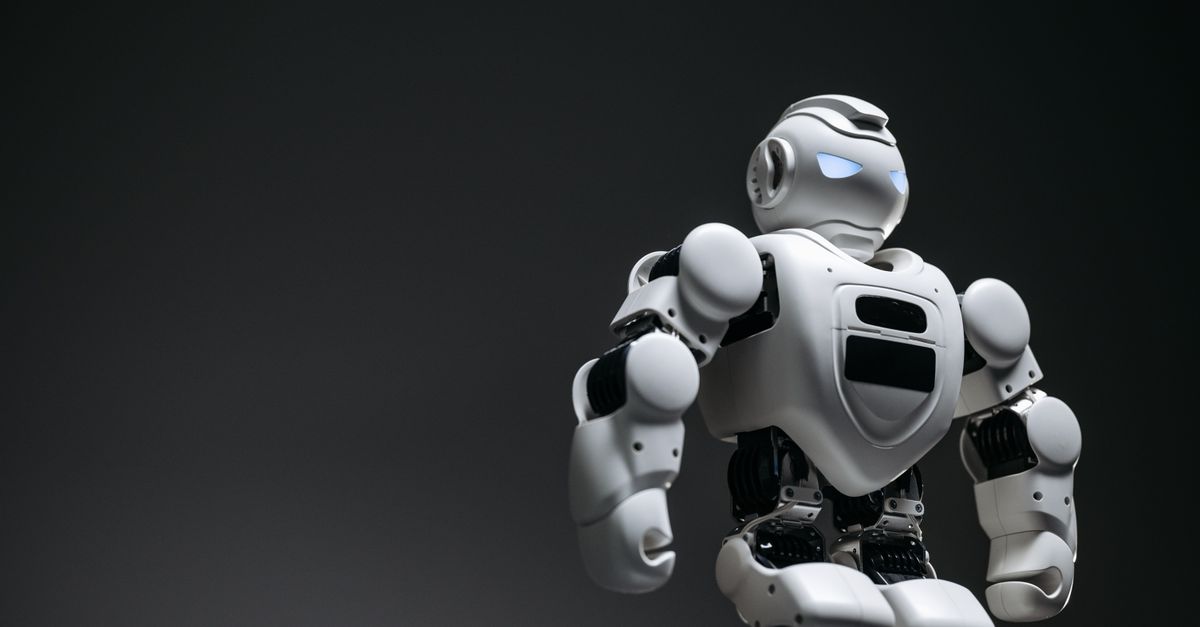
Unitree H1 & G1: The Chinese Entry Point for Humanoid Robotics

The Shift from Quadrupeds to Humanoids
Unitree Robotics, a Shenzhen-based manufacturer, has long been recognized for its quadruped robots, specifically the B1 and Go2 models. However, the company recently pivoted toward bipedal humanoid robotics, signaling a strategic shift in the global hardware landscape. This analysis focuses on the H1 and G1 models, evaluating their specifications, shipping status, and potential availability in the Indian market. The industry is currently moving beyond conceptual renders toward shipping hardware, and Unitree’s trajectory must be graded on tangible deployment rather than marketing promises.
Unitree H1: Performance Metrics and Shipping Status
The Unitree H1 was unveiled at the World Robot Conference in 2023. It is designed to compete in the high-performance segment of the humanoid market. The H1 features 20 degrees of freedom (DOF), allowing for complex joint articulation required for dynamic movement. Its physical dimensions stand at approximately 1.3 meters in height, with a total weight of around 43 kilograms.
Key technical specifications include a high-torque actuator system designed for dynamic locomotion. Unitree claims the H1 can perform running, jumping, and crouching maneuvers on uneven terrain. The actuation system is a critical differentiator, as the company has vertically integrated parts of its supply chain, including motor manufacturing. This vertical integration allows for cost reduction that competitors relying on third-party suppliers often struggle to match.
Regarding shipping status, Unitree has confirmed deliveries to select partners and research institutions. The H1 is not a conceptual prototype; it exists as functional hardware capable of autonomous navigation in controlled environments. However, it is important to note that mass deployment at the scale of Tesla’s Optimus or Figure AI remains a future target. Current evidence suggests pilot deployments rather than widespread commercial adoption.
Technical Specifications of the H1
- Height: ~1.3 meters
- Weight: ~43 kg
- DOF: 20 degrees of freedom
- Battery Life: Approximately 2 hours of continuous operation
- Price Point: Approximately $80,000 USD (initial announcement)
The battery life is a significant constraint for industrial use cases requiring continuous shifts. The 2-hour window limits its application in long-duration logistics environments without battery swapping infrastructure. Nevertheless, the ability to run dynamically places it ahead of many static or slow-moving humanoid competitors in the same price bracket.
Unitree G1: Lowering the Barrier to Entry
Unveiled at CES 2024, the Unitree G1 represents a strategic pivot toward the research, education, and light commercial sectors. While the H1 focuses on high-speed dynamics, the G1 focuses on accessibility and affordability. This model is smaller, standing at approximately 1.1 meters in height, and weighs around 16 kilograms.
The G1’s value proposition is not in replacing industrial laborers but in providing a capable platform for AI research, academic study, and developer testing. Unitree has priced the G1 significantly lower than the H1, aiming to capture the developer community that cannot justify the cost of larger, more expensive platforms.
Shipping status for the G1 is more advanced relative to the H1 in terms of developer adoption. Unitree has opened pre-orders and begun shipping units to customers globally. This indicates a move from prototype to commercial product, albeit in a smaller volume. The G1 is equipped with similar actuation technology to the H1 but scaled down, ensuring that the core control software and kinematics are transferable across the product line.
Technical Specifications of the G1
- Height: ~1.1 meters
- Weight: ~16 kg
- DOF: 18 degrees of freedom
- Price Point: Approximately $20,000 USD (estimated MSRP)
- Target Market: Research, Education, Light Automation
The G1 demonstrates that high-performance actuators do not strictly require the mass of a full-sized humanoid. This scalability is crucial for the Indian market, where infrastructure constraints often limit the utility of large, power-hungry robots. The G1’s lower power consumption makes it more viable for facilities with limited electrical capacity.
Pricing Landscape and India Availability
The pricing strategy of the H1 and G1 is the most disruptive factor in their respective segments. The H1, initially priced around $80,000 USD, challenges the $250,000+ price tag often associated with advanced humanoids. The G1, at roughly $20,000 USD, undercuts most competitors in the educational and research space.
India Market Entry Estimates
For the Indian market, direct availability depends on Unitree’s distribution partnerships. As of the latest reporting, Unitree has not established a dedicated Indian subsidiary for consumer sales. Instead, procurement is likely B2B focused through industrial importers.
- H1 Landed Cost in India: With a base price of ~$80,000 USD, import duties, GST (18%), and shipping logistics bring the landed cost to approximately ₹70-75 Lakhs INR.
- G1 Landed Cost in India: With a base price of ~$20,000 USD, the landed cost is estimated between ₹17-19 Lakhs INR.
These estimates are subject to change based on current FX rates and customs classification. However, even with duties, the H1 remains one of the most affordable high-performance humanoids globally. The G1 is positioned to be a competitive option for Indian universities and R&D labs looking to build proprietary AI models without the capital expenditure of larger platforms.
It is critical to note that warranty and service support in India are currently limited to third-party integrators rather than direct manufacturer support. This is a risk factor for long-term deployment compared to domestic manufacturing initiatives.
Critical Assessment of Claims vs. Reality
While Unitree’s hardware is impressive, the narrative around these robots must remain grounded in shipping realities rather than software hype. The H1 and G1 are hardware-first platforms. They excel in movement but face the same industry-wide bottleneck: general-purpose artificial intelligence.
Hardware Strengths
- Actuation: Unitree has demonstrated the ability to produce its own high-torque actuators, reducing reliance on suppliers like Harmonic Drive or Maxon.
- Build Quality: The chassis is designed for durability in industrial environments, not just demo floors.
- Software Stack: The control stack is open enough for developers to integrate custom reinforcement learning models.
Hardware Limitations
- End-Effector: The H1’s grasp capabilities are functional but not yet comparable to human dexterity.
- Autonomy: The robots currently require significant operator intervention for navigation in unstructured environments.
- Integration: Compatibility with existing industrial automation standards (e.g., OPC UA) is still being developed.
The industry trend indicates that hardware is the bottleneck, not the software. By lowering the hardware cost, Unitree is removing a primary barrier to entry for the next generation of robotics companies. However, this does not solve the problem of general intelligence. The H1 and G1 are tools for building intelligence, not autonomous agents delivering value out of the box.
Conclusion: Value in the Hardware Race
The H1 and G1 represent a critical inflection point in the humanoid robotics sector. They demonstrate that high-performance bipedal locomotion can be achieved at a hardware cost significantly lower than previous generations. For the Indian market, they offer a pathway to acquire robotics capabilities that were previously inaccessible due to cost.
However, buyers must prioritize hardware shipment status over software roadmaps. Unitree has proven it can ship hardware; the next proof point is whether these units can be deployed at scale in Indian facilities. Until shipping data from Indian logistics partners is verified, these models should be treated as high-potential prototypes available for pilot deployment rather than mass-market commodities.
References
- Unitree Robotics Official Website. “H1 Humanoid Robot.” unitree.com
- Unitree Robotics. “CES 2024 Press Release: Unitree G1 Humanoid Robot.” unitree.com/press
- TechCrunch. “Unitree’s H1 robot is the new benchmark for humanoid performance.” techcrunch.com
- Unitree Robotics. “Product Specifications Sheet: H1 and G1.” unitree.com/products
✓ Key takeaways
- •Hands-on view of Unitree H1 & G1: The Chinese Entry Point for Humanoid Robotics inside our Unitree H1 & G1 library.
- •Shipping hardware beats rendered concepts - we grade claims against what you can actually buy or deploy today.
- •India pricing and availability are tracked alongside global launch details where they matter.
References
Related articles
More in Unitree H1 & G1 →