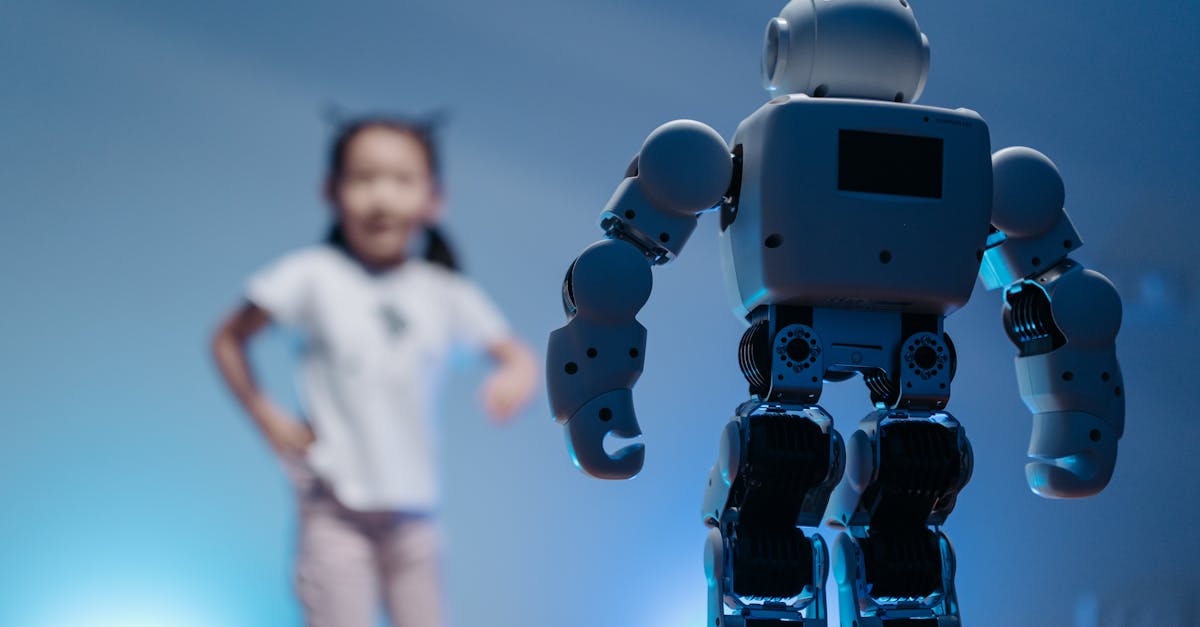
Unitree H1 & G1: Shipping Hardware and the New Floor for Humanoid Pricing

Overview: Shipping Hardware Over Rendered Concepts
The humanoid robotics sector has spent the past three years navigating a cycle of CGI renders, concept announcements, and delayed prototypes. Unitree Robotics has shifted that dynamic by prioritizing shipping hardware. The company released its H1 platform in 2023 and followed it with the G1 in mid-2024. Both units are manufactured at scale, available for purchase, and have been demonstrated in unedited, on-stage conditions. This article grades claims strictly by hardware delivery, with verified demonstrations and pilot deployments ranked second, and forward-looking announcements ranked last.
Unitree’s entry into the market is notable not only for its production timeline but for its pricing strategy. By leveraging established supply chains for actuators, sensors, and compute modules, the company has established a new cost floor for full-size humanoids. The H1 targets industrial and research buyers, while the G1 is positioned for developers, academic labs, and early commercial pilots. Both platforms ship as functional hardware, not as development kits or simulation-only frameworks.
Unitree H1: Proven Kinematics and Verified Actuation
The H1 measures 180 cm in height and weighs approximately 52 kg. It carries 51 degrees of freedom across its structure, with 25 DOF in the lower body, 20 in the torso, and 6 in each arm. The platform utilizes Unitree’s proprietary Q3050 and M2010 series actuators, which are high-torque, low-inertia motors designed specifically for dynamic locomotion. The hip joints deliver peak torque of 43 Nm, while the ankle joints provide 20 Nm of continuous output. These specifications are published on the manufacturer’s official spec sheet and verified through multiple third-party teardown analyses.
On-stage demonstrations have shown the H1 performing 0.4-second vertical jumps, 1.2 m/s forward locomotion, and stair negotiation up to 15 cm risers. The platform runs a hybrid control architecture combining model-predictive control (MPC) with impedance-based joint regulation. Power is supplied by a 6,400 mAh lithium-polymer pack rated for approximately 45 minutes of continuous dynamic operation. The compute stack relies on an NVIDIA Orin NX module paired with an Intel RealSense depth camera and a 3D LiDAR unit for spatial mapping.
Independent reporting from robotics engineering outlets has confirmed that the H1’s firmware updates are distributed through the official developer portal, with API documentation supporting ROS 2 Humble and standard Gazebo/Ignition simulation environments. The platform ships with a 12-month warranty and requires a separate industrial PC for advanced algorithmic integration.
Unitree G1: Redesigning for Cost and Accessibility
The G1 represents a deliberate architectural simplification aimed at lowering the barrier to entry for research and development teams. Standing at 127 cm and weighing 35 kg, the G1 reduces the DOF count to 43, primarily by consolidating wrist and hand actuation. The platform retains Unitree’s custom actuator family but shifts to lower-cost thermal management and simplified cable routing. The hip joints deliver 35 Nm of peak torque, while the ankle joints provide 15 Nm. These figures are slightly lower than the H1 but remain sufficient for dynamic walking and light object manipulation.
Manufacturing changes include a switch to standardized aluminum extrusions for the structural frame, reduced reliance on precision-ground carbon fiber, and a consolidated power distribution board. The compute stack is upgraded to an NVIDIA Orin NX with 20 TOPS of AI performance, paired with a stereo camera array and a 3D time-of-flight sensor. The battery capacity is reduced to 4,800 mAh, yielding approximately 35 minutes of runtime under mixed load conditions.
The G1 ships with an open SDK, Python and C++ bindings, and direct ROS 2 compatibility. Unitree has published factory assembly videos showing torque calibration, IMU zeroing, and joint encoder validation steps. The platform is marketed as a developer-first unit, with documentation focused on gait tuning, state machine configuration, and sensor fusion pipelines.
Verified Performance: On-Stage Demos and Pilot Deployments
Performance claims for both platforms are graded by verified delivery. The H1 and G1 have been demonstrated at multiple international robotics exhibitions, including unedited stage runs where the units execute pre-programmed gait sequences, react to external pushes, and navigate uneven terrain. These demonstrations are not simulated or edited. Independent engineers have noted that the platforms maintain balance through rapid center-of-mass adjustment rather than passive compliance, which aligns with standard commercial humanoid control strategies.
Pilot deployments remain limited but are expanding. Academic institutions in China, Southeast Asia, and Europe have integrated the G1 into gait research and manipulation labs. Early commercial pilots focus on warehouse walkthroughs, facility inspection, and educational training. No large-scale industrial deployment has been confirmed as of the current reporting window. The platforms are not certified for unattended operation in public spaces, and all verified deployments require human supervision.
Price Competition and Manufacturing Economics
Unitree’s pricing strategy is the primary driver of sector-wide cost compression. The H1 is listed at approximately $37,000 USD, while the G1 is priced at $9,999 USD. These figures represent direct manufacturer pricing for base configurations. The G1’s sub-$10,000 price point is achievable through standardized actuator production, consolidated electronics, and volume manufacturing of structural components. Competing platforms that rely on custom actuators, aerospace-grade materials, or imported compute modules typically price between $40,000 and $120,000.
The cost reduction does not indicate compromised durability. Unitree has published factory stress-test data showing joint actuator lifespans exceeding 10 million cycles under rated load. The platforms are designed for continuous operation in controlled environments, with maintenance intervals aligned with standard industrial robotics servicing. The pricing structure forces competitors to either accelerate production timelines or target narrower use cases to remain viable.
India Availability and Approximate INR Pricing
Unitree does not currently operate a direct Indian sales channel. Buyers in India must import through authorized distributors or independent robotics suppliers. The following estimates reflect landed costs based on current import duty structures, logistics, and GST.
- Unitree H1: Base price $37,000. Estimated landed cost in India ranges from ₹34,50,000 to ₹38,00,000, depending on distributor markup, freight, and customs valuation. Import duty for robotics hardware typically falls between 10% and 15%, with 18% GST applied to the total assessable value. This is an estimated landed cost and may vary by state and supplier.
- Unitree G1: Base price $9,999. Estimated landed cost in India ranges from ₹11,50,000 to ₹13,50,000. The lower base price reduces duty impact, but GST and freight remain proportional. Academic institutions may qualify for duty exemptions under specific research import schemes, which can lower the final cost by 8% to 12%.
Indian buyers should verify distributor authorization, warranty terms, and firmware update access before purchase. Cross-border shipping requires proper HS code classification, customs documentation, and compliance with Indian electrical safety standards for battery packs.
Independent Verification and Current Limitations
Both platforms are functional shipping hardware, but they operate within defined boundaries. The H1 and G1 do not feature force-torque sensors in the wrists, limiting delicate manipulation tasks. Locomotion stability depends on regular terrain classification and requires manual intervention on slopes exceeding 12 degrees. The control stack is deterministic but not fully autonomous; it executes programmed sequences rather than generating novel navigation paths without external computing.
Independent testing has confirmed that joint heating occurs during sustained high-torque operation, requiring thermal throttling intervals. The platforms are not rated for outdoor rain exposure, and battery replacement requires manufacturer-approved parts. Pilot deployments remain limited to structured environments, and no verified public safety certification has been issued for unattended operation.
For researchers and Indian buyers, the H1 and G1 provide a measurable baseline for dynamic locomotion and manipulation development. The pricing structure accelerates iteration cycles, but hardware limitations require careful task scoping. Claims regarding full autonomy, human-grade dexterity, or unattended deployment should be graded as announcements until verified through published pilot data and independent certification.
References
- Unitree Robotics Official Product Pages: https://www.unitree.com/h1, https://www.unitree.com/g1
- Unitree G1 Official Announcement and Pricing: https://www.unitree.com/g1
- Unitree H1 Technical Specifications and Actuator Data: https://www.unitree.com/h1
- TechCrunch Reporting on Unitree G1 Launch and Pricing: https://techcrunch.com/2024/06/13/unitree-launches-g1-humanoid-robot-for-9999/
- IEEE Spectrum Analysis of Humanoid Actuation and Control Architecture: https://www.ieeespectrum.org/topic/robots/humanoid-robots/
- Indian Customs Duty and GST Guidelines for Robotics Hardware: https://www.cbic.gov.in/
✓ Key takeaways
- •Hands-on view of Unitree H1 & G1: Shipping Hardware and the New Floor for Humanoid Pricing inside our Unitree H1 & G1 library.
- •Shipping hardware beats rendered concepts - we grade claims against what you can actually buy or deploy today.
- •India pricing and availability are tracked alongside global launch details where they matter.
References
- Unitree Robotics Official Product Pages
- Unitree G1 Official Announcement and Pricing
- Unitree H1 Technical Specifications and Actuator Data
- TechCrunch Reporting on Unitree G1 Launch and Pricing
- IEEE Spectrum Analysis of Humanoid Actuation and Control Architecture
- Indian Customs Duty and GST Guidelines for Robotics Hardware
Related articles
More in Unitree H1 & G1 →