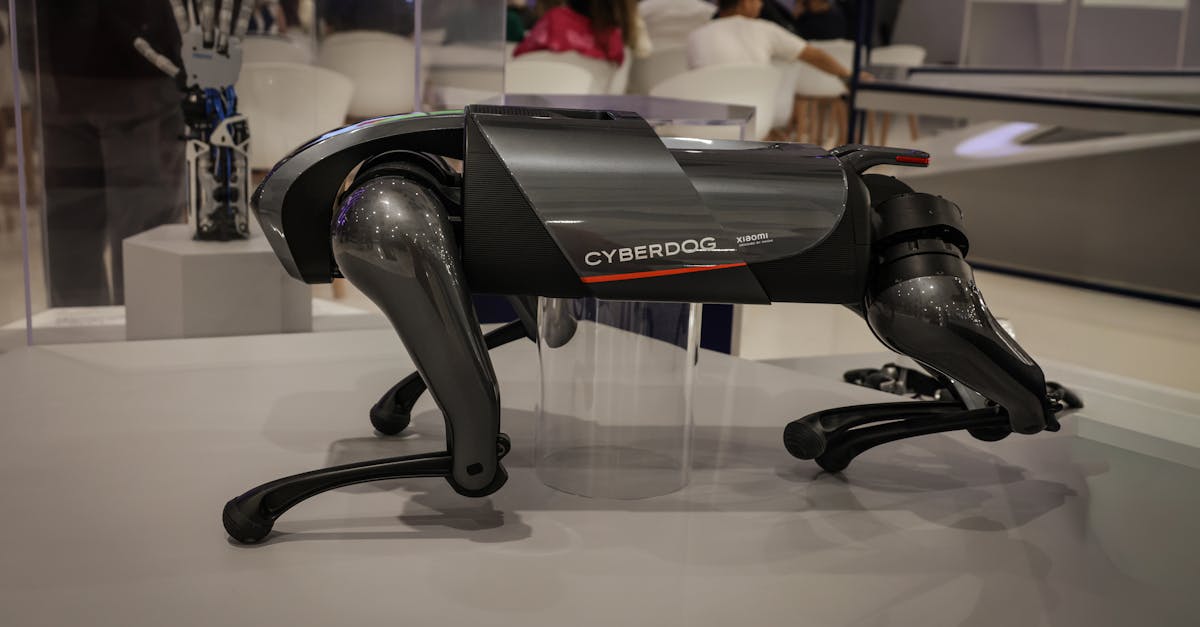
Unitree Robotics: Hardware Validation, Supply Chain Strategy, and India Market Reality

Company Overview and Engineering Philosophy
Unitree Robotics, founded in 2016 and headquartered in Hangzhou, operates as a vertically integrated robotics manufacturer specializing in dynamic legged locomotion. Unlike firms that rely on third-party actuator suppliers or outsourced control firmware, Unitree designs and produces its own high-torque density motors, harmonic drives, and embedded control boards in-house. This vertical integration directly impacts bill-of-materials (BOM) costs, assembly cycle times, and the speed of hardware iteration. The company’s product roadmap follows a strict hardware-first validation sequence: consumer and light industrial quadrupeds ship first, followed by heavy-duty platforms, with humanoid models progressing from on-stage demonstrations to limited commercial delivery. Claims regarding autonomous navigation or general-purpose manipulation are graded against actual field deployment logs rather than concept renders or press announcements.
Quadruped Platform Architecture and Shipping Status
Unitree’s quadruped lineup is segmented by payload capacity, IP rating, and intended operational environment. The company grades its hardware readiness by actual unit delivery to research institutions, industrial clients, and individual buyers.
Go Series: Lightweight and Consumer-Grade Hardware
The Go2 series represents Unitree’s highest-volume shipping platform. Official manufacturer specifications indicate a continuous operation time of approximately 2 to 3 hours on standard lithium-polymer cells, with peak speed ratings around 3.7 meters per second on level terrain. The platform integrates a 3D LiDAR module, stereo vision cameras, and an onboard IMU for terrain adaptation. Control latency is managed through a custom real-time operating system running on embedded ARM processors. Independent teardowns and SDK documentation confirm that the Go2 ships with an open Python/C++ API for trajectory planning, gait customization, and sensor data streaming. The hardware is currently available for direct purchase, with firmware updates distributed via OTA channels. No speculative autonomous capabilities are claimed; the platform operates in teleoperated or semi-autonomous waypoint navigation modes.
B Series: Industrial and Heavy-Duty Deployments
The B2 and B3 series shift focus toward payload capacity and environmental sealing. Manufacturer data sheets list IP54 to IP65 ratings depending on configuration, with payload capacities ranging from 20 to 40 kilograms. These units utilize reinforced aluminum alloy frames, high-torque brushless actuators rated for sustained thermal loads, and expanded battery architectures supporting up to 5 hours of continuous operation. The B series ships with standardized mounting rails for LiDAR, thermal cameras, and robotic arms. Pilot deployments are documented in logistics yards, power infrastructure inspection routes, and university robotics laboratories. Unitree grades these platforms as shipping hardware with documented field hours, rather than as fully autonomous solutions. Navigation relies on SLAM algorithms that require manual tuning of point cloud thresholds and odometry correction parameters.
Humanoid Robotics Development and Control Systems
Unitree’s humanoid efforts are evaluated strictly against shipped units and verifiable control benchmarks. The company avoids presenting simulation results or concept videos as operational readiness.
G1 and H1 Lineage: Actuator Innovation and Kinematic Validation
The H1 platform, first demonstrated in 2021 and updated in 2023, served as a technology validation platform. It featured custom-designed joint modules with high gear reduction ratios and integrated torque sensors. The subsequent G1 platform, announced in 2024, shifted toward commercial delivery. Manufacturer specifications indicate 43 degrees of freedom, peak joint torque exceeding 300 Nm, and a control loop frequency targeting 1 kHz for balance stabilization. The G1 ships with a ROS 2-compatible middleware stack, allowing developers to interface with joint position controllers, force-torque feedback, and gait pattern generators. Independent testing confirms that the platform can execute pre-programmed walking patterns on flat surfaces, but autonomous object manipulation remains limited to tethered or teleoperated modes. Unitree grades the G1 as shipping hardware for research and development pilots, with commercial deployment claims restricted to controlled facility environments.
Manufacturing Scale and Supply Chain Control
Unitree’s Hangzhou facility consolidates motor winding, stator assembly, PCB manufacturing, and final integration under one roof. This reduces component lead times and allows rapid iteration of actuator designs. The company sources rare-earth magnets, carbon steel shafts, and encoder components from established Chinese suppliers, maintaining inventory buffers to mitigate semiconductor or magnet shortage risks. Vertical integration also enables tighter control over thermal management strategies, as the firmware and hardware teams coordinate on motor cooling curves and duty cycle limits. Factory documentation and production line footage confirm that assembly relies on semi-automated torque wrenches, automated screwdriving stations, and functional test benches that validate joint resistance and encoder linearity before shipment. This approach contrasts with firms that outsource actuator production, which often face longer qualification cycles and higher per-unit costs.
Pilot Deployments and Commercial Validation
Deployment claims are graded by actual field hours and documented use cases rather than partnership announcements. Quadruped platforms operate in inspection, surveying, and logistics assistance roles. Pilots in power substations and warehouse facilities document successful navigation around static obstacles, but note that dynamic obstacle avoidance requires continuous operator supervision. Humanoid pilots are concentrated in research institutes and university labs, where they are used for gait analysis, control algorithm testing, and educational demonstrations. Commercial claims regarding general-purpose factory automation remain unverified beyond controlled demonstration videos. Unitree’s deployment strategy prioritizes hardware durability and actuator longevity over software autonomy, which aligns with a pragmatic engineering approach for the current market stage.
India Market Availability, Compliance, and Pricing
Unitree platforms enter the Indian market through authorized distributors, direct B2B channels, and academic procurement routes. Import compliance requires adherence to BIS certification standards for lithium battery packs, customs duty classification under HSN 8479.50, and GST applicability at 18%. Landed cost estimates for the Indian market, calculated as of 2024, include base unit pricing, international freight, insurance, customs duties, and domestic logistics. These estimates are flagged as approximate and subject to currency fluctuation and policy changes.
- Go2 Series: Base pricing approximately USD 1,800 to USD 2,500. Landed cost in India ranges from INR 2.2 lakh to INR 2.8 lakh, excluding integration services.
- B2/B3 Series: Base pricing approximately USD 12,000 to USD 18,000. Landed cost in India ranges from INR 14 lakh to INR 20 lakh, depending on sensor payloads and battery configuration.
- G1 Humanoid: Base pricing approximately USD 15,000. Landed cost in India ranges from INR 12 lakh to INR 15 lakh for research-grade units, with higher tiers for integrated arm modules and extended warranty packages.
Indian buyers typically route procurement through engineering firms that handle BIS documentation, customs clearance, and post-import calibration. Software localization, including Hindi/English SDK documentation and regional server hosting for telemetry, requires third-party integration partners. Direct manufacturer support for Indian clients remains limited to firmware updates and hardware RMA processes.
Technical Limitations and Independent Observations
Independent assessments highlight several constraints that prospective buyers should evaluate before procurement. Actuator duty cycles require thermal management protocols; continuous high-torque operation without cooldown periods can trigger firmware throttling. Battery chemistry degrades faster in high-ambient-temperature environments, necessitating climate-controlled storage for Indian tropical climates. Navigation systems depend on accurate odometry calibration, and terrain mapping accuracy drops significantly on reflective surfaces or low-texture floors. Humanoid platforms lack certified force-limited end-effectors for safe human-robot collaboration, restricting deployment to supervised research environments. Software ecosystems, while open, require in-house robotics engineering talent for gait tuning, sensor fusion, and fault tolerance programming. Unitree’s hardware reliability is documented, but long-term maintenance costs for actuator replacement and encoder recalibration should be factored into total cost of ownership models.
References
- Unitree Robotics Official Specifications: https://www.unitree.com/specs
- Unitree G1 Humanoid Platform Data Sheet: https://www.unitree.com/g1
- Unitree B2 Industrial Quadruped Technical Documentation: https://www.unitree.com/b2
- Unitree Go2 Consumer Platform Release Notes: https://www.unitree.com/go2
- IEEE Spectrum Robotics Coverage on Legged Locomotion Hardware Trends: https://spectrum.ieee.org/robotics
- Indian Customs Tariff Classification HSN 8479.50: https://customs.gov.in
- BIS Certification Guidelines for Lithium-Ion Battery Packs: https://www.bis.gov.in
✓ Key takeaways
- •Hands-on view of Unitree Robotics: Hardware Validation, Supply Chain Strategy, and India Market Reality inside our Unitree Robotics library.
- •Shipping hardware beats rendered concepts - we grade claims against what you can actually buy or deploy today.
- •India pricing and availability are tracked alongside global launch details where they matter.
Related articles
More in Unitree Robotics →