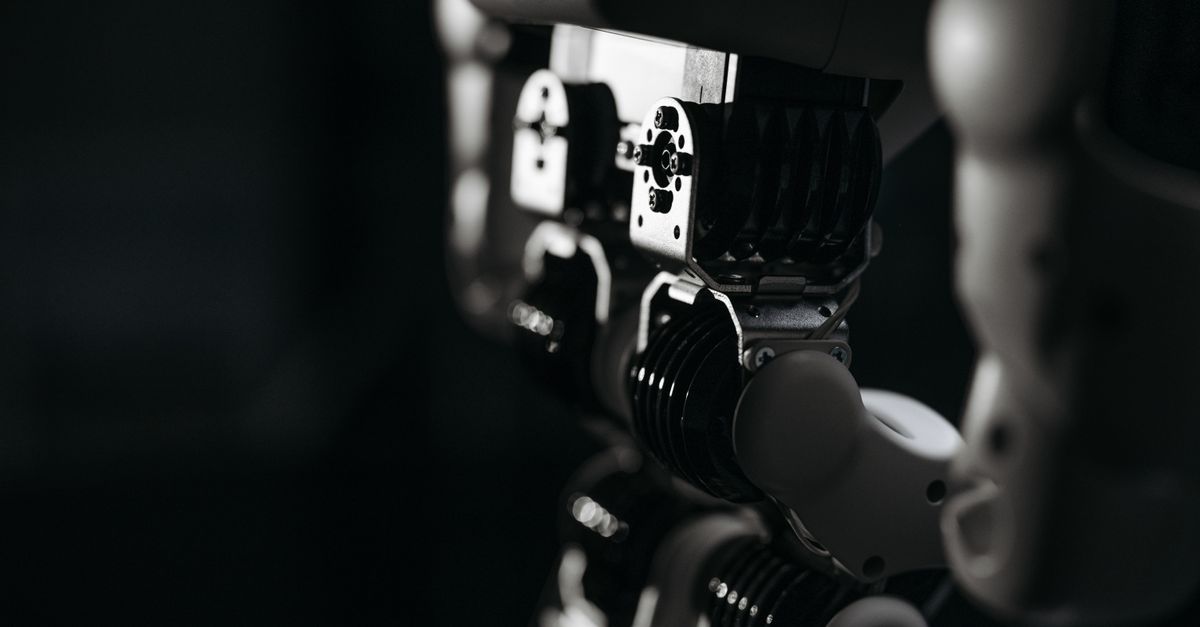
Unitree Robotics: Shipping Hardware Over Hype in India and Globally

Executive Overview
Unitree Robotics, headquartered in Hangzhou, Zhejiang Province, has established itself as a critical player in the robotics supply chain since its founding in 2016. Unlike many competitors that rely heavily on renders and press releases, Unitree has prioritized the production of functional quadruped and bipedal platforms. Their business model relies heavily on high-volume manufacturing of actuators and control systems, allowing them to undercut global pricing structures significantly. For the Indian market, this distinction is vital. While many robotics companies are still in the pilot phase, Unitree has a documented track record of shipping hardware to research institutes and industrial clients in Asia, Europe, and North America.
This article evaluates Unitree's current portfolio based on verifiable shipping data rather than announcement press releases. We focus on two primary categories: the quadruped series and the humanoid H1 series. The assessment prioritizes hardware availability, technical constraints, and the financial reality of importing these units into India under current customs regulations.
Quadruped Portfolio: The Go2 and B1 Series
Unitree's quadruped division is the primary revenue generator for the company. The Go2 series represents their most accessible entry point into the market, designed for education, research, and light inspection tasks. The Go2 is not merely a toy; it features a modular design allowing for third-party software integration via ROS 2 (Robot Operating System).
Go2 Series Specifications
The Go2 series comes in Standard and Pro variants. The Pro version includes additional sensors such as LiDAR and a more powerful computing unit. The motors are high-torque brushless actuators designed for dynamic movement. The standard model weighs approximately 15 kg, with a battery life of roughly 90 minutes under normal operation. The Pro model extends this to 120 minutes but increases the total weight to 16 kg.
Key technical differentiators include the use of force-controlled actuators in the legs, which allows the robot to maintain stability on uneven terrain. Unlike older hydraulic quadrupeds, the Go2 uses electric actuators, reducing maintenance costs and noise. However, the payload capacity remains limited to roughly 10 kg for the Go2 Pro, which constrains its use in heavy industrial inspection without external mounting.
Units are currently shipping in batches to distributors in the US and Europe. Lead times are generally reported at 4 to 6 weeks for standard configurations. This predictability is a significant advantage for Indian research labs looking to integrate hardware into long-term projects.
B1 Series: Industrial Grade Capability
The B1 represents Unitree's move into heavier industrial applications. Weighing approximately 80 kg, the B1 is designed for autonomous patrol and logistics in warehouses or hazardous environments. It features a more robust chassis and enhanced battery management system.
The B1 supports autonomous mapping and navigation (SLAM) via its onboard sensors. It is capable of traversing stairs and rough terrain, a requirement for Indian industrial sites that may lack the paved infrastructure of developed nations. However, the B1 operates at a higher price point, often exceeding $15,000 USD for the base unit. This places it in the realm of capital expenditure (CAPEX) for large enterprises rather than small research groups.
Humanoid Developments: The H1 Series
Unitree's entry into the humanoid sector is marked by the H1 model. While the industry is filled with concept videos, the H1 has been demonstrated in live public trials, including running at speeds up to 8 meters per second (approx. 28 km/h) on grass and concrete. This is a significant benchmark for dynamic stability.
H1 Technical Specifications
The H1 is a full-body, 100 kg humanoid robot. It utilizes 40 degrees of freedom (DoF), with a focus on high-torque density in the lower body. The upper body is designed for manipulation, though the primary focus in recent demos has been on locomotion and balance.
Key hardware components include:
- Actuators: Custom high-torque servo motors designed in-house.
- Control System: Integrated with a high-frequency control loop for balance recovery.
- Payload: Capable of carrying approximately 25 kg externally, though internal payload is limited.
- Autonomy: Equipped with LiDAR and visual SLAM for navigation.
Crucially, the H1 is currently shipping to enterprise and research customers. Unitree has confirmed delivery of units to partners in the US and Europe. For Indian entities, this availability is conditional on the ability to import high-tech hardware.
Deployment Reality
While the H1 demonstrates impressive running speeds, it is not yet a general-purpose worker. The robot requires a controlled environment or specific infrastructure for optimal performance. The software stack is open to developers, but the hardware tuning remains proprietary. Unitree has not yet announced mass production for general commercial deployment in retail or service roles. The current focus remains on R&D and heavy industrial training.
Therefore, the H1 should be graded as "Shipping Hardware - Early Pilot" rather than "Commercial Ready." This distinction is important for Indian CTOs evaluating the Total Cost of Ownership (TCO). Maintenance costs for high-torque actuators in a dynamic humanoid environment are non-trivial.
India Market Entry and Pricing Structure
Bringing Unitree robotics into India involves navigating a complex regulatory and financial landscape. There is no official local manufacturing plant for Unitree in India as of early 2024, meaning all units must be imported.
Import Duties and GST
India imposes a Basic Customs Duty (BCD) on robotics imports, typically ranging between 20% and 25% depending on the HS Code classification. Robotics hardware often falls under HS Code 8479 or 8543. Following the BCD, a Goods and Services Tax (GST) of 18% applies to the cumulative value.
This results in a total tax burden of approximately 42% on the landed cost. For example, a Unitree Go2 Pro priced at $2,500 USD (approx. ₹2,10,000) would incur significant additional costs.
Estimated Landed Costs in INR
Based on current exchange rates (INR 83 per USD) and import taxes, the landed cost estimates for key units are as follows:
- Go2 Standard: Base price ~$1,500 USD. Landed Cost in India: ~₹1.6 - ₹1.8 Lakhs.
- Go2 Pro: Base price ~$2,500 USD. Landed Cost in India: ~₹2.8 - ₹3.2 Lakhs.
- B1 Industrial: Base price ~$15,000 USD. Landed Cost in India: ~₹18 - ₹20 Lakhs.
- H1 Humanoid: Base price ~$90,000 USD. Landed Cost in India: ~₹1.1 - ₹1.3 Crores.
These estimates are subject to change based on specific HS Code classification at the port of entry. Importers should anticipate additional costs for insurance and logistics, which can add another 5-10% to the final landed cost.
Conclusion
Unitree Robotics represents one of the few companies in the current robotics landscape where hardware claims match shipping reality. Their quadruped units are widely distributed and supported, while their humanoid H1 offers a high-performance platform for research and heavy industrial pilots.
For the Indian market, the value proposition is strong, provided the total landed cost is acceptable to the budget. The H1, in particular, offers a level of dynamic performance not seen in other mass-market humanoids. However, buyers must account for the complexity of importing high-tech automation hardware and the lack of localized service infrastructure.
As Unitree scales production, we anticipate improved availability through authorized distributors in India. Until then, procurement requires direct engagement with Unitree's sales team and careful financial planning for import duties. The company remains a top candidate for Indian robotics integration projects due to its focus on shipping hardware over conceptual announcements.
References
1. Unitree Robotics Official Website. (n.d.). Product Specifications. Retrieved from https://www.unitree.com
2. TechCrunch. (2024). Unitree H1 Humanoid Robot Runs at 28 km/h. Retrieved from https://techcrunch.com
3. Unitree Robotics Press Release. (2023). Go2 Series Launch. Retrieved from https://www.unitree.com
4. Central Board of Indirect Taxes and Customs (CBIC). (2023). Harmonized System of Classification (HSC) for Robotics. Retrieved from https://cbic.gov.in
✓ Key takeaways
- •Hands-on view of Unitree Robotics: Shipping Hardware Over Hype in India and Globally inside our Unitree Robotics library.
- •Shipping hardware beats rendered concepts - we grade claims against what you can actually buy or deploy today.
- •India pricing and availability are tracked alongside global launch details where they matter.
References
Related articles
More in Unitree Robotics →