IIT Bombay and DST Inaugurate National Humanoid Robotics Research Lab - RobotWale News

IIT Bombay and DST Launch Dedicated Humanoid Robotics Facility
The Indian Institute of Technology Bombay, in partnership with the Department of Science and Technology (DST), officially inaugurated the National Humanoid Robotics Research Lab (NHRRL) on Monday. The ₹120 crore facility is located within the IIT Bombay Powai campus and will serve as the country’s first dedicated research hub focused exclusively on bipedal humanoid platforms. The launch marks a coordinated effort to accelerate indigenous development of advanced robotics systems for industrial and domestic applications.
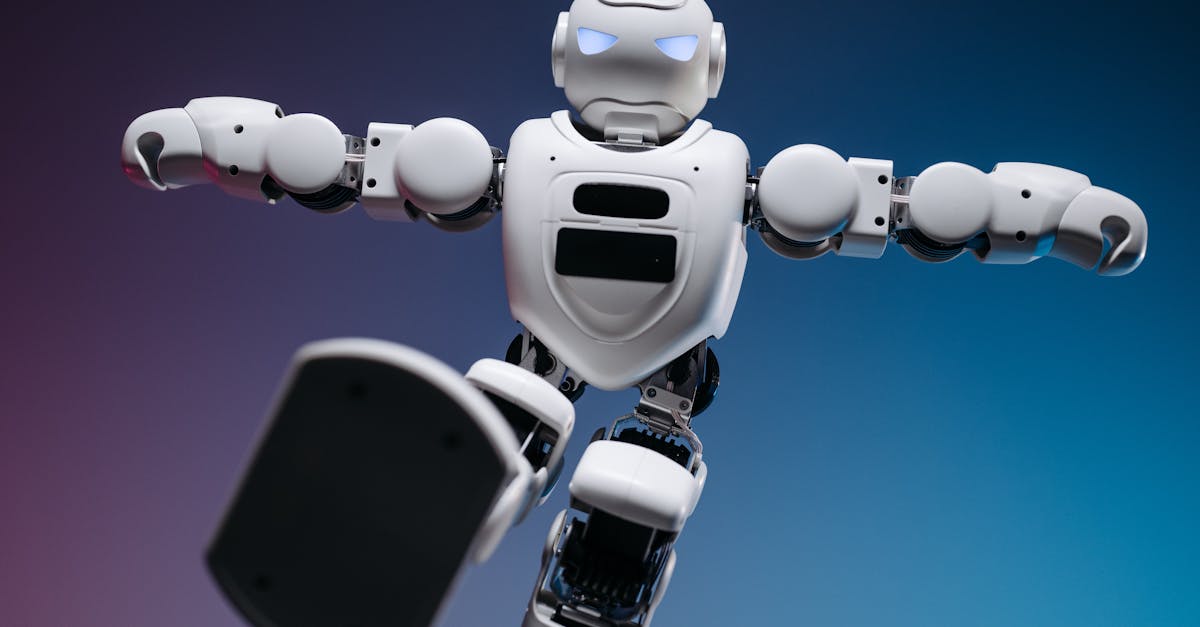
Researchers at the new facility will concentrate on high-torque joint actuation, dynamic balance control, and multimodal perception systems. The lab will integrate a custom-designed robotic testbed featuring 30 degrees of freedom, force-torque sensors at each ankle and wrist, and a localized edge-computing module running real-time reinforcement learning algorithms. Development timelines target a functional prototype by Q3 2025, followed by controlled field trials in manufacturing environments by early 2026.
Technical Framework and Open-Source Strategy
A core mandate of the NHRRL is the publication of all software stacks under an open-source license. The research team will release modular control architectures, simulation environments compatible with ROS 2, and standardized hardware interface specifications. This approach aims to lower the barrier for startups and academic groups across India to iterate on existing designs rather than developing foundational kinematic models from scratch. The lab will also host a shared motion capture arena and a high-fidelity physics simulation cluster to validate fall recovery and heavy-load manipulation routines before physical deployment.
India Market Relevance and Pricing Targets
The initiative directly addresses India’s growing demand for automation in logistics, eldercare, and precision manufacturing. By leveraging domestic semiconductor partnerships and locally sourced actuators, the NHRRL has set a target manufacturing cost of under ₹22 lakh per unit for the initial commercial variant. This pricing structure positions the platform as a viable alternative to imported humanoid robots, which currently retail between $150,000 and $250,000 in the Indian market. The DST has allocated ₹45 crore in the first phase for talent acquisition, sensor procurement, and infrastructure scaling, with additional funding tied to industry adoption milestones. Pilot deployments are scheduled for three automotive component plants and two Tier-2 healthcare facilities in Maharashtra and Karnataka by late 2026. The facility will also establish a standardized safety certification protocol aligned with Bureau of Indian Standards (BIS) guidelines for autonomous mobile manipulators.
More in Reviews & Opinion