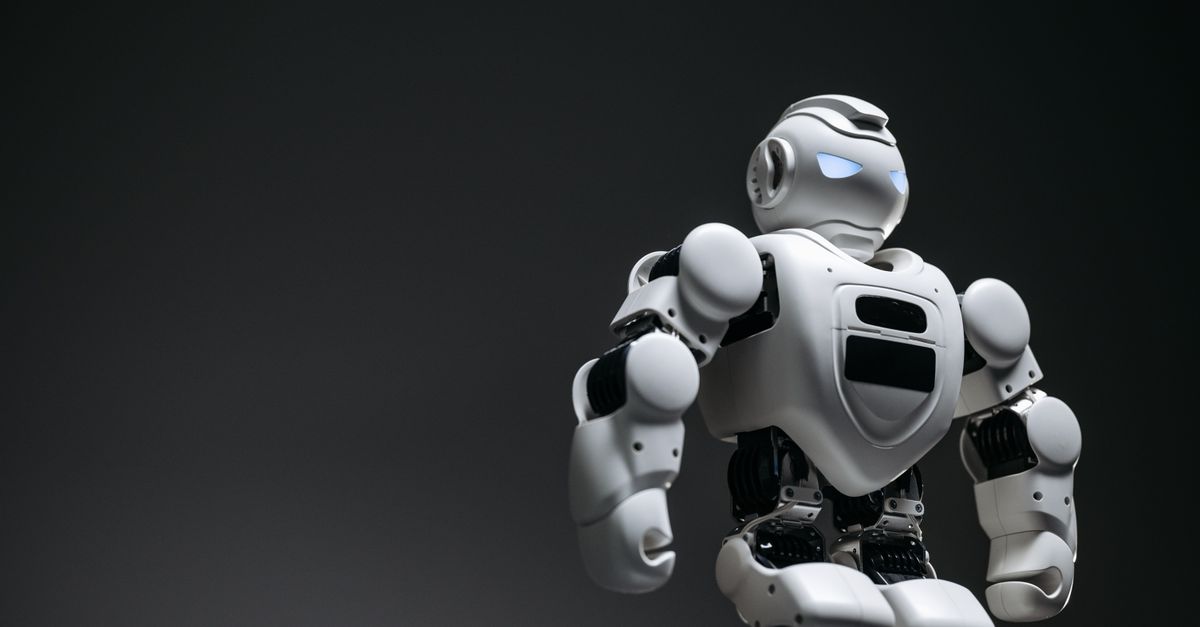
1X NEO: Engineering a Soft-Bodied Humanoid for Household Deployment

Overview and Development History
The 1X NEO is a next-generation humanoid robot developed by 1X Technologies, a Norwegian robotics company founded in 2014 by Alexander Rudjord and Anders Heiberg. The company originally gained attention for the Electra series, a heavy-duty bipedal platform designed for industrial and hazardous environments. The NEO represents a strategic pivot toward compliant, soft-bodied architectures optimized for unstructured domestic environments. Unlike rigid exoskeleton designs, the NEO integrates silicone-composite skins, series-elastic actuation, and distributed compliance to reduce impact forces and improve human-robot interaction safety.
The platform was first unveiled in 2024 as a dedicated household robot, targeting tasks such as object manipulation, light cleaning, and basic assistance. The announcement emphasized modularity, serviceability, and a control stack built on open-source robotics frameworks. All specifications released to date are classified as manufacturer-announced or prototype-stage data. No mass production units have been shipped to end consumers as of the current reporting window. Claims regarding task autonomy, battery endurance, and pricing are graded as announcement-tier until validated by shipped hardware or third-party pilot reports.
Soft-Bodied Architecture and Actuation
The core differentiator of the NEO is its soft-body construction. The chassis utilizes a hybrid framework of carbon-fiber-reinforced polymer load-bearing members and silicone-polymer surface layers. This design serves three engineering purposes: impact attenuation, acoustic dampening, and reduced joint stiffness during human contact. The skin is segmented into replaceable panels, allowing maintenance without full chassis disassembly.
Compliance and Joint Design
Actuation relies on direct-drive high-torque brushless motors paired with series-elastic elements. The elastic components store and release mechanical energy during gait cycles, improving efficiency and reducing peak motor currents. Joint torque limits are software-enforced, with hardware-level current limiting and mechanical fuses integrated into the drive train. The NEO employs 33 degrees of freedom in its core body, with additional degrees of freedom allocated to the hands and head. All joints utilize harmonic drives or cycloidal reducers where high ratio reduction is required, while lower-torque appendages use belt-driven or planetary stages to minimize cost and weight.
Power and Thermal Management
Power distribution is managed through a centralized battery pack rated at approximately 48V nominal voltage, composed of lithium-ion cells with integrated battery management systems (BMS). The BMS monitors cell temperature, voltage balance, and isolation resistance. Thermal regulation relies on passive aluminum heat sinks coupled with forced-air convection channels routed through the torso. Motor windings are insulated with class-F or class-H materials to withstand sustained duty cycles. The system is designed to operate within a -10°C to 40°C ambient range, with derating applied above 35°C to protect power electronics.
Control Stack and Perception
The NEO runs on a ROS 2 (Robot Operating System 2) architecture, utilizing Humble or Iron distributions depending on the firmware revision. The control stack separates real-time motion control from high-level task planning. Motion primitives for walking, grasping, and standing are generated by a model-predictive controller (MPC) that solves contact wrench optimization at 500Hz on an embedded NVIDIA Jetson Orin or equivalent compute module. State estimation fuses IMU data, joint encoders, and force-torque sensors mounted in the wrists and ankles.
Perception relies on a stereo camera rig, a depth-sensing LiDAR unit, and tactile arrays embedded in the fingertips. Sensor fusion occurs via an extended Kalman filter (EKF) that outputs a 6D pose estimate for grasped objects. Manipulation policies are trained using reinforcement learning in simulation, with domain randomization applied to textures, friction coefficients, and lighting conditions. Real-world fine-tuning is conducted through teleoperation demonstrations, which are recorded and used for imitation learning pipelines.
Shipping Status and Pilot Deployments
As of the current reporting period, the 1X NEO remains in the prototype and limited pilot phase. The company has disclosed that engineering validation units (EVUs) are being distributed to select research partners and early-access programs. No consumer retail channels have been activated. Pilot deployments are restricted to controlled domestic or lab environments where safety protocols and remote monitoring are enforced. Independent verification of task completion rates, battery degradation curves, or long-term reliability data is not yet available. All performance claims should be treated as manufacturer-reported until third-party pilot reports or shipping hardware metrics are published.
India Availability and Landed Cost Estimate
The 1X NEO is not officially distributed in India. 1X Technologies has not announced a local distributor, authorized service center, or India-specific compliance certification (such as BIS or WPC) as of this reporting window. Importing the unit would require individual import clearance under India's customs tariff heading for robotic assemblies, subject to applicable basic customs duty, social welfare surcharge, and GST. Regulatory clearance for autonomous mobile robots also involves potential scrutiny under the Drone Rules framework and local municipal bylaws regarding public-space operation, though domestic use remains largely unregulated at present.
Approximate landed cost estimation for India is provided for reference only. The manufacturer has indicated a target retail price of approximately $150,000 USD for early production units. Applying a conservative 15% import duty, 3% social welfare surcharge, 18% GST, and freight/insurance costs yields an estimated landed cost of $178,000 USD. At an exchange rate of ₹83.5 per USD, this translates to approximately ₹1.49 Crore INR. This figure is flagged as an estimate and excludes dealer margins, import documentation fees, customs valuation adjustments, and potential regulatory compliance costs. Actual costs will vary based on customs classification, valuation methods, and current tariff notifications.
Limitations and Independent Verification
The soft-body design introduces several engineering trade-offs. Silicone compliance reduces positional accuracy and increases control latency due to elastic deformation. Tactile feedback resolution is limited by sensor density and signal-to-noise ratios in the skin layers. Battery energy density constrains continuous operation time, with manufacturer data suggesting 3–4 hours of mixed-task operation before requiring a recharge. Thermal management under sustained high-torque operation may trigger derating thresholds, temporarily reducing available torque.
Verification of autonomy claims requires independent pilot data. Current evidence consists of manufacturer demos, press releases, and prototype specifications. Until shipped hardware metrics, third-party pilot reports, or published safety certifications are available, the platform should be evaluated as an engineering prototype rather than a deployed consumer product. Future updates will be tracked based on shipping hardware first, pilot deployments second, and announcements last, per RobotWale's grading methodology.
References
- 1X Technologies. "1X NEO Announcement and Technical Overview." https://1x.com/neo
- 1X Technologies. "Press Releases and Media Kit." https://1x.com/press
- 1X Technologies. "Electra Platform Architecture Documentation." https://1x.com/electra
- TechCrunch. "1X Unveils NEO: A Soft-Bodied Humanoid for Household Use." https://techcrunch.com/2024/03/1x-neo-soft-bodied-humanoid/
- The Verge. "1X's Next-Gen Humanoid Targets Domestic Environments." https://www.theverge.com/2024/3/1x-neo-humanoid-household
- ROS Foundation. "Robot Operating System 2 Documentation." https://docs.ros.org/en/humble.html
- India Customs Tariff. "Heading 8479: Robots and Robotic Devices." https://icegate.gov.in
✓ Key takeaways
- •Hands-on view of 1X NEO: Engineering a Soft-Bodied Humanoid for Household Deployment inside our 1X NEO library.
- •Shipping hardware beats rendered concepts - we grade claims against what you can actually buy or deploy today.
- •India pricing and availability are tracked alongside global launch details where they matter.
Related articles
More in 1X NEO →