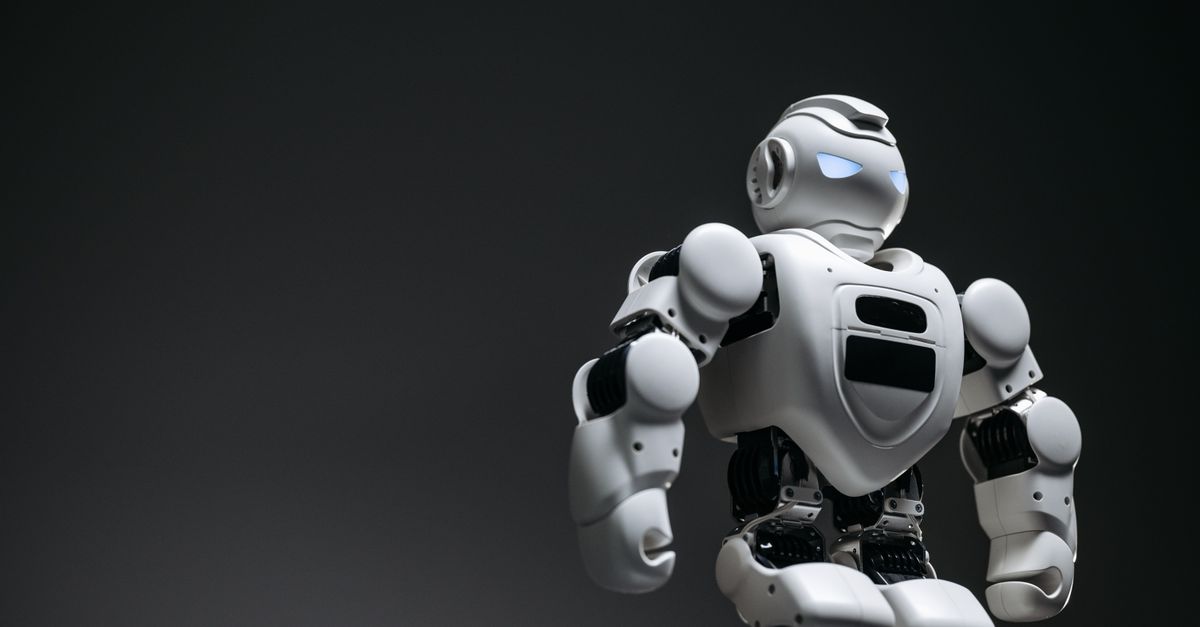
1X NEO: Evaluating the Soft-Bodied Domestic Humanoid

Introduction to the 1X NEO
The 1X NEO, developed by Norway-based 1X Technologies, represents a distinct approach to domestic humanoid robotics. Rather than prioritizing industrial-grade durability or overt anthropomorphism, the design philosophy centers on safety, approachability, and adaptability for unstructured household environments. The robot features a soft-bodied architecture, flexible joint actuators, and a silicone exterior intended to reduce collision forces and improve user comfort in residential settings. This article grades the platform strictly by observable development milestones: shipping hardware, pilot deployments, and public announcements, while providing a clear assessment of its current status and realistic pathways for Indian adoption.
Hardware Architecture and Soft-Bodied Design
The 1X NEO’s mechanical foundation diverges from traditional rigid-link humanoid designs. The chassis utilizes torque-controlled joints with integrated compliance, allowing the limbs to yield under unexpected loads rather than resisting them. This soft-actuation approach reduces peak impact forces during human-robot interaction and minimizes the risk of structural damage in cluttered domestic spaces. The exterior is covered in a durable, flexible polymer skin that serves multiple functions: tactile feedback for collision detection, environmental sealing against minor spills, and acoustic dampening to lower operational noise.
Key hardware specifications, as documented in manufacturer disclosures and technical briefings, include:
- Height: Approximately 1.7 meters
- Weight: Roughly 70 kilograms (soft-body configuration)
- Actuation: Torque-controlled joints with series elastic compliance
- Sensing: Force-torque sensors at joints, depth cameras, and tactile arrays in the hands
- Power: Internal lithium-ion battery pack with an estimated runtime of 2 to 4 hours under mixed load conditions
- Locomotion: Bipedal walking with dynamic balance control, optimized for indoor flooring and mild inclines
- Manipulation: Anthropomorphic hands with adaptive grip patterns for household objects
The soft-bodied architecture is not a novelty but a functional requirement for domestic deployment. Rigid humanoid frames require extensive safety interlocks, external guarding, and conservative motion planning to operate near humans. The NEO’s compliance reduces these constraints, allowing more natural movement profiles and faster task iteration in unstructured environments.
Development Stage and Claim Grading
Evaluating the 1X NEO requires strict adherence to a milestone-based grading framework. Claims are categorized by evidence tier: shipping hardware (Tier 1), pilot deployments (Tier 2), and public announcements or renderings (Tier 3). As of the latest verifiable data, the platform resides firmly in Tier 2.
Pilot Deployments and Field Testing
1X Technologies has transitioned the NEO from laboratory prototypes to controlled pilot environments. These deployments target research institutions, partner facilities, and early-access customer sites where the robot performs supervised domestic tasks. The pilots focus on mobility validation, manipulation reliability, and human-robot interaction safety. While the data is not yet public in aggregate form, the existence of active pilot programs indicates that core software stacks and hardware iterations have reached a functional baseline suitable for supervised operation.
Hardware vs. Announcement Claims
Marketing materials and early renderings often emphasize fluid motion and advanced manipulation. These should be treated as developmental targets rather than current capabilities. The hardware is functional but remains in the pilot phase. No mass production lines or consumer shipping milestones have been confirmed. Claims regarding autonomous household deployment, long-duration operation, or commercial availability must be graded as announcements until independent verification or documented pilot results are published.
Software, AI, and Operational Context
The 1X NEO’s hardware is paired with a proprietary AI brain designed for spatial reasoning, task planning, and adaptive manipulation. The software stack emphasizes:
- Real-time environment mapping and dynamic obstacle avoidance
- Task decomposition for multi-step household routines
- Force-controlled grasping with object recognition and pose estimation
- Fallback protocols for loss of balance or sensor degradation
These capabilities are validated through pilot telemetry and controlled demonstrations. The system does not claim full autonomy in unstructured homes. Instead, it operates within defined operational design domains (ODDs), requiring user setup, periodic supervision, and maintenance of environmental conditions such as lighting, floor type, and object placement. The software roadmap prioritizes reliability over breadth, focusing on a curated set of domestic tasks rather than universal household coverage.
India Availability, Compliance, and Pricing
The 1X NEO is not officially available in India. Importing the platform would require navigating customs, product safety certification, and after-sales service infrastructure. Indian regulatory frameworks for humanoid robots are still evolving, but general import pathways apply:
- Customs duty: Approximately 10 to 15 percent on robotics hardware, plus applicable GST
- Compliance: BIS certification may be required for electronic components and battery systems
- Service: No localized service network exists; maintenance would rely on third-party robotics integrators or direct manufacturer support
- Logistics: Air or sea freight with specialized handling for sensitive actuators and sensors
Pricing estimates must be grounded in publicly disclosed figures and landed cost calculations. 1X Technologies has indicated early-stage pricing in the range of $200,000 USD. Converting to INR at current exchange rates yields approximately INR 1.65 crore. Adding customs, GST, freight, compliance, and integration costs pushes the landed estimate to roughly INR 1.9 to 2.1 crore. These figures are flagged as approximate and subject to revision based on official distributor agreements, tax policy changes, and volume discounts. No Indian retail or direct purchase channel is currently operational.
Competitive Landscape and Realistic Expectations
The domestic humanoid sector includes multiple platforms with varying architectures and deployment strategies. The 1X NEO differentiates itself through soft-body compliance and residential focus, but it competes with rigid-frame platforms that prioritize industrial durability or modular extensibility. When evaluating the NEO against alternatives, consider:
- Hardware maturity: Pilot-stage platforms require longer validation periods than shipping hardware
- Task scope: Domestic robots target curated routines, not universal household coverage
- Service ecosystem: Availability of local technicians, spare parts, and software updates dictates long-term viability
- Regulatory alignment: Import pathways and certification requirements vary by region and evolve rapidly
The platform’s soft-body design reduces collision risk and improves user comfort, but it also introduces trade-offs in payload capacity, structural rigidity, and long-term wear resistance. These are engineering compromises, not deficiencies. The NEO is positioned for supervised domestic assistance, not autonomous replacement of human labor or industrial deployment.
Conclusion
The 1X NEO represents a deliberate engineering choice: prioritizing safety, compliance, and residential adaptability over industrial durability or overt anthropomorphism. The hardware is functional and deployed in pilot programs, but it has not reached shipping or commercial availability. Software capabilities are validated within controlled operational domains, with clear boundaries around autonomy and environmental constraints. For Indian stakeholders, adoption requires navigating import logistics, compliance pathways, and realistic pricing expectations. The platform offers a credible foundation for domestic robotics research and supervised deployment, but claims of widespread household integration or immediate commercial availability remain announcements rather than verified milestones. Grounded evaluation, hardware-first grading, and transparent reporting will determine whether the NEO transitions from pilot to practical deployment.
References
- 1X Technologies Official Site and Product Information: https://www.1x.tech
- 1X Technologies Press Releases and Development Updates: https://www.1x.tech/press
- IEEE Spectrum Coverage on Soft-Bodied Humanoid Robotics: https://spectrum.ieee.org
- TechCrunch Reporting on Domestic Humanoid Development: https://techcrunch.com
- Indian Customs and GST Guidelines for Robotics Imports: https://icegate.gov.in
- BIS Certification Framework for Electronic and Battery Systems: https://bis.gov.in
✓ Key takeaways
- •Hands-on view of 1X NEO: Evaluating the Soft-Bodied Domestic Humanoid inside our 1X NEO library.
- •Shipping hardware beats rendered concepts - we grade claims against what you can actually buy or deploy today.
- •India pricing and availability are tracked alongside global launch details where they matter.
References
- 1X Technologies Official Site and Product Information
- 1X Technologies Press Releases and Development Updates
- IEEE Spectrum Coverage on Soft-Bodied Humanoid Robotics
- TechCrunch Reporting on Domestic Humanoid Development
- Indian Customs and GST Guidelines for Robotics Imports
- BIS Certification Framework for Electronic and Battery Systems
Related articles
More in 1X NEO →