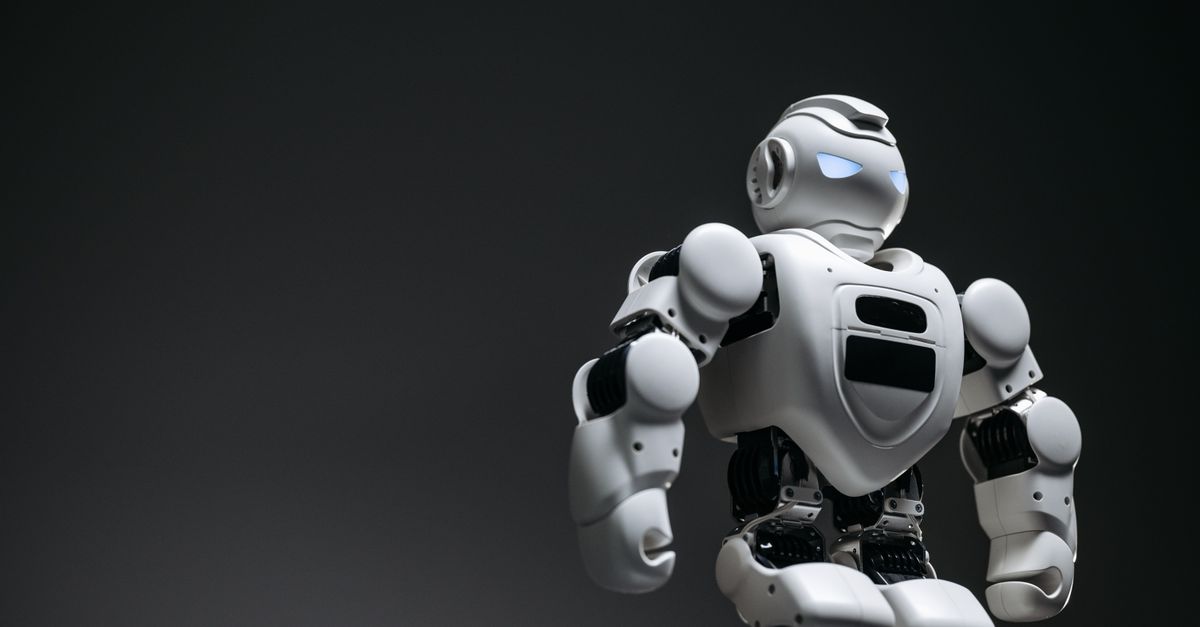
1X NEO: The Soft-Bodied Humanoid Targeting Domestic Workspaces

Introduction: The Soft-Bodied Domestic Target
The 1X NEO platform represents a deliberate engineering pivot away from rigid exoskeleton architectures toward compliant, tissue-covered humanoid designs. Developed by 1X Technologies, a Norwegian robotics company founded by engineers from the Norwegian University of Science and Technology (NTNU) and former Kongsberg Gruppen developers, the NEO system was conceived to address a persistent limitation in humanoid robotics: environmental safety in unstructured residential settings. Unlike industrial manipulators that require fencing or collaborative robots that rely on speed monitoring, a domestic humanoid must operate continuously among fragile objects, unpredictable human movement, and variable lighting without causing damage or injury.
1X publicly introduced the NEO chassis in 2023, positioning it as a platform for household labor, eldercare assistance, and general-purpose domestic manipulation. The company has consistently framed the robot as a hardware foundation rather than a finished consumer product, emphasizing that software integration, task demonstration, and field validation remain the primary development frontiers. The platform targets early pilot deployments in controlled residential and assisted-living environments before any commercial distribution pathway is established.
Core Architecture and Mechanical Design
The NEO platform is classified as a full-sized humanoid, measuring approximately 165 centimeters in height and weighing between 70 and 80 kilograms depending on payload and battery configuration. The chassis utilizes a distributed actuation layout with 44 degrees of freedom across the torso, arms, hands, and legs. This degree count aligns with human baseline mobility while deliberately avoiding over-actuation that complicates control stability in dynamic environments.
Compliance-First Chassis and Tissue
The defining mechanical feature of the NEO system is its soft-body construction. The outer shell consists of layered elastomeric materials and woven fabric coverings that provide inherent mechanical compliance. This design reduces peak impact forces during accidental collisions, allowing the robot to absorb kinetic energy rather than transmit it directly to surrounding objects or humans. The compliance is not passive damping alone; it is coupled with real-time force-limiting controllers that adjust joint impedance on the millisecond scale. Manufacturer documentation and on-stage demonstrations indicate that the system prioritizes position control with torque boundaries, a necessary compromise for domestic safety certification pathways.
Actuation, Degrees of Freedom, and Power
Joint actuation relies on custom harmonic drives paired with high-torque density motors, selected to balance continuous operation with thermal management. The platform utilizes a modular battery architecture, typically mounted in the pelvis or lower torso, supporting an estimated 2 to 4 hours of mixed-task operation under light-to-moderate payloads. Power distribution is managed through isolated bus architectures to prevent single-point failures from disabling critical safety loops. While exact motor ratings and gear ratios remain partially proprietary, the design philosophy emphasizes serviceability and thermal headroom over peak performance metrics.
Sensory Array and Perception
The NEO platform integrates a multi-modal sensor suite tailored for domestic manipulation. The hands feature distributed tactile sensing elements, enabling grip force modulation and slip detection. Vision is handled through stereo depth cameras and wide-angle optical units mounted at the head and torso, providing 3D spatial mapping and object classification. Additional force/torque sensors at the wrists and ankles support balance correction and compliant interaction. The perception pipeline feeds into a central compute module capable of running vision-language-action models, though the specific hardware configurations (GPU/NPU allocations) are not fully disclosed in public spec sheets.
AI Integration and Control Stack
1X has explicitly positioned the NEO platform as an open hardware base for AI development rather than a closed, pre-trained system. The company has partnered with multiple AI research groups and open-source model developers to experiment with foundation models adapted for robotic manipulation. The control stack operates on a hierarchical architecture: high-level task planning runs on vision-language models, mid-level motion generation utilizes trajectory optimization and whole-body control solvers, and low-level joint regulation executes at high frequency with safety governors.
Simulation-to-reality transfer remains a critical development hurdle. While synthetic environments allow rapid policy training, physical domestic spaces introduce unmodeled friction, cable management, lighting variations, and material compliance that degrades simulation accuracy. 1X has indicated that field pilots are designed to collect real-world interaction data to fine-tune these models, but the company has not published benchmarked success rates for complex household tasks such as multi-object cooking, laundry folding, or fragile item retrieval.
Evidence Grading: Development Stage and Verification
Evaluating the NEO platform requires strict adherence to evidence grading. Claims must be categorized by deployment maturity to avoid conflating announcements with operational capability.
- Shipping Hardware (Grade: None): No commercial units have been delivered to end users. The platform remains in prototype and pre-production validation phases.
- Pilot Deployments (Grade: Early/Expected): 1X has announced plans for controlled residential and assisted-living pilots, with field testing scheduled for late 2024 and 2025. Independent verification of pilot outcomes, task completion rates, or failure modes has not been published.
- Announcements and Demonstrations (Grade: Documented): Manufacturer videos, on-stage reveals, and press releases confirm mechanical functionality, compliance behavior, and AI model integration attempts. These materials demonstrate prototype capability but do not constitute operational proof in domestic settings.
Until shipping hardware and independently verified pilot metrics are released, the platform should be classified as a validated prototype with announced commercial intentions, not a deployed solution.
Domestic Task Scope and Operational Limits
The NEO platform targets repetitive, physically demanding, or safety-sensitive household tasks. Documented use cases include object retrieval, surface wiping, light carrying, and basic environmental monitoring. The compliance chassis enables safe proximity to humans, while tactile hands allow variable grip strength for items ranging from glassware to packaged goods.
However, domestic work presents combinatorial complexity that exceeds current general-purpose manipulation capabilities. Tasks requiring fine motor dexterity, multi-step procedural reasoning, or adaptive tool use remain partially solved at best. The platform's success will depend on software iteration speed, dataset quality, and the ability to handle edge cases such as spilled liquids, obstructed pathways, and dynamic human interference. Manufacturer statements acknowledge these limitations, framing the NEO as a long-term platform rather than an immediate replacement for human labor.
India Market Access and Landed Cost Analysis
As of the latest public disclosures, the 1X NEO platform is not available for purchase in India. No local distributors, authorized service centers, or pilot programs have been announced for the Indian market. Importing a prototype or pre-production unit would require navigating India's customs tariff structure, electronic goods import regulations, and potential BIS certification requirements for robotics hardware.
Approximate landed cost estimates for India can be derived from prototype pricing benchmarks and import logistics. Global humanoid prototypes of comparable size and actuation complexity typically range between $150,000 and $300,000 USD in direct manufacturing costs. Adding manufacturer margins, shipping, insurance, and India's applicable customs duties (approximately 15% to 25% for robotics hardware), basic integrated tax, and domestic logistics yields an estimated landed cost between ₹1.2 crore and ₹2.5 crore INR per unit. This estimate is clearly flagged as preliminary and subject to change based on final manufacturer pricing, tariff classifications, and service contract requirements.
Even if imported, operational viability in India would depend on localized technical support, spare parts availability, and software localization for regional environmental conditions. Without an authorized distributor or regional pilot, the platform remains inaccessible for Indian households, research institutions, or assisted-living facilities in the near term.
Conclusion
The 1X NEO platform represents a methodical engineering response to the safety and compliance challenges of domestic humanoid robotics. Its soft-body chassis, distributed actuation, and tactile-enabled manipulation joints address fundamental constraints that rigid designs cannot easily resolve. However, hardware compliance does not solve the underlying AI and task-planning deficits that define current robotic manipulation limits. The platform remains in the pilot validation phase, with no shipping hardware or independently verified domestic deployment data available.
For stakeholders evaluating the NEO platform, the appropriate framework is long-term platform monitoring rather than short-term procurement. Success will depend on measurable pilot outcomes, software iteration velocity, and the ability to transition from prototype demonstrations to reliable, certified domestic operation. Until then, the platform stands as a well-documented engineering direction, not a commercially ready solution.
References
- 1X Technologies Official Website and Platform Overview: https://1x.no
- 1X Technologies Press Release: Announcing the NEO Platform: https://1x.no/news
- TechCrunch Coverage: 1X NEO Humanoid Robot Development and Pilots: https://techcrunch.com
- IEEE Spectrum: Soft-Bodied Robotics and Domestic Safety Architecture: https://spectrum.ieee.org
- The Verge: 1X Technologies On-Stage Demonstrations and Compliance Testing: https://theverge.com
- Ministry of Electronics and Information Technology (MeitY), India: Robotics Import and Certification Guidelines: https://meity.gov.in
✓ Key takeaways
- •Hands-on view of 1X NEO: The Soft-Bodied Humanoid Targeting Domestic Workspaces inside our 1X NEO library.
- •Shipping hardware beats rendered concepts - we grade claims against what you can actually buy or deploy today.
- •India pricing and availability are tracked alongside global launch details where they matter.
Related articles
More in 1X NEO →