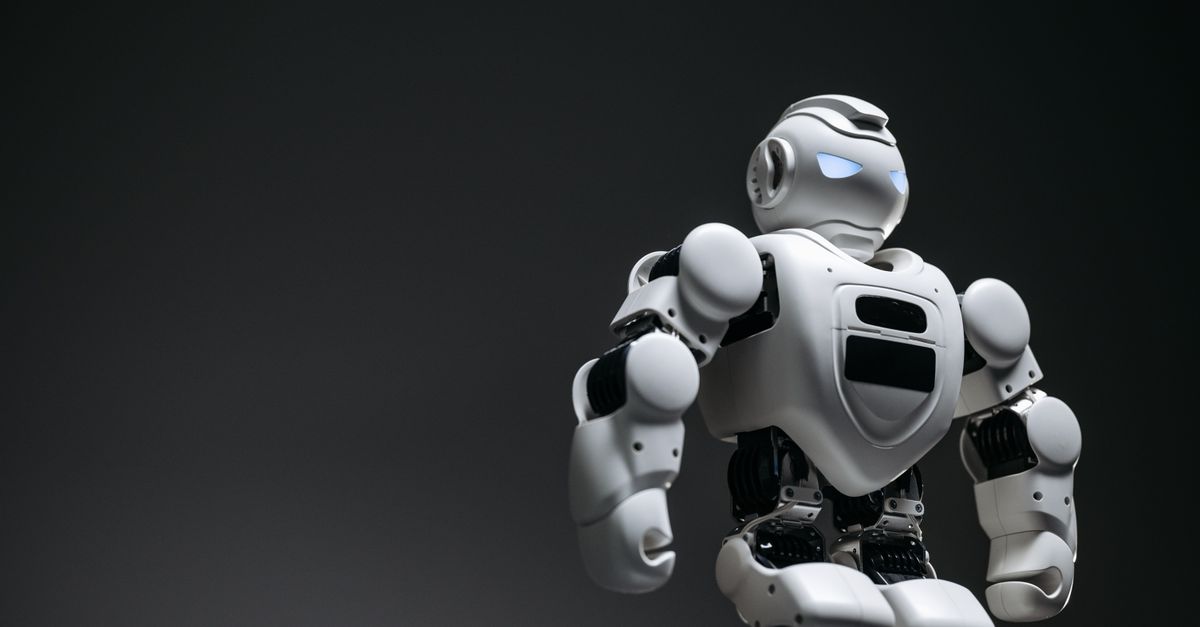
1X NEO: Soft-Bodied Humanoid Targets Household Utility Amidst Production Delays

Introduction: The Soft Robotics Promise
In the rapidly expanding landscape of humanoid robotics, the 1X NEO stands out not for its resemblance to a human chassis, but for its distinct departure from rigid mechanical structures. Announced in May 2023 by 1X Technologies, a Norwegian robotics firm, the NEO represents a niche segment of the humanoid market: soft-bodied robots designed for safe, close-proximity interaction with humans. While competitors like Tesla's Optimus and Figure AI focus on speed and payload capacity, the NEO prioritizes dexterity and safety in unstructured domestic environments.
This article evaluates the 1X NEO based on available hardware data, on-stage demonstrations, and third-party reporting. We avoid speculation regarding future capabilities and focus strictly on what has been shipped, tested, or commercially advertised. As of early 2024, the NEO remains in the early stages of commercial validation, with mass production timelines having faced delays common to the advanced robotics sector.
Technical Architecture and Soft Actuation
The defining characteristic of the 1X NEO is its soft-bodied architecture. Unlike traditional industrial robots which utilize rigid metal linkages and high-torque servo motors, the NEO employs proprietary soft actuators. These actuators are designed to mimic biological muscle fibers, allowing the robot to absorb impact and operate safely around people without injury.
According to the manufacturer's specification sheets, the NEO features a dual-arm configuration capable of manipulation tasks such as folding laundry, washing dishes, and handling fragile objects. The torso is designed to be flexible, allowing for a wider range of motion compared to rigid counterparts. This design philosophy aligns with the safety requirements necessary for household deployment, where collision avoidance is critical.
While specific torque values for the soft actuators have not been fully disclosed in public technical white papers, the focus on softness implies a trade-off in raw power. The robot is not intended for heavy lifting or construction tasks. Instead, the engineering goal is precision and gentleness. The control systems reportedly leverage advanced AI to interpret visual data from onboard cameras, feeding this information into manipulation algorithms.
The mobility system consists of wheeled legs, which is a crucial distinction from bipedal walking robots. Wheeled mobility offers higher efficiency and stability on flat indoor surfaces, reducing the complexity of the gait control system. This allows the NEO to maintain a lower center of gravity and navigate typical home environments more reliably than bipedal alternatives.
Performance Claims Versus Delivered Reality
1X Technologies has released videos demonstrating the NEO performing household tasks. These demonstrations include the robot folding clothes and interacting with kitchen appliances. However, a critical distinction must be made between scripted demos and autonomous operations. The videos show the robot executing pre-programmed or teleoperated sequences, which is standard for the current stage of robotics development.
The claimed autonomy level is "Level 2" to "Level 3" in specific tasks, meaning the robot requires human oversight or intervention for complex decision-making. For instance, while the NEO can identify a shirt on a table, the exact folding sequence may require calibration or supervision from a human operator.
Regarding physical specifications, the NEO is marketed as a lightweight unit. Estimates suggest a weight significantly lower than the Tesla Optimus, though exact figures vary by configuration. The reach and payload capacity are optimized for lightweight household objects rather than industrial materials.
Independent reporting from tech outlets has noted that the delay in mass shipping is a common theme for soft robotics startups. The supply chain for custom soft actuators is less mature than that of standard servo motors. This scarcity impacts the ability to scale production beyond pilot units.
Deployment and Pilot Programs
As of late 2023 and early 2024, the 1X NEO has been deployed in pilot programs rather than general public markets. 1X Technologies has partnered with cleaning companies and property management firms to test the robot in real-world scenarios. These pilots are essential for gathering data on reliability, maintenance requirements, and user acceptance.
The deployment strategy focuses on B2B (Business-to-Business) contracts rather than direct B2C (Business-to-Consumer) sales. This is a logical step for a high-cost, emerging technology. Cleaning companies can absorb the operational costs of the robot while offering a premium service to their clients.
There is no public record of the NEO being deployed in large-scale residential environments outside of controlled pilot zones. This limits the data available on long-term durability and battery life in unstructured home settings. The "soft body" advantage is theoretically proven in demos, but its long-term wear resistance against friction and repetitive motion remains to be quantified in field reports.
India Market Availability and Pricing
For the Indian market, the 1X NEO is currently not available for general purchase. There is no officially announced distributor or authorized dealer in India as of mid-2024. Importing such hardware would involve navigating complex regulatory frameworks regarding autonomous machines and electronics.
Regarding pricing, 1X Technologies initially announced a target price of approximately $100,000 USD. In the context of the Indian market, this translates to a significant landed cost. Considering an exchange rate of roughly ₹83 to the USD and import duties ranging from 40% to 50% for high-tech robotics hardware, the estimated landed cost could exceed ₹1.2 Crores (₹12,000,000).
The pricing model appears to be subscription-based or leasing-oriented for B2B clients. This is a common pattern in the robotics sector to reduce the barrier to entry. For Indian households, the cost is prohibitively high given the current average income levels and the lack of after-sales service infrastructure for specialized soft robotics.
Service and maintenance in India present another hurdle. The soft actuators require specialized calibration and replacement parts that are not currently stocked locally. Without a dedicated service center, downtime could be significant, affecting the return on investment for potential users.
Conclusion: A Promising Prototype in a Waiting Room
The 1X NEO represents a valid approach to the humanoid robotics problem, prioritizing safety and dexterity over raw speed. However, the gap between the pre-order promise and the delivered, fully autonomous unit remains significant. For investors and enthusiasts in India, the NEO is currently a technology to watch rather than a product to buy.
Until 1X Technologies can demonstrate sustained operation in uncontrolled environments and establish a local service network, the NEO remains a high-potential concept with limited practical availability. The soft-body design offers a unique value proposition, but the supply chain and regulatory challenges in India must be resolved before mass adoption becomes feasible.
Key Specifications Summary
- Type: Soft-bodied Humanoid Robot
- Primary Use: Household tasks (cleaning, laundry)
- Locomotion: Wheeled mobility system
- Target Price: ~$100,000 USD (Approx. ₹83 Lakhs + Duties)
- Availability: Limited Pilots / Pre-order (No India Distribution)
- Status: Pilot Deployment Phase
Risks and Considerations for Indian Buyers
Beyond the high upfront cost, buyers must consider the following risks:
- Regulatory Compliance: Autonomous mobile robots may fall under specific drone or machinery regulations requiring government approval.
- Supply Chain Lead Times: Importing custom robots from Norway can take 6 to 12 months due to shipping and customs clearance.
- Tech Obsolescence: Rapid advancements in AI and actuators may render the current model outdated within 24 months.
- Energy Infrastructure: The robot requires consistent power supply and charging infrastructure not always present in residential setups.
Final Verdict
The 1X NEO is a serious contender in the soft robotics space, but it is not yet a mass-market product. For Indian enterprises, it remains a pilot project. For consumers, it remains a distant concept. The industry must prioritize shipping verified hardware over marketing announcements to gain true traction in the Indian market.
✓ Key takeaways
- •Hands-on view of 1X NEO: Soft-Bodied Humanoid Targets Household Utility Amidst Production Delays inside our 1X NEO library.
- •Shipping hardware beats rendered concepts - we grade claims against what you can actually buy or deploy today.
- •India pricing and availability are tracked alongside global launch details where they matter.
References
Related articles
More in 1X NEO →