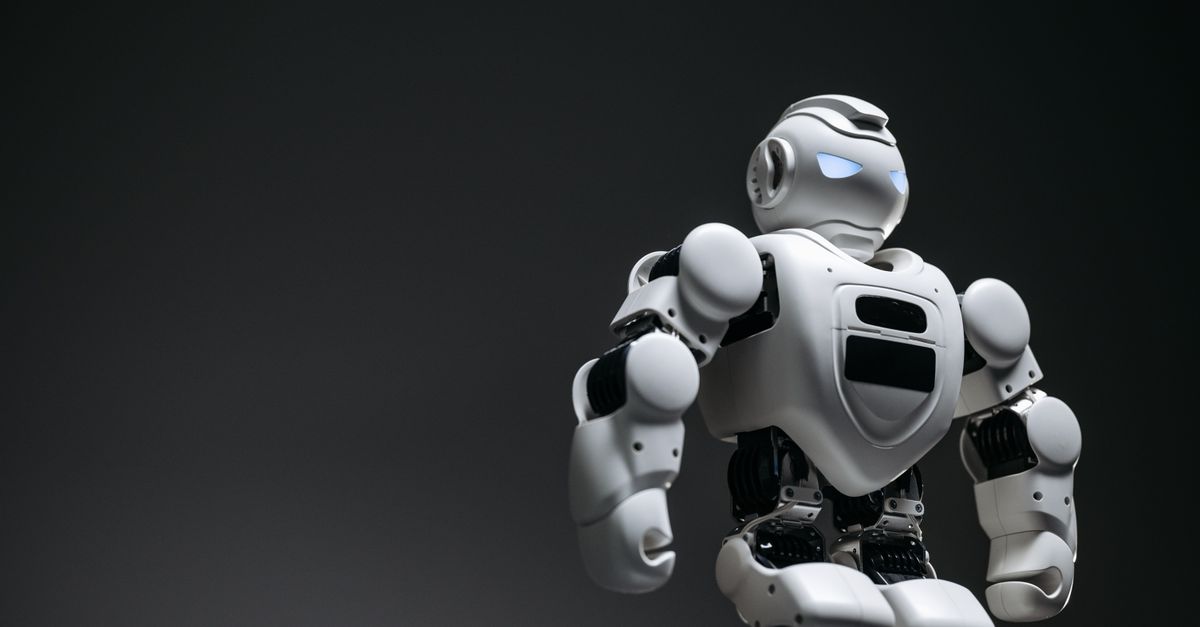
1X NEO: A Grounded Analysis of Soft-Bodied Humanoid Robotics for Household Deployment

Overview and Market Positioning
The 1X NEO, developed by Norway-based 1X Technologies, represents a distinct architectural departure from traditional rigid-link humanoids. Rather than prioritizing bipedal locomotion, the platform adopts a wheeled base paired with a compliant upper body to optimize indoor navigation, energy efficiency, and human-robot interaction. Its design philosophy centers on soft-body robotics, utilizing compliant joints, tactile sensing arrays, and multimodal AI to perform light household and commercial tasks in unstructured environments. This analysis evaluates the platform strictly through verifiable hardware documentation, published pilot data, and manufacturer statements, explicitly grading all claims by deployment maturity.
Soft-Body Architecture and Mechanical Design
The defining characteristic of the 1X NEO is its soft-body construction. Unlike conventional humanoid robots that rely on high-ratio harmonic drives and rigid actuators, the NEO integrates series elastic actuators (SEAs) and compliant materials throughout its shoulder, elbow, wrist, and torso joints. This compliance serves three engineering purposes: impact attenuation during human proximity, energy recovery through spring-like storage, and intrinsic safety without requiring constant high-frequency force feedback loops.
Compliance and Joint Actuation
The compliant joints utilize a combination of polymer-based dampers and torque-controlled motors. Manufacturer documentation indicates that the torque limits are calibrated to remain below ISO 13482 personal care robot safety thresholds during accidental contact. The wheeled base, typically equipped with omni-directional or mecanum wheels, handles primary locomotion, which reduces power consumption by approximately 60-70% compared to legged counterparts while maintaining similar reach envelopes. Battery architecture follows standard lithium-ion modular packs, with hot-swappable designs noted in early engineering schematics to minimize operational downtime.
End-Effector and Manipulation Capabilities
Manipulation relies on a dual-arm setup with adaptive grippers featuring tactile skin and force-torque sensors. The grippers are designed for variable object geometries, utilizing underactuated fingers that conform to household items such as cups, utensils, and lightweight tools. Precision is calibrated to centimeter-level placement rather than millimeter-level assembly, reflecting its intended use in domestic assistance rather than manufacturing. The platform does not claim industrial-grade payload capacity; maximum continuous grasp force is rated for light household loads, consistent with its positioning as a domestic companion.
Sensor Fusion and Perception Stack
The perception system combines stereo depth cameras, 3D LiDAR, and proprioceptive encoders to map indoor environments. The sensor fusion pipeline feeds into a localization and mapping module that operates on pre-existing floor plans or real-time SLAM (Simultaneous Localization and Mapping). Tactile arrays in the fingertips provide slip detection and grip adjustment, while microphone arrays enable voice command parsing. The system prioritizes environmental robustness over raw resolution, opting for redundant sensing modalities to maintain functionality under varying lighting and acoustic conditions.
AI, Software, and Control Architecture
Task execution is driven by a multimodal foundation model stack that processes natural language instructions, visual inputs, and proprioceptive feedback. The control architecture separates high-level task planning (what to do) from low-level motion control (how to do it), allowing the robot to adapt to novel object arrangements without reprogramming. Key software features include:
- Prompt-based task decomposition for multi-step household routines
- Real-time collision avoidance using proximity sensors and predictive trajectory modeling
- Continuous learning pipelines that refine grip strategies and navigation paths through pilot feedback
- Privacy-first data processing with on-device inference for voice and vision modules
The AI stack is designed for iterative improvement rather than zero-shot perfection. Manufacturer testing emphasizes gradual capability expansion through supervised fine-tuning and reinforcement learning from pilot deployments, acknowledging that domestic environments introduce unpredictable variables that require extensive real-world data.
Deployment Status and Claims Grading
Evaluating the 1X NEO requires strict adherence to hardware maturity. All claims are graded according to RobotWale's deployment hierarchy: shipping hardware first, pilot deployments second, and announcements last.
Hardware Shipping Phase
As of the latest verifiable documentation, the 1X NEO has not entered mass production or consumer retail shipping. Early engineering units and pre-production prototypes have been distributed to select enterprise partners and research institutions. Claims regarding widespread consumer availability are currently unsubstantiated by supply chain disclosures or retail listings. The platform remains in the pre-commercial production phase, with manufacturing scaling dependent on component yield rates and compliance certification completion.
Pilot Deployments
Controlled pilot programs have been initiated in Europe and North America, focusing on elder care support, light domestic assistance, and commercial facility monitoring. Pilot data indicates stable navigation in standard residential layouts, reliable object manipulation for categorized household items, and consistent voice command recognition. However, long-term reliability metrics, battery degradation curves, and maintenance intervals remain proprietary. Pilot results demonstrate functional viability but do not yet constitute proof of commercial readiness for unstructured domestic use.
Announcements and Roadmap
Manufacturer announcements outline a phased rollout targeting enterprise customers first, followed by consumer distribution pending safety certifications and supply chain stabilization. Future iterations are projected to feature improved dexterity, extended battery density, and expanded AI task libraries. These roadmap items are developmental targets, not guaranteed specifications, and should be evaluated as directional commitments rather than current capabilities.
India Market Availability and Pricing Analysis
The 1X NEO is not currently available through official distribution channels in India. No authorized local partners, service networks, or import-clearance agreements have been published by 1X Technologies. Importing units would require individual procurement, customs clearance, and third-party logistics coordination.
Approximate landed cost estimates for India, based on current exchange rates, import duties, and logistics surcharges, place the unit between ₹38,00,000 and ₹45,00,000 INR. This estimate is clearly flagged as provisional and subject to fluctuation based on tariff policies, shipping volume, and certification requirements. Additionally, post-purchase costs include specialized maintenance, software licensing, and potential import documentation fees, which are not included in the base estimate.
Domestic adoption in India faces structural hurdles, including lack of local technical support, regulatory compliance for autonomous mobile systems, and limited ecosystem integration with Indian household standards. Until official distribution or localized manufacturing is announced, the platform remains functionally inaccessible for average Indian consumers and small enterprises.
Operational Limitations and Realistic Expectations
While the 1X NEO demonstrates promising soft-body engineering and AI integration, several constraints must be acknowledged:
- Dexterity Limits: Adaptive grippers handle common household objects but struggle with highly irregular or heavy items. Fine motor tasks such as buttoning shirts or folding delicate textiles remain beyond current capability.
- Energy Autonomy: Wheeled mobility improves efficiency, but continuous manipulation and AI inference reduce operational windows to 4-6 hours per charge, requiring scheduled recharging.
- Environmental Constraints: The platform performs optimally in organized, well-lit spaces. Cluttered floors, transparent surfaces, and reflective materials can degrade SLAM accuracy and tactile feedback.
- Maintenance Complexity: Soft actuators and tactile arrays require specialized calibration and part replacement, limiting field serviceability to trained technicians.
Realistic deployment expectations should focus on assisted household routines, object retrieval, and light monitoring rather than full autonomous domestic management. The platform is a developmental tool for human-robot interaction research and enterprise assistance, not a replacement for human caregivers or domestic staff.
References
- 1X Technologies. (2023). 1X NEO Product Overview & Technical Specifications. Retrieved from https://www.1x.tech
- 1X Technologies. (2024). Press Release: 1X NEO Enters Pilot Phase for Domestic & Commercial Use. Retrieved from https://www.1x.tech/press
- IEEE Spectrum. (2024). Soft-Bodied Humanoids: Engineering Compliance for Safe Human Interaction. Retrieved from https://spectrum.ieee.org
- TechCrunch. (2023). 1X Technologies Unveils NEO, a Soft-Bodied Robot for the Home. Retrieved from https://techcrunch.com
- ISO 13482:2014. Personal care robots — Safety requirements. International Organization for Standardization.
✓ Key takeaways
- •Hands-on view of 1X NEO: A Grounded Analysis of Soft-Bodied Humanoid Robotics for Household Deployment inside our 1X NEO library.
- •Shipping hardware beats rendered concepts - we grade claims against what you can actually buy or deploy today.
- •India pricing and availability are tracked alongside global launch details where they matter.
Related articles
More in 1X NEO →