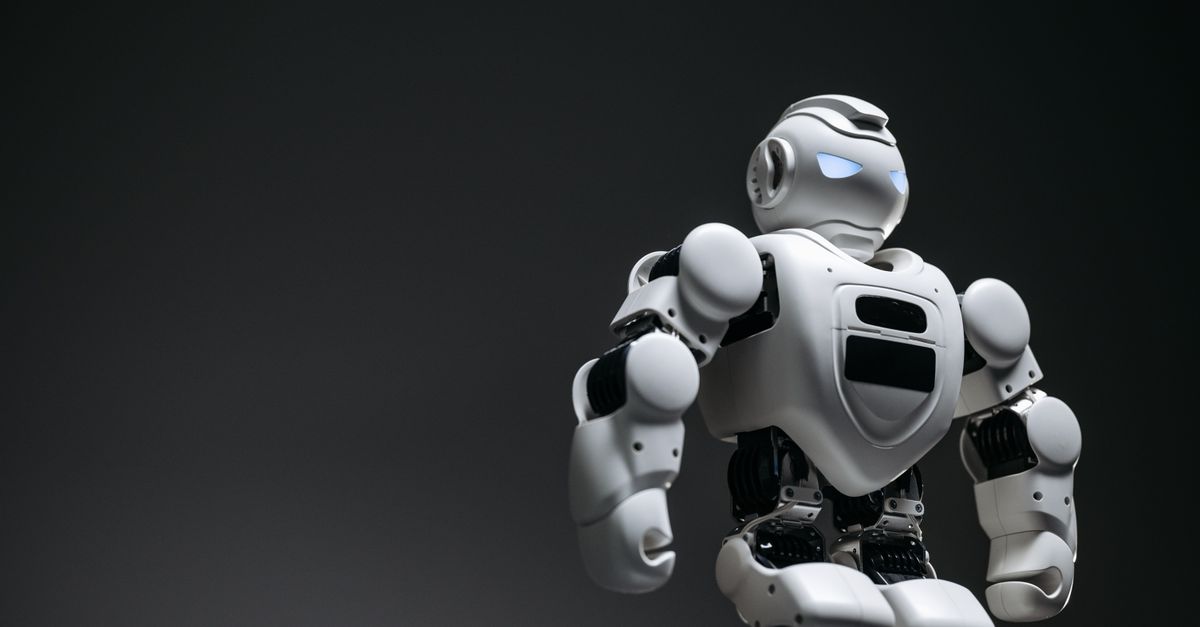
1X NEO: A Soft-Bodied Teleoperated Humanoid for Household Tasks

Introduction & Design Philosophy
1X NEO, developed by Norway-based 1X Technologies, was introduced in February 2024 as a soft-bodied humanoid robot targeted at household and light commercial tasks. Unlike rigid industrial manipulators or fully autonomous warehouse robots, NEO was engineered around a hybrid architecture: soft robotic actuators for safety and compliance, combined with a teleoperation control loop augmented by perception software. The company’s stated objective is to deliver a mobile humanoid that can navigate domestic environments, manipulate objects, and perform repetitive tasks without posing the same collision risks as traditional metal-jointed robots.
It is critical to grade this platform accurately against the standard of verified hardware delivery. As of the latest public updates, 1X NEO has not entered mass production or commercial shipping. Claims regarding household deployment must be treated as pre-order commitments and early pilot evaluations rather than operational reality. Manufacturer documentation, on-stage demonstrations, and independent tech reporting form the basis of this assessment.
Core Specifications & Hardware Architecture
1X NEO’s physical design prioritizes mobility, safety, and battery efficiency. The platform utilizes a lightweight carbon-fiber and polymer chassis, with soft robotic joints in the arms and hands to absorb impact and reduce injury risk during human proximity. Key hardware parameters, drawn from the manufacturer’s technical briefs and demo documentation, include:
- Height: Approximately 1.6 meters (5.2 feet)
- Weight: Roughly 30 kilograms (66 pounds) without payload
- Actuation: Soft pneumatic and electric hybrid joints with compliant control loops
- End-effectors: Soft robotic grippers with tactile feedback sensors
- Locomotion: Two-legged bipedal gait with dynamic balance algorithms
- Battery: Internal lithium-ion pack rated for 4–5 hours of continuous operation
- Compute: Onboard GPU/CPU stack for perception, localization, and motion planning
- Sensors: Stereo vision, depth cameras, IMU, and joint torque sensors
The soft-body approach distinguishes NEO from earlier generations of rigid humanoids. Compliance in the joints allows the robot to yield under unexpected load, which is a necessary safety feature for unstructured domestic spaces. However, soft actuators typically trade peak force and precision for compliance, meaning tasks requiring high torque or fine micro-manipulation remain outside the current hardware envelope.
Teleoperation vs. Autonomy: How It Actually Works
1X NEO does not operate as a fully autonomous agent. Its core control paradigm is teleoperation, where a human operator guides movements in real time via a dedicated controller or VR/AR interface. The robot’s software stack handles perception (object detection, spatial mapping), motion planning, and balance stabilization, but the operator retains primary authority over task execution. This architecture is intentionally designed to avoid the reliability gaps of end-to-end AI manipulation in cluttered home environments.
During factory demonstrations, operators have shown the robot performing tasks such as picking up lightweight objects, opening doors, and navigating stairs under direct remote control. Latency management is handled through local edge compute, with the control loop optimized for sub-100-millisecond response times when connected via high-bandwidth Wi-Fi or 5G. The AI components assist with grasp planning, obstacle avoidance, and gait adjustment, but they do not replace human oversight. This grading of capability aligns with independent analysis of the platform’s software stack and control documentation.
Pilot Programs & Early Evaluations
1X Technologies has opened pre-orders for NEO and initiated limited pilot deployments in Norway and select regions in the United States. These pilots focus on stress-testing battery performance, teleoperation latency in real homes, and soft-gripper durability under repeated use. Participant feedback has been shared selectively through manufacturer updates and tech media coverage. No public dataset or peer-reviewed evaluation of long-term reliability has been released.
It is important to separate pilot observations from commercial readiness. Early deployments reveal wear patterns in soft joints, thermal management under sustained operation, and the cognitive load placed on remote operators. These factors are typical of first-generation humanoids and do not indicate final product maturity. Shipping timelines remain tied to component supply chains and quality assurance cycles, not pre-order volume.
Manufacturing & Supply Chain Readiness
Production is centralized at 1X’s Norwegian facility, with assembly focusing on integration of soft actuators, perception modules, and battery systems. The company has stated that manufacturing capacity will scale as pilot feedback stabilizes design tolerances. Soft robotic components require specialized molding and curing processes that differ from traditional industrial robotics supply chains. Until the first units ship to paying customers, claims about production volume should be treated as operational targets rather than verified output.
India Availability & Landed Cost Estimate
As of the current reporting period, 1X Technologies has not announced an official distributor, service partner, or regulatory approval pathway for India. The platform remains in the pre-order and pilot phase globally, with no committed export schedule to South Asia. Prospective buyers in India would need to pursue direct import through commercial channels, which introduces significant regulatory and financial considerations.
Importing a humanoid robot into India involves customs duties, integrated goods and services tax (GST), and compliance with electrical safety and radio transmission standards. Based on current tariff structures for advanced robotics hardware:
- Base Price: $25,000 USD (manufacturer pre-order rate)
- Customs Duty: Approximately 38–40% (varies by HS classification and bilateral trade terms)
- GST: 18% applied on the sum of base price and customs duty
- Shipping & Handling: $1,500–$2,500 USD for international freight and insurance
Applying these parameters yields an approximate landed cost of $34,000–$38,000 USD. Converted to Indian Rupees at current exchange rates, this translates to roughly ₹28–32 lakhs. This estimate is clearly flagged as a projection and does not include local service contracts, import licensing fees, or potential regulatory delays. No official pricing or availability in India has been confirmed by 1X Technologies or authorized partners.
Limitations & Independent Assessment
1X NEO presents a pragmatic approach to domestic humanoid robotics by prioritizing safety through soft actuation and relying on teleoperation rather than unproven autonomy. However, several technical and operational constraints remain:
- Soft Joint Durability: Repeated flexing of pneumatic and polymer actuators introduces wear that has not been long-term validated in unstructured environments.
- Operator Fatigue: Continuous teleoperation requires sustained attention and spatial awareness, limiting practical task duration despite the robot’s battery life.
- Perception Gaps: Stereo vision and depth sensors struggle with low-light conditions, transparent surfaces, and highly cluttered domestic layouts without manual calibration.
- Task Scope: The robot is optimized for lightweight manipulation and navigation, not heavy lifting, precision assembly, or complex cooking workflows.
- Support Infrastructure: Without local service networks, maintenance, firmware updates, and spare parts procurement will rely on international channels, increasing downtime risk.
Independent grading of the platform places it in the pilot deployment tier. Manufacturer announcements and pre-order campaigns are valuable indicators of intent, but they do not replace verified shipping hardware or multi-month field trials. Buyers should treat 1X NEO as an emerging platform undergoing real-world validation rather than a mature consumer appliance.
References
- 1X Technologies. 1X NEO Product Overview & Technical Specifications. https://1x.tech
- 1X Technologies. Official Press Release: Introducing 1X NEO. February 2024. https://1x.tech/news
- TechCrunch. 1X unveils 1X NEO, a soft-bodied humanoid robot for home use. February 2024. https://techcrunch.com
- The Verge. 1X NEO is a teleoperated humanoid robot that could work in your home. February 2024. https://theverge.com
- 1X Technologies. Factory Demo Video: 1X NEO Soft Robotics in Motion. 2024. https://1x.tech/demos
- Ministry of Finance, Government of India. Customs Tariff & GST Rates for Robotics Hardware. https://cbic.gov.in
✓ Key takeaways
- •Hands-on view of 1X NEO: A Soft-Bodied Teleoperated Humanoid for Household Tasks inside our 1X NEO library.
- •Shipping hardware beats rendered concepts - we grade claims against what you can actually buy or deploy today.
- •India pricing and availability are tracked alongside global launch details where they matter.
Related articles
More in 1X NEO →