Agility Robotics: Digit’s Path to Warehouse Reality

Introduction: The Reality of Bipedal Logistics
Agility Robotics, founded in 2016 and headquartered in Portland, Oregon, has long positioned itself as a leader in bipedal robotics. Unlike many competitors that focus on quadrupedal forms or static manipulation, Agility Robotics has bet on the human form. Their flagship product, Digit, represents a specific engineering philosophy: two legs, two arms, and a torso designed for warehouse environments. While the broader industry buzzes about general-purpose humanoids, Agility Robotics has maintained a narrower focus on logistics. This article evaluates the company’s current standing based on shipping hardware, verified pilot deployments, and realistic market entry scenarios, specifically addressing the Indian context.
The Digit Hardware Reality
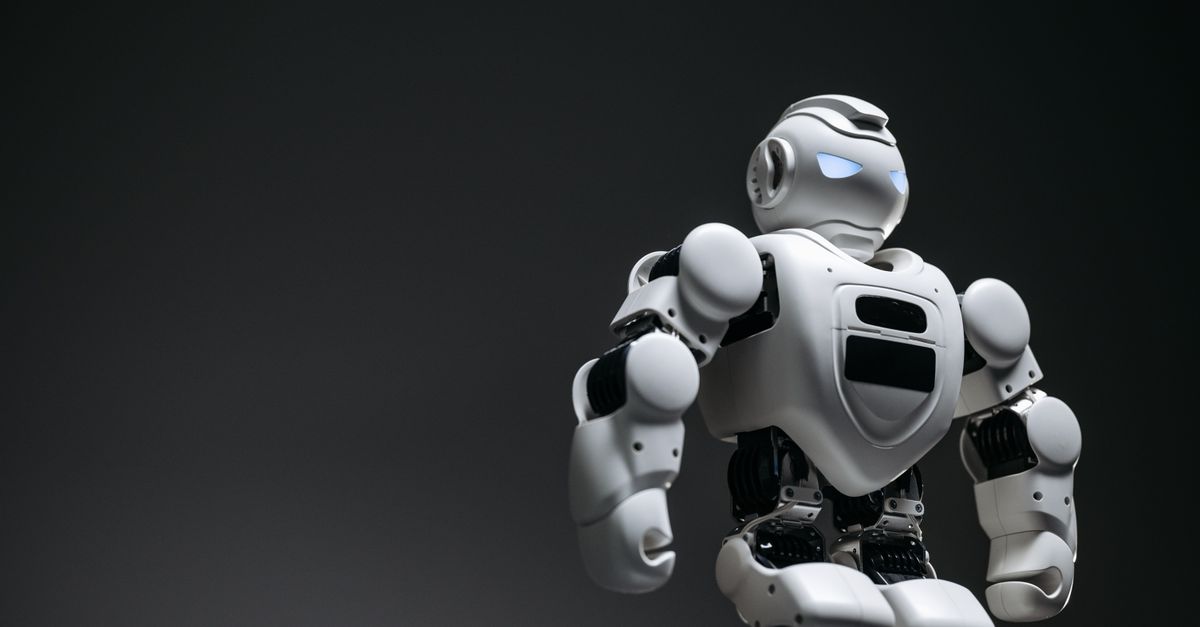
To grade Agility Robotics correctly, we must look past renderings and examine the shipped unit. The Digit robot is a fully actuated, bipedal humanoid standing approximately 2 meters (6.6 feet) tall. It is designed to carry loads up to 10 kilograms (22 pounds), which aligns with typical warehouse picking tasks rather than heavy industrial lifting.
Key technical specifications from Agility Robotics’ official documentation indicate a weight of roughly 60 kilograms. The robot utilizes a series of joints in the waist, hips, and knees to maintain balance on uneven surfaces. Unlike early prototypes that required external tethering for power, the current production Digit operates on an internal battery pack, though operational cycles are limited. The company claims a battery life sufficient for several hours of continuous operation, though real-world throughput depends heavily on the task complexity.
Crucially, the hardware is built for durability. The chassis uses metal components rather than polymer shells often seen in concept models. The arms feature dexterous grippers capable of handling standard boxes and pallets. However, the speed of operation remains a constraint. Digit is not designed for high-speed sprinting but for sustained, repetitive motion in a controlled environment. This distinction is vital for warehouse managers evaluating Total Cost of Ownership (TCO).
Amazon Partnership: Deployment vs. Hype
The most significant development for Agility Robotics involves its partnership with Amazon. In 2023 and continuing into 2024, Amazon announced an investment in Agility Robotics and a commitment to deploy Digit units in its fulfillment centers. This is not merely a press release; it represents a shift from R&D to operational pilots.
According to public statements, Amazon is utilizing Digit for tasks such as moving boxes, inspecting inventory, and navigating around humans in fulfillment centers. This deployment grade is higher than the announcement grade seen with many other humanoid startups. However, the scale remains the critical variable. While Amazon has confirmed that Digit robots are being tested and used in specific pilot sites, mass deployment across thousands of facilities is not yet a confirmed fact. The distinction between a pilot program and a fleet-wide rollout is significant in the robotics industry.
The partnership validates the hardware’s utility but does not guarantee universal scalability. Warehouse environments vary widely in flooring, lighting, and layout. The success of Digit in a pilot warehouse in the US does not automatically translate to success in other markets without adaptation. Furthermore, the economic case relies on the robot’s ability to replace labor costs. If the robot cannot match the productivity of a human worker in a standard 8-hour shift, the business case weakens.
Amazon’s involvement provides a level of commercial validation that many competitors lack. It signals that the hardware is stable enough for enterprise integration. Yet, investors and industry observers must note that the timeline for widespread adoption remains fluid. The shipping of hardware is the first step; the scaling of software and fleet management systems is the second.
India Market Viability and Pricing
For the Indian robotics market, the feasibility of deploying Digit requires a sober analysis of costs and infrastructure. Agility Robotics does not publish a standard list price for Digit, as is common with enterprise automation hardware. However, based on industry benchmarks for similar bipedal robots and recent procurement trends, we can estimate the landed cost.
Estimates suggest a base hardware cost between $150,000 and $200,000 USD per unit. When factoring in Indian customs duties, which range from 10% to 15% for high-tech machinery, along with shipping and import documentation, the landed cost could exceed ₹1.5 Crore to ₹2.5 Crore INR per unit. This is a significant capital expenditure (CapEx) for most Indian logistics firms.
Moreover, the service ecosystem is a major hurdle. Agility Robotics currently operates primarily out of the United States. While they have global ambitions, there is no publicly confirmed local service center or authorized integrator network in India as of late 2024. For a warehouse operation, downtime is costly. If a Digit unit requires a specialist technician from the US to repair a joint failure, the operational risk increases significantly.
Therefore, while the technology is mature enough for deployment in the US, the Indian market requires a localized partner or a significant reduction in hardware costs. The current pricing structure favors large conglomerates like Amazon or Tata that can absorb the CapEx. Smaller logistics providers in India are unlikely to adopt this technology until either the price drops or a local manufacturing partnership is established. Until then, the focus in India remains on semi-autonomous mobile robots (AMRs) rather than full humanoids.
Competitive Landscape and Technical Limitations
Agility Robotics does not operate in a vacuum. The humanoid robotics sector is crowded with entities like Tesla (Optimus), Figure AI, and Boston Dynamics. Each brings different engineering philosophies. Digit’s advantage lies in its focus on logistics tasks specifically, rather than general-purpose household assistance.
However, technical limitations persist. The bipedal stance, while human-like, is mechanically less stable than quadrupedal or wheeled platforms. Stability algorithms are advanced, but navigating cluttered warehouse floors with debris remains a challenge. Additionally, the payload capacity of 10kg limits the scope of tasks. Heavy pallet moving is still the domain of forklifts and automated guided vehicles (AGVs).
Software remains the differentiator. A robot is only as good as its navigation stack and manipulation algorithms. Agility Robotics has demonstrated the ability to navigate autonomously in defined areas, but the integration with existing warehouse management systems (WMS) is complex. The hardware is shipping, but the software integration requires deep customization for each facility. This customization cost must be included in the total cost of ownership calculations.
Conclusion: Grading the Progress
Agility Robotics has moved beyond the concept phase. The Digit robot is shipping hardware, and pilots are active. This places them in the top tier of humanoid logistics companies. However, the leap from pilot to mass deployment is the hardest hurdle in the industry.
For the Indian market, the path forward is not immediate adoption. The high landed cost and lack of local service infrastructure suggest that Digit will remain a niche enterprise solution in India for the near term. The focus should be on monitoring deployment milestones in the US and watching for localization partnerships. Until pricing becomes competitive with semi-autonomous alternatives and service networks are established locally, the humanoid logistics revolution in India remains on the horizon.
RobotWale continues to track Agility Robotics’ progress, prioritizing verified deployment data over marketing announcements. The company has proven it can build a robot that works. The next chapter is proving it works at scale.
References
- Agility Robotics Official Website – Product Specifications: https://www.agilityrobotics.com/products/digit/
- Amazon Press Release – Investment in Agility Robotics: https://www.aboutamazon.com/news/innovation-at-amazon/amazon-invests-in-agility-robotics
- TechCrunch – Amazon and Agility Robotics Partnership Details: https://techcrunch.com/2023/06/29/amazon-invests-in-agility-robotics-to-deploy-humans-in-warehouses/
✓ Key takeaways
- •Hands-on view of Agility Robotics: Digit’s Path to Warehouse Reality inside our Agility Robotics library.
- •Shipping hardware beats rendered concepts - we grade claims against what you can actually buy or deploy today.
- •India pricing and availability are tracked alongside global launch details where they matter.
References
Related articles
More in Agility Robotics →