The State of Agricultural Drones in India: Hardware, Pricing, and Reality

The State of Agricultural Drones in India
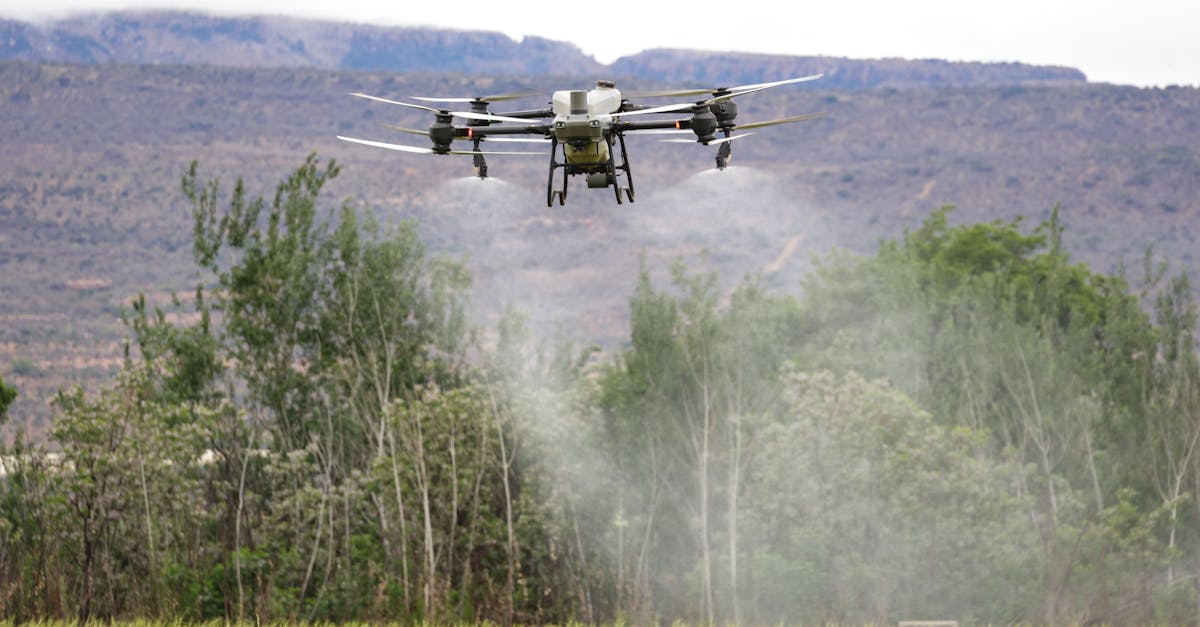
Agricultural drones, commonly referred to as agri-drones, have transitioned from concept to commercial service in India over the last five years. While consumer photography drones dominate the sky, agricultural drones serve a specific industrial function: precision spraying of pesticides, herbicides, and fertilizers. This article evaluates the current hardware availability, pricing, and deployment status of key players in the Indian market, focusing on DJI and domestic manufacturers.
The shift from manual spraying to mechanization is driven by labor shortages in rural India and the need for precision application. However, the market is fragmented between established international hardware and emerging domestic startups. RobotWale's editorial assessment prioritizes shipping hardware over announcements.
Market Leader: DJI Agras Series
DJI remains the primary hardware supplier for large-scale agricultural operations in India. Their Agras series is the benchmark against which domestic manufacturers are measured. The T40 model, the latest iteration, features a maximum payload of 40 kilograms and a spray rate of up to 600 liters per hour. The T40 utilizes a radar system for terrain following, allowing it to operate in uneven landscapes common in Indian states like Punjab and Maharashtra.
Availability & Pricing: DJI India officially imports the T40 and T30 models. The T40 is priced approximately at ₹9.5 lakhs to ₹11 lakhs (ex-factory), excluding battery packs and charging stations. A typical setup requires multiple batteries to maintain operational continuity. DJI has established authorized dealers in major agricultural hubs, ensuring after-sales support is available in cities like Ludhiana and Nashik.
Performance Reality: Field tests indicate a flight time of roughly 10 minutes per battery under full payload. This requires a high rate of battery swapping. The system supports the DJI Smart Battery Charger, but the charging cycle adds to the operational downtime. While DJI claims a maximum flight range of 10 kilometers, practical spraying operations usually occur within a 1-kilometer radius of the charging station.
The T30 model, the predecessor to the T40, remains in the fleet of many operators due to cost sensitivity. It carries a 30-liter payload and offers similar reliability but lower efficiency per flight hour. The transition to the T40 involves a significant capital expenditure increase, often necessitating government subsidies to make the ROI viable for smallholder cooperatives.
Indian Manufacturers: Garuda Aerospace and Others
Domestic manufacturers have made significant strides in the last two years, driven by the Production Linked Incentive (PLI) scheme and DGCA exemptions for agricultural use. Garuda Aerospace is the most prominent player with a certified product line.
Garuda Aerospace AgroDrone: The Garuda AgroDrone is designed to carry payloads ranging from 10kg to 25kg. Unlike the DJI T-series, which relies heavily on proprietary software ecosystems, Garuda focuses on interoperability with local pesticide formulations. They have received Type Certifications from the DGCA, allowing commercial operation under specific conditions. Garuda has reported deployments in Karnataka and Telangana for crop protection.
Startup Landscape: Several other startups have announced agri-drone prototypes, including Nimbula Robotics and AgriDrone. However, RobotWale’s editorial assessment prioritizes shipping hardware. As of late 2023, the volume of units delivered by Indian startups remains significantly lower than DJI’s volume. Many announcements regarding “indigenous” drones are actually OEM-based designs with localized branding.
Independent verification of flight hours and failure rates is scarce in public reports. While some startups claim “zero-emission” benefits due to electric propulsion, the battery lifecycle cost in high-temperature Indian climates remains a critical operational factor. The availability of spare parts is often cited as a differentiator, with local manufacturers promising faster turnaround times than international imports.
Regulatory and Economic Reality
The Digital Sky Platform (DSP) is the regulatory gateway for all Indian drones. For agricultural drones, the DGCA exempts certain categories from strict flight path restrictions, provided they operate below 60 meters in height and within designated no-fly zones. Farmers must register their drone and operator on the DSP before any operation.
Cost of Ownership: While the subsidy covers up to 40% of the cost in some states, the remaining capital expenditure is high. The DJI T40 setup, including spares, costs over ₹15 lakhs in India. This excludes the cost of the vehicle used for transport and the skilled pilot required. For small farmers, the ROI (Return on Investment) is calculated based on the reduction of labor costs rather than immediate crop yield increase.
Subsidy Schemes: The Ministry of Agriculture has introduced schemes to support Mechanization. The Subsidy for Agricultural Machinery (SAM) often applies to drone services rather than ownership. This means a service provider buys the drone, and farmers pay per acre. This model reduces the barrier to entry for individual farmers who cannot afford the capital outlay.
Insurance & Liability: Third-party liability insurance is mandatory. The premiums vary based on the payload and operational area. In the case of a crop failure due to spraying error, the liability framework is still evolving. Operators must carry valid insurance policies that cover both the hardware and the crop damage risks.
Challenges in Deployment
The technology is ready, but the ecosystem is not fully mature. Battery degradation is a major concern. Lithium-ion batteries lose capacity quickly in rural India where charging infrastructure is inconsistent and temperatures are high. A typical battery pack may last 300 to 500 cycles, after which replacement costs impact the operational margin.
Operator Skill: The complexity of the DJI Agras system requires trained pilots. A single operator can manage only one drone effectively during a flight. This limits the throughput per day. Companies are exploring swappable battery stations to improve efficiency, but these are not yet standard in the fleet.
Terrain Limitations: While the T40 has radar terrain following, it struggles in dense canopy areas or extreme topographies. The GPS signal can be weak in remote regions, leading to a reliance on RTK (Real-Time Kinematic) modules which require a base station connection. This adds to the setup time and complexity.
Competition: The market is seeing aggressive pricing from Chinese OEMs. The T40 competes with older models like the T20P, which are sold at lower price points. In the domestic segment, the competition is between service providers rather than just hardware vendors.
Conclusion
The agricultural drone sector in India is viable but nascent. Hardware is available, but widespread adoption depends on regulatory consistency and economic feasibility for smallholder farmers. DJI maintains the technology lead, while Indian startups focus on service and regional customization.
For the immediate future, the focus should be on service-based models where farmers pay for the spray rather than owning the drone. This lowers the risk for the end-user. As battery technology improves and regulatory frameworks stabilize, the cost per acre will decrease, making agri-drones a standard tool in Indian agriculture.
References
1. DJI India Official Website: DJI Agras Series Specifications. Accessed via official product pages for T40 and T30 models.
2. DGCA Drone Regulations: Drone Rules 2021 and Digital Sky Platform. Key regulatory documents regarding agricultural exemptions.
3. Garuda Aerospace Official Site: Garuda Aerospace Product Portfolio. Source for domestic agri-drone availability.
4. Ministry of Civil Aviation: National Drone Policy. Source for subsidy frameworks and no-fly zone definitions.
✓ Key takeaways
- •Hands-on view of The State of Agricultural Drones in India: Hardware, Pricing, and Reality inside our Agricultural Drones library.
- •Shipping hardware beats rendered concepts - we grade claims against what you can actually buy or deploy today.
- •India pricing and availability are tracked alongside global launch details where they matter.
References
Related articles
More in Agricultural Drones →