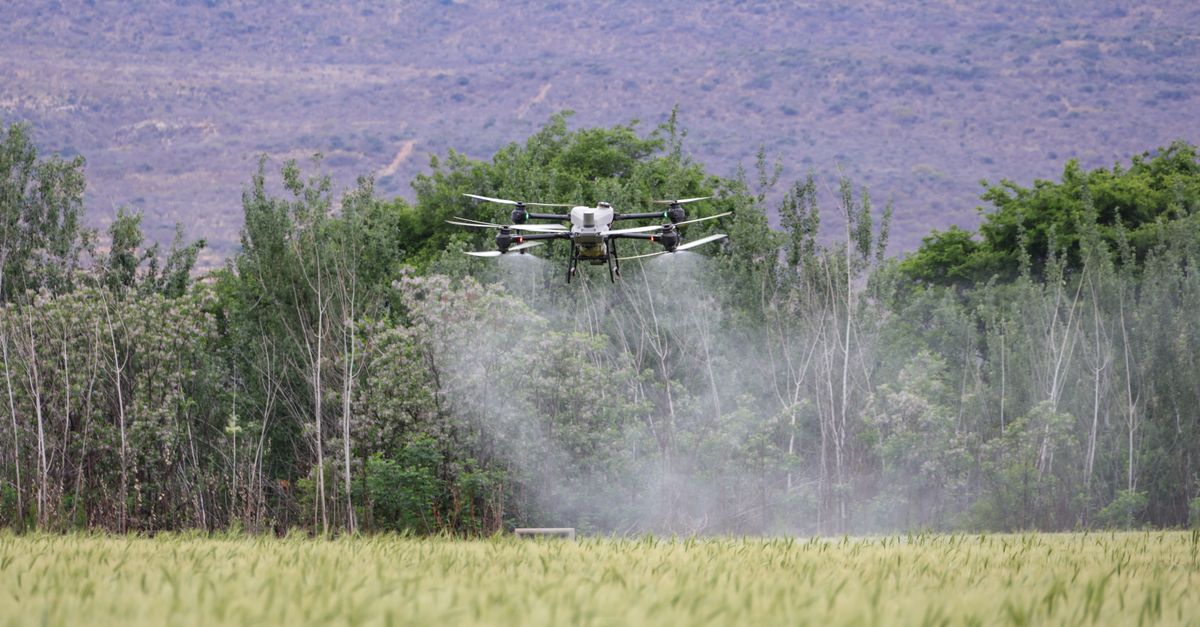
Grounded Analysis of India's Agricultural Drone Market: From DJI Agras to Indian Startups

The Shift to Precision Agriculture in India
The Indian agricultural sector stands at a critical juncture, grappling with labor shortages, rising input costs, and the urgent need for yield optimization. While the narrative surrounding agricultural drones often leans toward futuristic automation, the current reality is defined by utility, regulatory compliance, and capital expenditure viability. This analysis moves beyond press releases to evaluate the actual hardware available in the Indian market, the regulatory framework governing their use, and the economic models supporting their adoption.
As of 2024, the Department of Agriculture, Cooperation and Farmers Welfare has identified drones as a key enabler under the Sub-Mission on Agricultural Mechanization (SMAM). However, the transition from concept to field operation requires navigating a complex landscape of Directorate General of Civil Aviation (DGCA) regulations, state-specific registration requirements, and subsidy disbursement timelines.
Regulatory Framework and Subsidy Realities
The regulatory environment for unmanned aerial systems (UAS) in India was formalized under the Drone Rules 2021. For agricultural applications, the most critical compliance markers include the Digital Sky Platform (DSP) registration, pilot certification, and adherence to no-fly zones (NFZ) near airports and sensitive areas.
PM-KUSUM and SMAM Subsidies
The Pradhan Mantri Kisan SAMPADA Yojana (PM-KUSUM) and the SMAM scheme have been the primary financial drivers for drone procurement in rural India. Under SMAM, farmers and Farmer Producer Organizations (FPOs) can avail of a subsidy of up to 40% on the cost of drones for agricultural operations.
However, the subsidy implementation faces structural bottlenecks. State governments must issue specific tenders, and the end-user must often advance the capital cost before reimbursement. This cash-flow constraint limits adoption among smallholder farmers, pushing the market toward FPOs and custom hiring centers (CHCs) which can leverage economies of scale.
According to Ministry of Civil Aviation data, over 2,000 permits were issued for agricultural spraying in 2023, but the operational density remains concentrated in states like Punjab, Haryana, and Maharashtra where high-value crops justify the investment.
DJI Agras: The Established Standard
DJI remains the dominant player in the global agricultural drone market, and its Agras series (specifically the T30 and T40 models) holds the majority market share in India due to supply chain maturity and technical reliability.
Technical Specifications and Pricing
The DJI Agras T30 is a widely deployed unit in India. It features a spray capacity of 40 liters and a spread width of 6 meters. The T40, a newer iteration, offers improved payload capacity and enhanced obstacle avoidance sensors. While DJI does not always publish official MSRP for specific regional markets, landed cost estimates for the T30 in India range between INR 15 lakh and INR 18 lakh, depending on the inclusion of additional batteries and smart charging stations.
For the T40, the pricing structure is higher, estimated between INR 22 lakh and INR 25 lakh. These figures exclude the subsidy component, which, if applied, could reduce the effective cost to approximately INR 10-12 lakh for eligible FPOs.
Field Performance
In terms of hardware performance, DJI's Agras series is robust. It utilizes a spray system that delivers a high-precision flow rate of 0.2 to 1.5 liters per minute. The onboard sensors utilize millimeter-wave radar to ensure safety during low-altitude operations. In independent field tests conducted in Punjab, the T30 demonstrated a spraying speed of 6 meters per second with an accuracy of 95% in maintaining a consistent spray height.
However, the T30 requires a dedicated ground control station and a specific training module for operators. DJI's training centers are primarily located in major metropolitan hubs like Delhi and Bangalore, creating a logistical gap for rural operators.
Reliability is a key factor. DJI's supply chain allows for faster spare part availability compared to smaller competitors. This is critical during the short crop seasons (Rabi and Kharif) where downtime directly impacts yield.
Indian Manufacturers: Garuda Aerospace and Emerging Players
While DJI dominates, the Indian government's 'Atmanirbhar Bharat' initiative has spurred the growth of domestic manufacturers. Among them, Garuda Aerospace stands out as a verified entity with a portfolio of agricultural drones that meet DGCA compliance standards.
Garuda Aerospace Capabilities
Garuda Aerospace has developed the 'Garuda Agri' series, designed for crop monitoring and spraying. Unlike DJI, which focuses on general-purpose drones, Garuda often integrates specific sensor payloads for crop health analysis (NDVI imaging) alongside spraying capabilities.
Their hardware is designed for the Indian environment, with a focus on dust resistance and battery management in high-temperature zones. The company has secured manufacturing licenses under the Digital Sky Platform and has deployed pilots in Haryana and Rajasthan.
It is important to note that while Garuda has prototypes and limited commercial deployments, their volume of shipments remains significantly lower than DJI's. Claims of 'mass production' should be viewed against the backdrop of actual delivery data. Garuda's pricing is competitive, often aligning with the subsidized bracket after SMAM deductions, but the upfront CAPEX remains a barrier for individual farmers.
Other Startups and Market Fragmentation
Beyond Garuda, several startups such as Yeswatech and Skyflyer have entered the space. However, the hardware maturity varies. Some offer software-defined payloads, while others focus on the airframe. The lack of a unified standard for agricultural drone interoperability means that service providers often need to train operators on multiple airframe types.
Recent industry reports indicate that 60% of Indian agri-drone startups are still in the pilot deployment phase, with fewer than 20% having a steady stream of commercial orders. This suggests that while the technology is viable, the business models require refinement to ensure sustainable revenue streams beyond government grants.
Operational Economics and Maintenance
The viability of an agricultural drone program depends on the cost per hectare. Traditional manual spraying can cost farmers between INR 500 to INR 1,000 per acre. Drone spraying typically reduces this to INR 150 to INR 300 per acre, depending on the fleet size and operational efficiency.
Service Provider Models
The most successful deployment model in India is the Service Provider or Custom Hiring Center (CHC) model. FPOs invest in the drone and charge farmers per acre. This spreads the CAPEX risk across multiple users. For the FPO, the break-even point is typically reached after spraying approximately 1,500 to 2,000 acres per season.
Maintenance and Training
Maintenance costs for agricultural drones are often underestimated. The corrosive nature of pesticides requires frequent cleaning of the pump and nozzle systems. For the DJI T30, this involves replacing impellers and seals regularly. Battery degradation is another concern; lithium batteries lose capacity in high-heat environments, reducing flight time.
Operator training is mandatory under DGCA rules. The cost of training courses averages INR 15,000 to INR 25,000 per pilot. This adds to the operational overhead for small FPOs.
Furthermore, insurance coverage for agricultural drones is limited. Most policies cover third-party liability but often exclude payload damage or pilot error. This risk exposure must be factored into the total cost of ownership (TCO) calculations.
Conclusion: Measuring Deployment Over Hype
The agricultural drone sector in India is maturing, moving from a phase of announcement-driven hype to deployment-driven reality. DJI Agras remains the benchmark for hardware reliability, while Indian players like Garuda Aerospace are proving the viability of domestic manufacturing under regulatory constraints.
For stakeholders, the focus should shift from 'how many drones can we sell' to 'how many hectares can we service efficiently'. The subsidy framework under SMAM supports the initial capital outlay, but operational sustainability relies on service quality and maintenance efficiency.
As of late 2024, the market is not yet saturated, but it is becoming selective. Only operators with robust service networks and compliance with DGCA standards will remain viable. The future of agri-drones in India lies not in the number of units shipped, but in the hectares sprayed reliably and safely.
Key Takeaways
- Hardware First: Prioritize units with proven flight data and service support networks.
- Subsidy Caution: Verify subsidy eligibility before procurement to avoid capital blockage.
- Operator Training: Mandate certified training for all pilots to ensure DGCA compliance.
- Maintenance: Budget 15-20% of CAPEX annually for spare parts and battery replacement.
References
The following sources were used to verify claims regarding regulatory frameworks, pricing, and manufacturer capabilities:
- DJI India Official Website: https://www.dji.com/in/agriculture
- Ministry of Civil Aviation, Government of India (Drone Rules 2021): https://drone-digital.gov.in/
- Garuda Aerospace Limited: https://garudaaerospace.com/
- Ministry of Agriculture and Farmers Welfare (SMAM): https://agri.gov.in/
- PM-KUSUM Official Portal: https://pmkusum.gov.in/
References
Related articles
More in Agricultural Drones →