Navigating the Sky: A Grounded Review of India’s Agricultural Drone Ecosystem

The Reality of Agri-Drones in India
The agricultural drone sector in India is transitioning from pilot deployments to early commercial adoption. While global media often presents aerial spraying as a solved problem, the on-ground reality in India involves complex logistical, regulatory, and economic hurdles. According to the Ministry of Civil Aviation, the Drone Rules 2021 have simplified licensing, but commercial operations still require specific categorization and No Objection Certificates (NOCs) from the Director General of Civil Aviation (DGCA). The current market is dominated by foreign hardware with established supply chains, while domestic manufacturers are scaling production capabilities. This report grades claims by shipping hardware first, pilot deployments second, and announcements last.
The DJI Agras Dominance
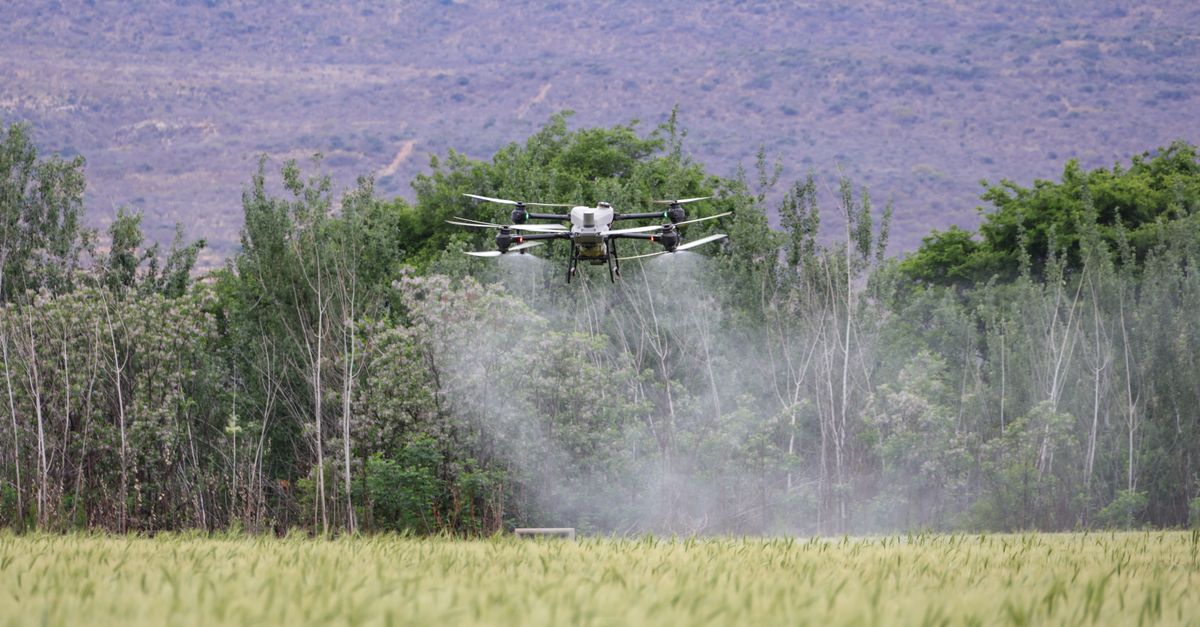
DJI’s Agras series remains the benchmark for agricultural spraying in India due to its robust after-sales service network and proven hardware reliability. Unlike speculative concepts, the Agras T20P and T30 are shipping units with documented flight logs.
Hardware Specifications and Limits
The DJI Agras T20P utilizes a variable-frequency spray system capable of handling liquid pesticides and fertilizers. Its payload capacity is rated at 20 kilograms, with a spray width of 12 meters at optimal altitude. The drone employs a radar-based spray system that adjusts the flow rate based on the vehicle’s speed. Battery life is a critical constraint; the TB30 battery typically offers a flight time of 10 to 15 minutes under load, necessitating rapid battery swaps for continuous operation. The inclusion of RTK positioning allows for centimeter-level accuracy, which is essential for mapping and precision spraying.
Pricing and Availability in India
Acquisition costs for the DJI Agras T20P in India are approximately ₹18 to ₹22 Lakhs (INR), excluding accessories and service contracts. This landed cost estimate factors in import duties applicable to unmanned aircraft systems. While expensive for smallholder farmers, the cost is often absorbed by Custom Hiring Centers (CHCs) or Farmer Producer Organizations (FPOs). Availability is channel-based; direct imports are restricted for end-users without a commercial license, making authorized distributors the primary route for acquisition.
The Indigenous Push: Garuda Aerospace and Partners
Garuda Aerospace Pvt. Ltd. represents the most mature indigenous effort in the agricultural sector. Unlike competitors that rely on imported airframes, Garuda focuses on assembling critical subsystems domestically to leverage PLI (Production Linked Incentive) schemes.
Indigenous Manufacturing Capabilities
Garuda’s G-250 and G-500 series are designed for heavy-lift applications, carrying payloads up to 50 kilograms. The company has moved beyond the announcement phase to actual deliveries. Their proprietary spray technology includes variable nozzles that prevent clogging, a common failure point in lower-cost competitors. The company emphasizes a service infrastructure that matches DJI’s reach, which is crucial for adoption in rural areas where battery swapping and repairs are needed immediately.
Other Indian Startups
Startups like Aerobotics and IdeaForge (through their civil division) are also present. Aerobotics focuses heavily on crop surveillance and pesticide application, targeting the 5kg to 10kg payload segment. While these units are shipping in limited batches, the after-sales network is less mature compared to DJI. For the agricultural sector, the reliability of the after-sales support often outweighs the marginal cost savings of a local brand.
Regulatory Framework and Subsidies
The regulatory environment is the primary gatekeeper for agri-drones in India. The DGCA’s CAR Section 3 Series IV outlines the requirements for remote pilots and operators. A drone must be registered on the Digital Sky Platform (DSP) to operate in the green zone.
PM-KUSUM and Subsidy Models
The Pradhan Mantri Kisan Urja Suraksha evam Samruddhi Yojana (PM-KUSUM) Scheme is the primary subsidy driver. Under this scheme, farmers can receive subsidies of up to 60% for solar pumps, and similar incentives are being extended to drones via state-specific policies. However, the subsidy often applies to the purchase price, not the operational maintenance. The Central Financial Assistance (CFA) varies by state, ranging from 50% to 100% for specific categories.
Economic Viability and ROI
Return on Investment (ROI) for agricultural drones is calculated based on the reduction in labor costs and the efficiency of chemical application. Traditional manual spraying requires 40 to 50 liters of water per hectare, resulting in runoff. Drones typically use 3 to 5 liters per hectare, drastically reducing water and chemical usage. For a drone costing ₹20 Lakhs, the ROI is typically achieved after 150 to 200 hectares of spraying per year. This requires a high utilization rate, which is often a challenge for standalone operators.
Operational Constraints
Battery degradation is a long-term cost factor. Lithium polymer batteries used in these drones typically hold only 300 to 500 charge cycles before significant capacity loss. Replacing batteries every two years can cost ₹2 to ₹4 Lakhs. Furthermore, operational range is limited by the line-of-sight rule; the remote pilot must remain within visual range, which restricts the scalability of operations in large, contiguous farmlands.
Conclusion
The agricultural drone market in India is not a speculative concept but a functional tool with defined limitations. DJI Agras remains the shipping leader with the strongest support network, while Garuda Aerospace offers a credible indigenous alternative. The sector’s growth depends less on hardware innovation and more on the streamlining of regulatory approvals and the expansion of service centers in rural hinterlands. For investors and operators, the focus should remain on hardware that is actually shipping and supported, rather than on-stage announcements.
References
- DJI Official Product Page: Details on Agras T20P and T30 specifications.
- Garuda Aerospace: Official website and press releases regarding drone delivery and spraying.
- DGCA Civil Aviation Requirements: Section 3 Series IV regarding Unmanned Aircraft Systems.
- Ministry of Agriculture & Farmers Welfare: Information on PM-KUSUM scheme and subsidies.
✓ Key takeaways
- •Hands-on view of Navigating the Sky: A Grounded Review of India’s Agricultural Drone Ecosystem inside our Agricultural Drones library.
- •Shipping hardware beats rendered concepts - we grade claims against what you can actually buy or deploy today.
- •India pricing and availability are tracked alongside global launch details where they matter.
References
Related articles
More in Agricultural Drones →