
Humanoid Startup Funding: Capital Cycles, Shipping Milestones, and India Market Realities
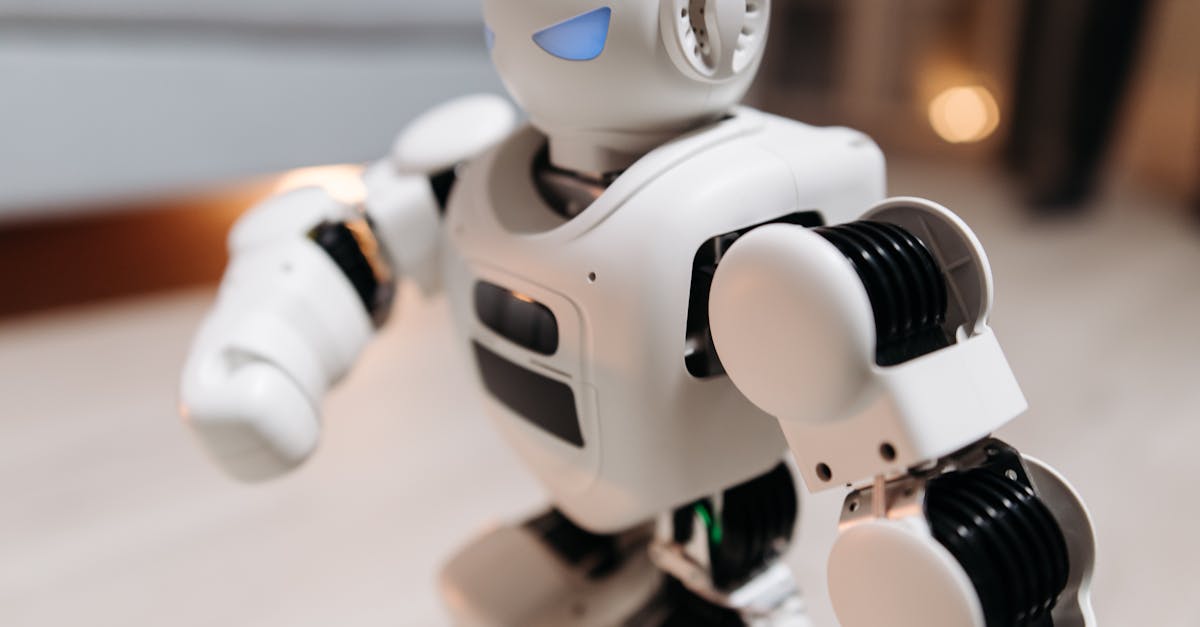
The Humanoid Capital Cycle: Funding, Shipping, and Scale
The humanoid robotics sector has transitioned from conceptual demonstration to capital-intensive hardware development. Venture funding in this space is no longer driven by render quality or narrative alone; it is increasingly graded by shipped units, controlled pilot deployments, and supply chain maturity. This article evaluates recent funding rounds across five prominent companies—Figure AI, 1X Technologies, Apptronik, Sanctuary Robotics, and Unitree Robotics—applying a strict hierarchy of validation: shipped hardware first, pilot deployments second, and funding announcements last. India market availability and approximate landed pricing are addressed where applicable.
Figure AI: Capital Allocation for Manufacturing Readiness
Figure AI closed a $325 million Series C in November 2023, led by NVIDIA, with participation from Amazon, Intel, and Samsung. This brought Figure's total raised to approximately $500 million. The capital was explicitly earmarked for scaling production of the Figure 02 hardware platform and advancing the Figure 01 fleet in industrial environments. By the grading hierarchy, Figure's validation rests on hardware shipping and pilot deployment rather than funding announcements alone. The company began delivering Figure 01 units to BMW's Spartanburg plant in 2023, conducting controlled pilot deployments for parts handling and logistics. These deployments provided measurable data on cycle times, fault tolerance, and integration with existing warehouse management systems.
Figure's funding structure reflects a shift toward vertical integration, with capital directed toward custom actuators, vision stacks, and manufacturing tooling. The company has emphasized that production scaling requires sustained capex over 18 to 24 months. For the Indian market, Figure has not announced official distribution channels or localized pricing. Independent importers occasionally source Figure 01 units at approximately ₹4.5 to ₹6 crore per system, landed, depending on customs classification, import duties, and third-party integration costs. Official availability remains contingent on commercial pilot expansion and localized service agreements.
1X Technologies: Backing a Shipping-Ready Platform
1X Technologies secured a $130 million Series C in May 2024, led by SoftBank Vision Fund 2 and the International Finance Corporation, bringing total funding to roughly $160 million. The capital was allocated to mass-producing the NEKO 2 humanoid platform and expanding pilot programs across Europe and North America. Grading by hardware first, 1X has progressed from prototype demonstrations to controlled shipping of NEKO 2 units. The company has documented on-stage demos and factory-floor validations, but commercial deployment remains in the pilot phase, primarily with utility providers and municipal safety teams in Norway and select European markets.
1X's funding strategy emphasizes supply chain localization, with partnerships for joint reducers, battery packs, and compute modules. The company has stated that unit economics will improve significantly once production exceeds 500 units annually. In India, 1X has not established official distribution. Independent procurement through European distributors places the NEKO 2 at approximately ₹1.2 to ₹1.8 crore landed, excluding software licensing and site integration. The hardware is technically importable, but regulatory compliance for industrial robots, including BIS certification pathways and safety audits, remains a prerequisite for commercial operation.
Apptronik: Infrastructure for Warehouse Deployment
Apptronik raised $60 million in a Series B round in January 2024, with prior funding bringing total capital to approximately $100 million. The company's Apollo platform has been graded primarily by pilot deployments rather than broad commercial shipping. Apptronik has deployed Apollo units at Ford's Kentucky assembly plant and Amazon fulfillment centers, collecting data on task execution, navigation stability, and human-robot collaboration. These pilots have been critical in validating the platform's mechanical reliability and software stack under real-world conditions.
Apptronik's funding has been directed toward actuator refinement, sensor fusion, and enterprise software licensing. The company has explicitly stated that hardware shipping will scale alongside enterprise contracts. For India, Apptronik has not announced official distribution or pricing. Independent import of Apollo units typically ranges from ₹3.5 to ₹5 crore landed, depending on configuration, compute modules, and third-party integration. The platform's software licensing model also requires enterprise support agreements, which limits direct consumer or small-business acquisition in the Indian market.
Sanctuary Robotics: Capitalizing on the Software-Defined Stack
Sanctuary Robotics closed a $120 million Series B in November 2023, led by Khosla Ventures, with participation from NVIDIA and other strategic investors, bringing total funding to roughly $150 million. Unlike hardware-first competitors, Sanctuary's funding strategy emphasizes a software-defined stack, focusing on embodied AI, motion policy optimization, and simulation-to-reality transfer. The company has not prioritized large-scale hardware shipping, instead concentrating on pilot deployments with select industrial partners and research institutions.
Sanctuary's approach reflects a broader industry trend where capital is allocated toward foundational AI models rather than mechanical iteration. The company has published technical reports on motion planning and manipulation policies, but commercial hardware deployment remains limited. In India, Sanctuary has not established distribution or pricing. Independent procurement of Sanctuary-compatible hardware or software licenses is not currently structured for the Indian market. The company's focus on simulation and policy training means that landed costs would depend heavily on custom hardware sourcing and enterprise AI licensing, which are not publicly priced for India.
Unitree Robotics: Pricing Strategy and Global Capital Inflows
Unitree Robotics has attracted substantial capital through multiple rounds, with total funding exceeding $300 million. The company's strategy centers on high-volume, low-cost hardware production, leveraging supply chain efficiency and vertical integration. Unitree has shipped the Go2, B2, and H1 platforms at prices significantly below Western competitors. The grading hierarchy strongly favors Unitree here: hardware shipping is widespread, pilot deployments are growing, and funding announcements serve as secondary validation.
Unitree's pricing strategy has disrupted the global market, with the Go2 quadruped available at approximately $2,000 and the B2 humanoid at roughly $10,000 in direct sales. In India, Unitree hardware is available through independent importers and authorized distributors. Landed costs for the Go2 range from ₹1.5 to ₹2.2 lakh, while the B2 humanoid ranges from ₹8 to ₹12 lakh, depending on customs duties, import taxes, and third-party integration. The H1 platform, priced higher for research and development, typically lands between ₹15 and ₹20 lakh in India. Unitree's hardware is widely accessible for research institutions, startups, and educational facilities, though enterprise support and localized service networks remain limited.
India Availability and Market Entry Considerations
The Indian humanoid robotics market is still in the early adoption phase. Hardware availability is primarily driven by independent importers rather than official manufacturer distribution. Landed costs are heavily influenced by customs duties, BIS certification requirements, and third-party integration expenses. For enterprise deployments, pilot programs must comply with industrial safety standards, data localization norms, and workplace regulations. Companies evaluating humanoid hardware in India should prioritize vendors with documented pilot data, transparent unit economics, and clear service pathways. Funding announcements alone do not indicate market readiness; shipped hardware and validated pilot deployments remain the primary indicators of commercial viability.
References
- Figure AI. (2023). Figure Closes $325 Million Series C Funding. https://www.figure.ai/news/figure-closes-325m-series-c
- 1X Technologies. (2024). 1X Raises $130 Million Series C to Scale NEKO 2 Production. https://www.1x.tech/news/series-c-funding-announcement
- Apptronik. (2024). Apptronik Secures $60 Million Series B for Apollo Platform. https://apptronik.com/news/apptronik-series-b-funding
- Sanctuary Robotics. (2023). Sanctuary Robotics Closes $120 Million Series B. https://www.sanctuary.ai/news/series-b-funding
- Unitree Robotics. (2023). Unitree Global Funding and Product Line Overview. https://www.unitree.com/about-us
- TechCrunch. (2023). Figure AI's $325M Series C and the Race to Ship Humanoid Robots. https://techcrunch.com/2023/11/14/figure-ai-series-c/
- Bloomberg. (2024). 1X Technologies' SoftBank Backing Signals Confidence in Humanoid Pilots. https://www.bloomberg.com/news/articles/2024-05-15/1x-technologies-softbank-humanoid-funding
- Crunchbase. (2024). Unitree Robotics Funding Rounds and Valuation. https://www.crunchbase.com/organization/unitree
✓ Key takeaways
- •Hands-on view of Humanoid Startup Funding: Capital Cycles, Shipping Milestones, and India Market Realities inside our Humanoid Startup Funding library.
- •Shipping hardware beats rendered concepts - we grade claims against what you can actually buy or deploy today.
- •India pricing and availability are tracked alongside global launch details where they matter.
Related articles
More in Humanoid Startup Funding →

