Autonomous Tractors: Hardware Reality, John Deere, and the Indian Market

The Current State of Autonomous Tractor Hardware
The autonomous tractor segment has moved beyond conceptual renderings and factory floor demonstrations into limited production and regional deployment. The industry’s claims are now testable against actual hardware, software maturity, and field performance data. Grading the market requires separating units that are shipping with certified autonomy packages from those still in pilot programs or reliant on manufacturer announcements. Shipping hardware ranks highest in credibility, followed by verified pilot deployments, with unvalidated announcements occupying the lowest tier.
Two manufacturers dominate the current hardware landscape: John Deere, which has scaled its autonomous row-crop platform in North America and Europe, and Mahindra & Mahindra, which is adapting autonomous and precision-agriculture systems for India’s fragmented smallholder and mid-sized farm markets. Both companies are shipping hardware, but the autonomy levels, operational constraints, and pricing models differ significantly.
John Deere’s Production-Ready Fleet
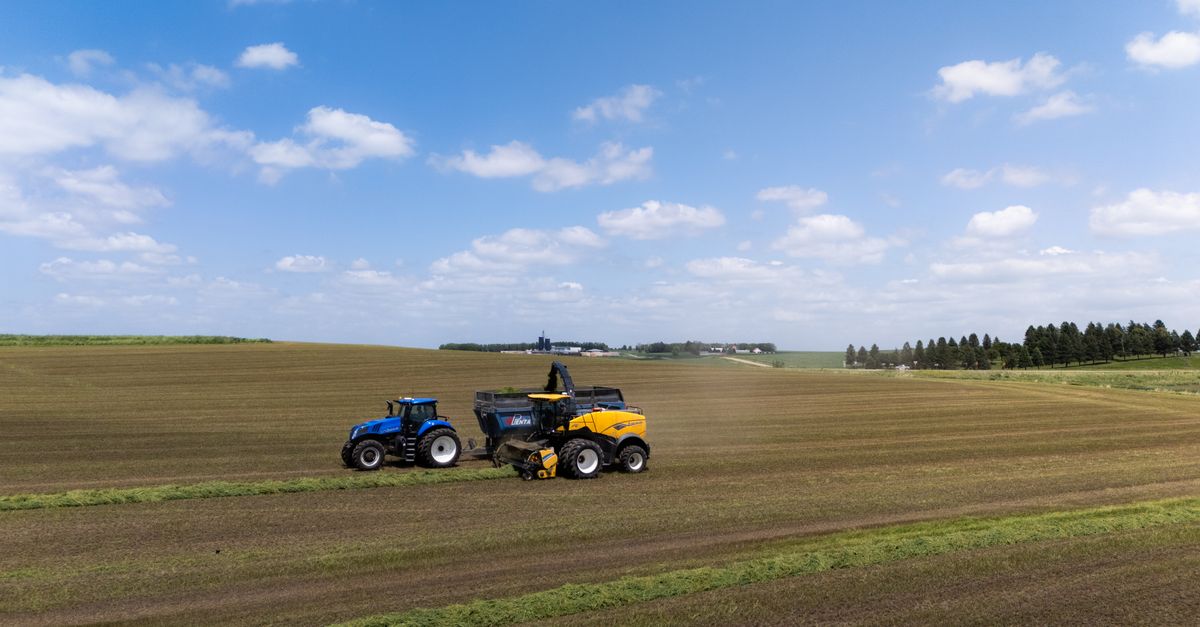
John Deere’s autonomous offering centers on the 8R Series tractor equipped with the AutoTrac system and a dedicated autonomy package. The hardware ships with RTK GPS receivers, steering actuators, and a centralized compute module that processes camera and LiDAR inputs for path tracking and obstacle detection. The system is classified as Level 4 autonomy under SAE J3016, but only within strict operational design domains: daylight conditions, row-crop planting and harvesting, and pre-mapped fields with RTK correction signals.
Production units have been delivered to commercial farms in the United States, Canada, and select European markets since 2022. John Deere has published factory integration videos and on-stage demonstrations at SIMA and Agritechnica, but independent verification remains limited to third-party agritech publications and farm operator reports. The autonomy package does not operate in low-light, heavy rain, or unstructured terrain, and it requires a dedicated control cabin for safety overrides.
Mahindra’s India-Centric Deployment
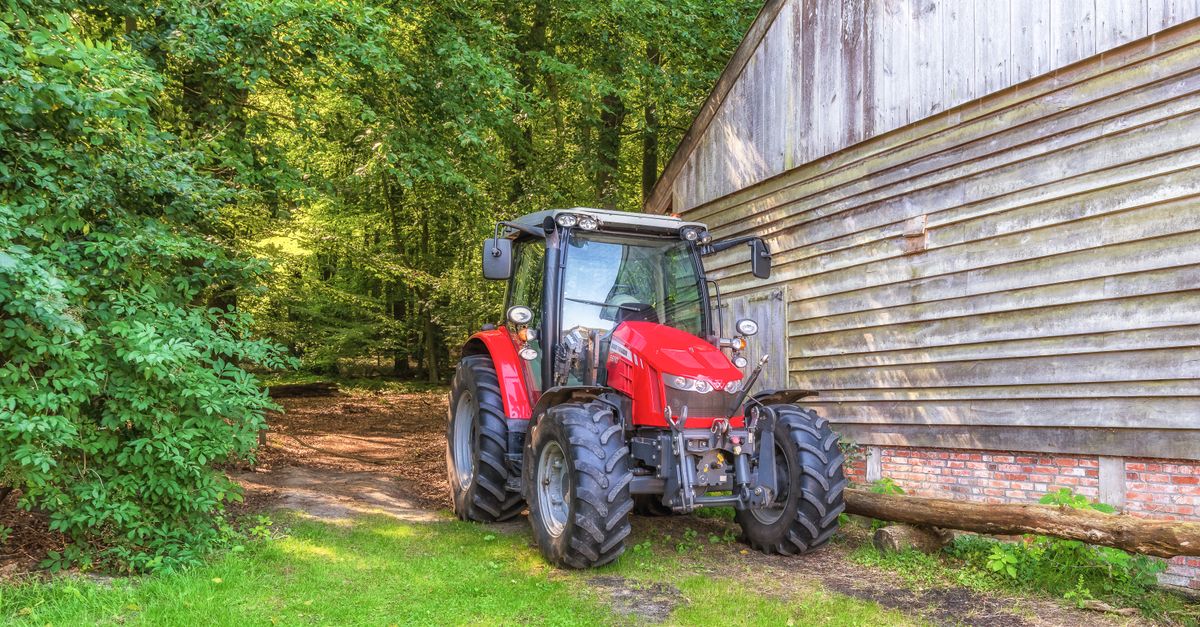
Mahindra & Mahindra’s approach to autonomous tractors is grounded in India’s cost structure, terrain diversity, and maintenance ecosystem. The company has integrated autonomous steering and precision guidance systems into the 6050 and 6060 tractor platforms, partnering with AgriNav and other localization vendors for software calibration. Unlike the North American row-crop model, Mahindra’s systems prioritize multi-crop adaptability, including paddy, wheat, and sugarcane operations.
Shipping hardware in India includes the 6050 Autonomous variant, which features RTK-GNSS guidance, automated steering, and a touchscreen interface for field mapping. Pilot deployments have been documented in Maharashtra, Punjab, and Karnataka, primarily through distributor-led precision agriculture programs. The hardware is built for high ambient temperatures, dust exposure, and intermittent power conditions, with service networks leveraging Mahindra’s existing dealer footprint. Full driverless operation remains restricted to controlled pilot zones, with manual override required for most field scenarios.
Grading the Claims: Shipping Hardware vs. Pilots vs. Announcements
Grading the autonomous tractor market requires strict adherence to deployment status. The following tier system reflects current industry reality:
- Tier 1: Shipping Hardware – John Deere 8R autonomy package and Mahindra 6050/6060 autonomous variants are available for purchase and delivery. These units include certified sensors, compute modules, and documented field performance data.
- Tier 2: Pilot Deployments – Mahindra’s multi-terrain autonomy trials, John Deere’s nighttime operation tests, and third-party retrofitted autonomy kits fall into this category. Results are published in agritech journals and distributor reports, but scalability is unproven.
- Tier 3: Announcements – Unveiled autonomy concepts, software-only guidance upgrades, and partnership MOUs without hardware integration remain speculative. These do not constitute operational systems and are excluded from hardware grading.
Manufacturers frequently conflate precision guidance with full autonomy. RTK-GNSS steering reduces lateral deviation to under 2.5 cm, but it does not eliminate the need for human oversight in dynamic field conditions. True autonomy requires real-time obstacle classification, terrain negotiation, and fault tolerance, which are still maturing in agricultural hardware.
Technical Architecture and Sensor Suites
Autonomous tractors rely on a layered sensor and compute architecture. The core components include:
- Positioning: RTK-GNSS receivers provide centimeter-level accuracy. Dual-antenna setups enable heading correction, while inertial measurement units (IMUs) bridge signal gaps in canopy-heavy or mountainous terrain.
- Perception: Stereo cameras and solid-state LiDAR modules detect row boundaries, obstacles, and terrain changes. John Deere’s system uses a forward-facing LiDAR array and wide-angle cameras, while Mahindra’s Indian variants prioritize camera-based row tracking to reduce cost and maintenance complexity.
- Compute & Control: Automotive-grade processors run path-planning algorithms and steering actuation control. Redundant braking and hydraulic systems ensure fail-safe operation when signal loss or sensor fault occurs.
- Connectivity: 4G/5G modules enable fleet management dashboards and remote diagnostics. Offline operation is mandatory for most Indian farms, requiring edge-compute fallback modes.
Field testing reveals that sensor degradation from dust, mud, and crop residue remains the primary failure mode. Regular cleaning, IP67-rated enclosures, and modular sensor mounts are standard in production units. Software updates are delivered via OTA when connectivity permits, but critical autonomy patches require dealer installation.
India Market Availability and Pricing Landscape
Autonomous tractors in India are priced at a premium due to imported compute modules, RTK infrastructure, and calibration labor. Approximate landed costs are as follows:
- John Deere 8R + Autonomy Package: ₹1.85–2.20 crore (imported, dealer-assembled, includes RTK base station setup). Availability is limited to large commercial farms and contract farming operators.
- Mahindra 6050/6060 Autonomous Variant: ₹28–35 lakh (domestic assembly, includes RTK-GNSS guidance and automated steering). Widely available through Mahindra Agri dealerships.
- Retrofit Autonomy Kits: ₹4.5–7 lakh (third-party vendors, includes GNSS receiver, steering actuator, and control unit). Deployment is fragmented, with varying reliability across farm types.
Pricing excludes ongoing costs: RTK subscription fees, software licensing, sensor replacement, and specialized technician labor. Indian operators typically amortize autonomy systems over 5–7 years, depending on crop cycles and labor savings. Smallholder farms (<2 hectares) remain outside the addressable market due to capital constraints and field fragmentation.
Operational Realities and Maintenance Constraints
Autonomous tractors perform reliably within their design boundaries, but field operations introduce constraints that manufacturers rarely disclose in marketing materials. Key operational realities include:
- Signal Dependency: RTK correction signals require a local base station or network subscription. Signal dropouts in valley terrain or dense canopy trigger immediate manual takeover.
- Calibration Frequency: Steering actuators and sensor mounts require recalibration every 1,000–1,500 operating hours. Misalignment causes row deviation and crop damage.
- Service Infrastructure: Autonomous systems require certified technicians with automotive electronics training. Rural service coverage remains uneven outside major agri-hubs.
- Software Licensing: Autonomy features are subscription-based in many markets. License expiration disables automated steering, reverting the tractor to manual mode.
Despite these constraints, autonomous tractors reduce operator fatigue, improve planting consistency, and lower fuel consumption by 8–12% through optimized path tracking. The technology is viable for mid-to-large farms with structured fields, reliable power, and access to certified service networks. It is not a replacement for skilled agronomists or field managers, but a tool that augments existing operations.
References
- John Deere. Autonomous 8R Tractor: Technical Specifications and Operational Limits. https://www.deere.com/en/agriculture/autonomous-tractors/
- John Deere. AutoTrac and Autonomous System Integration Whitepaper. https://www.deere.com/en/agriculture/precision-ag/autotracing/
- Mahindra & Mahindra. 6050 Autonomous Tractor: Product Sheet and Dealer Network Details. https://www.mahindra.com/agriculture/tractors/6050-autonomous
- AgriNav. RTK-GNSS Guidance and Autonomous Steering Integration Report. https://www.agrinav.com/technology/rtk-autonomy
- FAO. Autonomous and Precision Agriculture Machinery: Market and Deployment Analysis. https://www.fao.org/3/cb1494en/CB1494EN.pdf
- Reuters. John Deere Expands Autonomous Tractor Production Amid Farm Labor Shortages. https://www.reuters.com/business/autonomous-tractors-farm-labor-2023-10-15/
- Business Standard. Mahindra Agri’s Autonomous Tractor Pilots Scale in Maharashtra and Punjab. https://www.business-standard.com/industry/news/mahindra-autonomous-tractor-pilots-india-2024-01-22/
✓ Key takeaways
- •Hands-on view of Autonomous Tractors: Hardware Reality, John Deere, and the Indian Market inside our Autonomous Tractors library.
- •Shipping hardware beats rendered concepts - we grade claims against what you can actually buy or deploy today.
- •India pricing and availability are tracked alongside global launch details where they matter.
Related articles
More in Autonomous Tractors →