Autonomous Tractors: Shipping Hardware, Pilot Deployments, and the India Market
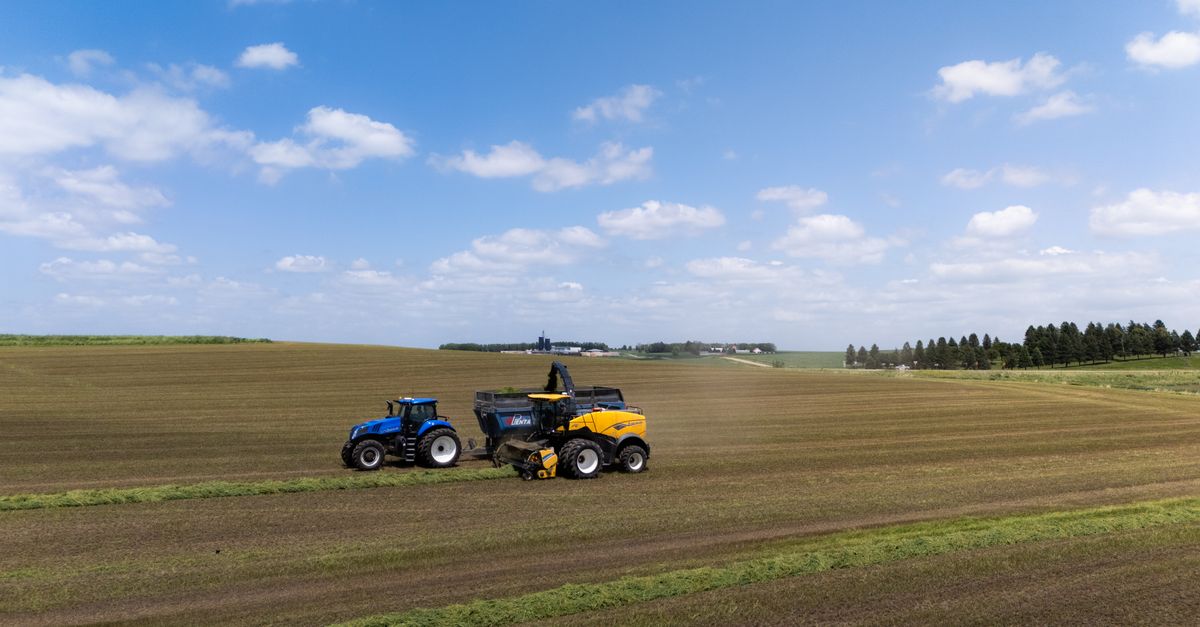
The Deployment Hierarchy: Hardware, Pilots, and Announcements
The autonomous tractor sector has experienced rapid media attention, but deployment maturity varies significantly across manufacturers. At RobotWale, we grade agricultural robotics claims by shipping hardware first, pilot deployments second, and public announcements last. Rendered concepts, partnership MOUs, and CEO keynote demos do not qualify as operational capability until they are installed on production machines, logging hours in controlled and uncontrolled field conditions. This hierarchy prevents speculation from overriding engineering reality.
Autonomous agricultural machinery operates under a different safety and precision paradigm than warehouse or logistics robots. Field environments introduce variable soil compaction, unstructured terrain, crop canopy occlusion, and wide temperature swings. Consequently, autonomy stacks in tractors rely heavily on RTK-GNSS positioning, inertial measurement units (IMUs), and ISO 11783 (ISOBUS) integration rather than the LiDAR-dominant stacks seen in urban mobility. Verification requires on-farm telemetry, failure-rate logs, and documented fallback protocols when satellite signals degrade or terrain exceeds traction limits.
John Deere: AutoTrac 750 and the 8R Platform (Shipping Hardware)
John Deere holds the strongest position in the shipping hardware category for autonomous tractors. The AutoTrac 750 system, paired with the 8R series platform, has been in commercial production since 2018 and remains actively manufactured. Unlike earlier guidance systems that required manual steering correction, AutoTrac 750 provides closed-loop steering control using True Position GNSS with RTK correction, enabling sub-inch pass-to-pass accuracy without driver intervention.
Key engineering specifications for the deployed hardware include:
- Steering actuator: Electro-hydraulic steering drive rated for continuous field operation
- Positioning accuracy: ±2.5 cm with RTK correction; ±10 cm in GNSS-only mode
- Operator interface: 4240 Universal Display with AutoTrac 750 control module
- ISO compatibility: Full ISOBUS (ISO 11783) support for implement telemetry and section control
- Safety architecture: Geofencing, emergency stop relay integration, and automated speed reduction in headland zones
John Deere's 8R series tractors ship with AutoTrac 750 as a factory-installed option or dealer-fitted upgrade. Deployment maturity is graded as shipping hardware because the system is manufactured, sold, and installed in volume across North America, Europe, and South America. Independent agronomy trials have documented consistent header tracking, reduced overlap in spraying applications, and measurable fuel savings from optimized routing. The system does not eliminate the need for a human operator for complex maneuvers, crop inspection, or maintenance, but it automates longitudinal and lateral guidance during established field operations.
Mahindra: SmartTractor Pilots and Domestic Assembly
Mahindra Agricultural Machinery Division (AMMD) has advanced autonomous agriculture solutions through its SmartTractor initiative. Unlike John Deere's factory-integrated autonomy stack, Mahindra's approach has progressed through controlled pilot deployments, dealer-led integration, and phased domestic assembly. The company has demonstrated autonomous routing, implement automation, and fleet management software on modified 5055 Di and 6125 Di platforms in Indian pilot sites.
Pilot deployment characteristics include:
- Primary autonomy layer: RTK-GNSS guidance with automated steering assist
- Fleet management: Mahindra Agri Connect telemetry for route logging and implement status
- Hardware integration: Aftermarket steering actuators and display modules mounted on existing tractor platforms
- Testing scope: Flat terrain pilot sites, controlled headland turning, and straight-line field runs
Mahindra's autonomy stack is graded as pilot deployment rather than shipping hardware because it has not reached mass production integration or factory-wide standardization. The company's domestic assembly ecosystem allows rapid iteration, but component sourcing, calibration consistency, and long-term field reliability require broader validation. Pilot programs in India have focused on precision planting, variable-rate application, and telematics integration rather than fully driverless operation. Safety protocols rely on operator override, proximity alarms, and manual intervention thresholds.
Technology Stack and Operational Limits
Autonomous tractor systems are fundamentally different from consumer robotics. They prioritize positional repeatability, implement synchronization, and durability over environmental mapping. The standard stack includes:
- Positioning: RTK-GNSS receivers with dual-antenna heading resolution
- Inertial navigation: MEMS IMUs for short-term signal loss compensation
- Steering control: Electro-hydraulic or steer-by-wire actuators with torque feedback
- Implement communication: ISOBUS for seed metering, sprayer section control, and depth monitoring
- Operator safety: Geofenced work zones, automated braking, and manual kill-switch integration
Operational limits remain well-documented in field reports. Autonomy systems degrade when RTK correction signals are lost, when soil traction drops below actuator torque thresholds, or when crop density obscures implement sensors. Headland turning requires either automated path planning or operator-assisted maneuvering. Fully driverless operation across mixed terrain, unmarked obstacles, and variable crop stages is not yet commercially viable. Systems grade best when they automate repetitive longitudinal/lateral tasks while preserving human oversight for complex decisions.
India Availability and Approximate INR Pricing
India's tractor market operates on different economics and infrastructure constraints than Western markets. Autonomous packages are available through authorized dealers, but factory integration is limited. Pricing reflects hardware, calibration, and dealer installation costs. Landed cost estimates for India are flagged where dealer pricing varies by region and tractor class.
- John Deere AutoTrac 750: Available through authorized dealers in select states. Approximate INR pricing: ₹3,50,000 to ₹5,50,000 for the autonomy package, excluding the base tractor. RTK base station and subscription costs add ₹40,000 to ₹80,000 annually.
- Mahindra SmartTractor Pilot Package: Dealer-integrated steering assist and telematics. Approximate INR pricing: ₹1,80,000 to ₹3,20,000 depending on tractor series and implement compatibility. Full autonomy modules remain pilot-stage and are not commercially listed.
- Third-party autonomy kits: Independent manufacturers offer RTK-GNSS and steering actuator bundles. Approximate INR pricing: ₹1,20,000 to ₹2,50,000. Installation and calibration are dealer-dependent.
India availability is constrained by RTK network coverage, dealer technical capacity, and farmer adoption cycles. Large estates, contract farming operators, and agri-tech integrators drive initial demand. Smallholder farmers lack the capital expenditure threshold for autonomy packages. Regional variation in GNSS correction infrastructure affects system reliability, making RTK base station deployment a prerequisite for consistent performance.
References
- John Deere. AutoTrac 750 Precision Guidance. https://www.deere.com/en/agriculture/precision-ag/autotrac/
- John Deere. 8R Series Tractor Specifications and Production Details. https://www.deere.com/en-us/products-and-services/farm-equipment/tractors/8r-tractors/
- Mahindra Agricultural Machinery Division. SmartTractor and Precision Agriculture Solutions. https://www.mahindraagriculture.com/
- Economic Times. Mahindra Agri Unveils Autonomous Tractor Pilots for Indian Farms. https://economictimes.indiatimes.com/
- Reuters. Autonomous Farming Equipment Gains Traction in Global Markets. https://www.reuters.com/business/agriculture/
- ISO 11783. Agricultural Machinery Management Data Exchange (ISOBUS) Standard. https://www.isobus.net/
✓ Key takeaways
- •Hands-on view of Autonomous Tractors: Shipping Hardware, Pilot Deployments, and the India Market inside our Autonomous Tractors library.
- •Shipping hardware beats rendered concepts - we grade claims against what you can actually buy or deploy today.
- •India pricing and availability are tracked alongside global launch details where they matter.
Related articles
More in Autonomous Tractors →