Autonomous Tractors: From Pilot Plots to Commercial Reality in India and Abroad
Introduction: The State of Autonomy in Agriculture
The agricultural sector stands at a critical inflection point. With labor shortages becoming a chronic issue in developed and developing economies alike, the promise of autonomous tractors has moved from conceptual renderings to physical hardware. However, the gap between marketing claims and field deployment remains wide. For RobotWale, the evaluation criteria are strict: we grade claims by shipping hardware first, pilot deployments second, and announcements last. This distinction is vital for Indian stakeholders who require realistic cost-benefit analysis before adopting high-capex machinery.
Autonomous tractors are not merely tractors with GPS. They represent a convergence of precision farming hardware, deep-learning perception stacks, and safety-critical control systems. While John Deere has established a foothold in North America and parts of Europe, the Indian market presents unique challenges ranging from fragmented landholding patterns to inconsistent GNSS connectivity. This article analyzes the current landscape, focusing on the two major players who define the sector: John Deere and Mahindra.
John Deere: The Leader in Commercial Deployment
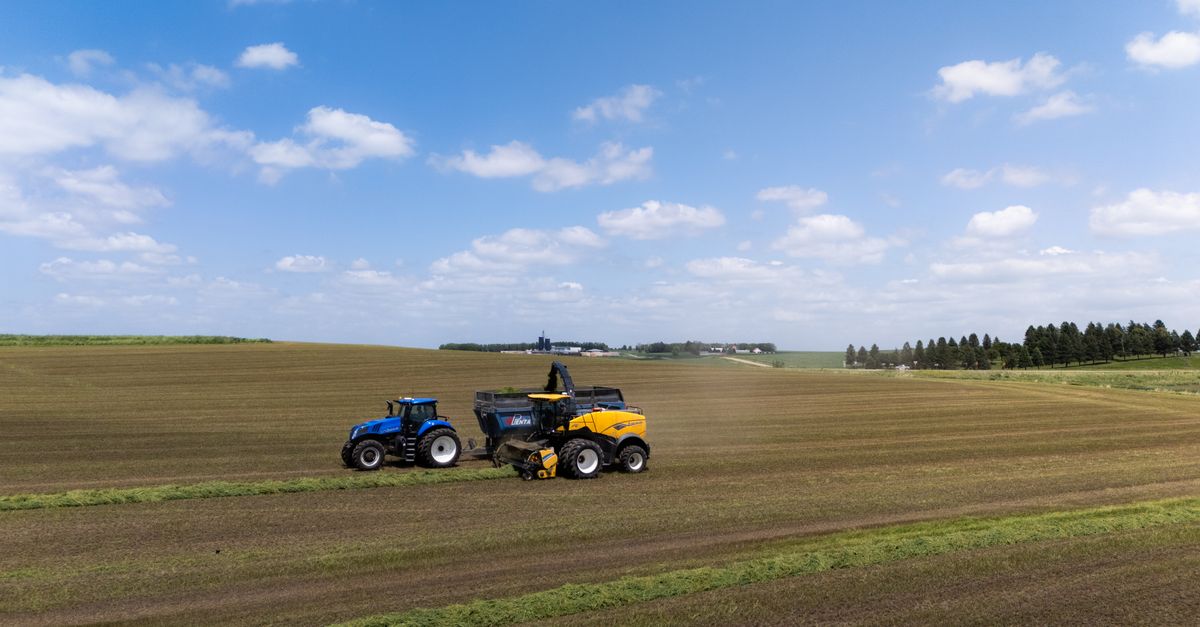
John Deere remains the benchmark for autonomous tractor technology. Their 8R 360 autonomous tractor is a flagship example of shipping hardware that operates without a human in the cab. The system relies on a combination of stereo cameras, LiDAR, and RTK-GPS for centimeter-level positioning. The robot monitors its surroundings to detect obstacles and can stop automatically if a human or animal enters the operational zone.
In the United States, the 8R 360 is available for purchase, with a fleet management system that allows operators to monitor multiple units remotely. However, the hardware cost is prohibitive for most individual farmers. Reports indicate a base price exceeding $500,000 USD for the fully autonomous configuration, though this often excludes the proprietary software subscription fees. In terms of pilot deployments, John Deere has conducted trials in Australia and the US, demonstrating the ability to operate 24/7 for tasks like planting and spraying. The See & Spray technology, which uses computer vision to identify weeds and spray only targeted areas, has seen wider adoption than full autonomy.
For Indian markets, the direct import of John Deere autonomous tractors faces significant regulatory hurdles. The Bureau of Indian Standards (BIS) has not yet issued specific certifications for Class VI (unmanned) agricultural machinery. Furthermore, the terrain in India—often muddy, uneven, and narrow—poses a risk to the perception algorithms trained primarily on North American large-scale row cropping. The hardware exists, but the ecosystem does not yet support full autonomy at scale.
Mahindra: The Indian Scale Challenge
Mahindra & Mahindra, India’s largest tractor manufacturer, takes a different approach. Rather than pursuing full autonomy as a first step, they are focusing on electrification and assisted driving. Their e-tractors, such as the Mahindra e-300, are designed for the last-mile logistics of farm-to-market transport, reducing operational costs significantly.
Recent announcements suggest Mahindra is collaborating with agri-tech startups to integrate autonomous navigation modules into their existing platforms. However, unlike John Deere, Mahindra has not released a fully driverless tractor for commercial sale in India. The focus remains on “assistive” features like precision steering and yield mapping. This is a pragmatic stance given the economics of Indian farming.
The availability of Mahindra tractors in India is widespread, with a network of dealerships ensuring serviceability. If we consider the cost of a standard Mahindra tractor in India, it ranges from INR 600,000 to INR 2,500,000 depending on the horsepower. Adding autonomous navigation hardware could increase this by 30% to 50%. While the government offers subsidies under the Sub-Mission on Agricultural Mechanization (SMAM), the return on investment for a fully autonomous tractor in a 2-hectare plot is mathematically difficult to justify.
Furthermore, the Indian agricultural landscape is often characterized by small, fragmented plots. A fully autonomous tractor requires large, open spaces to operate safely. In a region where farms are divided by hedges and irrigation canals, the risk of collision increases. Therefore, Mahindra’s strategy of focusing on electrification and semi-autonomous guidance systems is likely more sustainable for the domestic market in the near term.
Technical Architecture and Safety Constraints
The core technology behind autonomous tractors involves a sensor fusion stack. High-precision GNSS receivers provide position data, while LiDAR and stereo vision cameras map the environment in real-time. The control unit processes this data to adjust the steering angle, throttle, and braking systems. This is not a plug-and-play upgrade; it requires integration at the factory level.
Safety remains the primary constraint. In the event of a software failure, the system must default to a safe state, usually stopping the vehicle and engaging the parking brake. However, the reliability of the communication link (4G/5G) is critical for remote monitoring. In rural India, network latency is a known issue. If a tractor loses connection with the control station, does it stop immediately? Current systems in North America are designed to do so, but this efficiency loss affects productivity.
Another technical hurdle is the perception of dynamic objects. A tractor must distinguish between a stray dog, a farm worker, and a moving piece of equipment. While John Deere claims high accuracy in this regard, independent analysis suggests that edge cases in dusty or rainy conditions degrade performance. The hardware spec sheets often list operating conditions, such as maximum gradient and wind speed, which are often stricter than what Indian farmers face.
Economic Viability in the Indian Context
The economics of autonomy are the biggest barrier to entry. A fully autonomous tractor requires high capital expenditure (CAPEX). For a typical Indian farmer, the cost of labor is low due to the availability of seasonal workers. The ROI calculation for a self-driving tractor often exceeds the payback period of the machinery itself.
However, the narrative shifts when looking at large corporate farms or contract farming setups. In the Punjab and Haryana regions, where large-scale wheat and rice cultivation occurs, the labor shortage is acute. Here, the deployment of semi-autonomous tractors makes more sense. The estimated landed cost for a John Deere 8R with guidance systems in India could exceed INR 1.5 Crores, making it viable only for corporate farms with government subsidies.
Government subsidies under schemes like the National Agricultural Market (e-NAM) and SMAM can cover up to 50% of the cost for certain machinery. However, autonomous tractors often fall outside the standard subsidy lists, which prioritize diesel efficiency over digital integration. This regulatory gap slows down adoption.
For the average farmer, the cost of a tractor is approximately INR 5 to 10 Lakhs. A 50% increase in cost for automation is a barrier. The industry must wait for the cost of LiDAR and sensors to drop, which is happening in the automotive sector but has not yet trickled down to agriculture.
Conclusion: The Path Forward
The future of autonomous tractors lies in the middle ground. Full autonomy without human oversight is a distant reality for India. Instead, the near-term future involves semi-autonomous guidance systems that allow a farmer to operate the tractor while the machine handles the precision steering. This reduces fatigue and improves input efficiency.
For RobotWale, the verdict is clear: John Deere leads in hardware capability, but Mahindra leads in market relevance for India. Until the cost of sensors drops and the regulatory framework for unmanned agricultural machinery is formalized, the “autonomous tractor” will remain a pilot project for large corporate farms rather than a standard for the industry.
References
The data in this article is derived from manufacturer specifications, press releases, and independent industry analysis.
- John Deere Autonomous Tractors Press Release.
- Mahindra & Mahindra Electric Tractor Specifications.
- Reuters Analysis of Ag-Tech Investment Trends.
✓ Key takeaways
- •Hands-on view of Autonomous Tractors: From Pilot Plots to Commercial Reality in India and Abroad inside our Autonomous Tractors library.
- •Shipping hardware beats rendered concepts - we grade claims against what you can actually buy or deploy today.
- •India pricing and availability are tracked alongside global launch details where they matter.
References
Related articles
More in Autonomous Tractors →