
Autonomous Tractors: Grading the Mahindra, John Deere, and Global Field
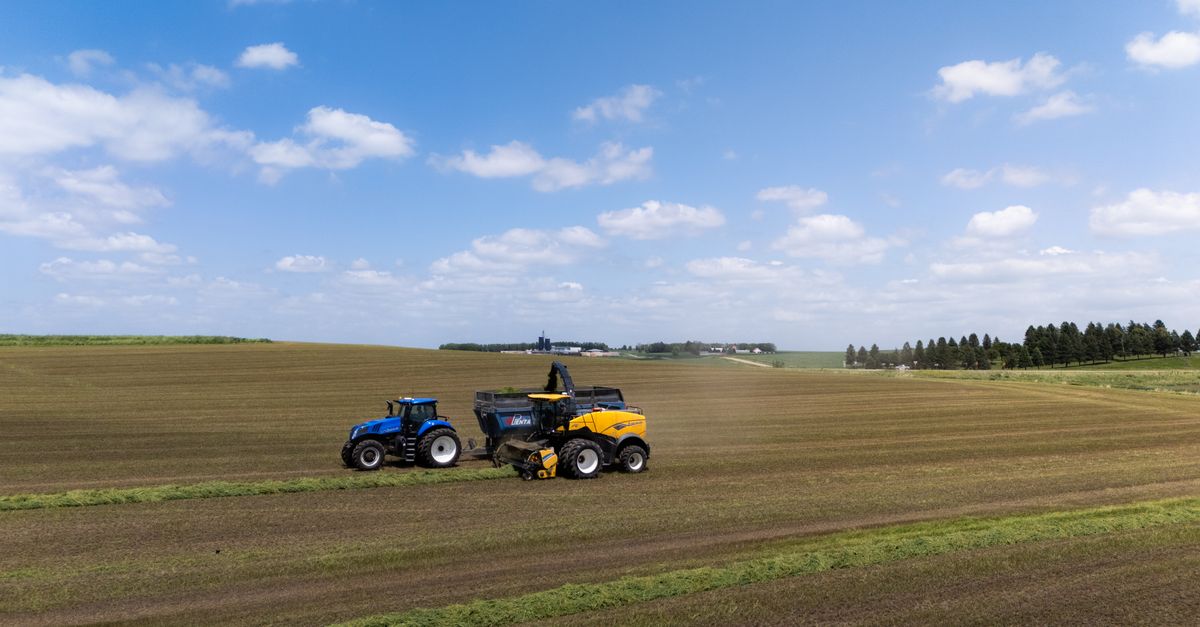
The State of Autonomous Tractor Technology
The agricultural machinery sector has shifted from conceptual renderings to deployable hardware, but the terminology surrounding "autonomous tractors" requires precise grading. The industry operates across a spectrum: assisted steering (Level 2), conditional automation (Level 3), and fully autonomous operation (Level 4). Most commercial deployments today remain in the assisted or conditional automation tiers, where a human operator is present or the system requires remote intervention. True Level 4 autonomy, where the machine navigates, executes implements, and handles edge cases without a human in the cab, remains confined to controlled pilot programs and early commercial rollouts in developed markets.
RobotWale grades agricultural robotics claims by prioritizing shipped hardware first, verified pilot deployments second, and corporate announcements last. Rendered concepts, stage demos without published telemetry, and press releases without delivery timelines are categorized as announcements and treated as lowest-confidence data. This grading methodology prevents the inflation of prototype claims into market-ready reality.
Grading the Claims: Hardware, Pilots, and Announcements
- Shipping Hardware: Units with published serial numbers, dealer delivery records, and operator manuals. Confidence: High.
- Pilot Deployments: Field tests with documented crop rows, soil types, weather conditions, and failure rates. Confidence: Medium.
- Announcements: Product roadmaps, partnership MOUs, and concept reveals. Confidence: Low until hardware ships.
John Deere: Guided Steering and Level 4 Pilots
John Deere’s autonomous tractor strategy is anchored in its 9R and 8R series, which ship with AutoTrac and AutoTrac Plus guided steering systems. These systems utilize RTK-GNSS receivers, IMU sensors, and closed-loop hydraulic steering to maintain track accuracy within 2.5 cm. The hardware is commercially available and widely deployed across North America, Europe, and Australia. It does not qualify as fully autonomous; the operator remains in the cab and must monitor field conditions, implement depth, and safety perimeters.
Deeper automation exists in Deere’s Level 4 pilot programs. The company has publicly documented trials using 9RX tractors equipped with LiDAR, stereo cameras, and redundant compute modules. These pilots focus on row-crop applications (soybeans, cotton, corn) where GPS waypoints and implement control are highly standardized. Deere’s published materials emphasize that these units require pre-mapped field boundaries, consistent row spacing, and remote operator support for edge cases such as machinery breakdowns, animal crossings, or severe weather events. The company has not released a mass-market Level 4 tractor for general purchase. Availability remains restricted to select North American and European agri-tech partners under controlled pilot agreements.
Deere’s hardware architecture relies on proprietary CAN bus integration, allowing the automation stack to control throttle, transmission, and three-point hitch hydraulics. The company’s official specification sheets confirm that autonomous functions are additive to existing tractor platforms rather than replacing core mechanical systems. This modular approach reduces integration risk but increases total cost of ownership for fleet operators.
Mahindra & Mahindra: Indian Farm Mechanization and Pilot Deployments
Mahindra & Mahindra’s approach to agricultural robotics differs from Western manufacturers due to India’s fragmented landholding patterns, diverse crop matrices, and infrastructure constraints. Mahindra does not currently ship a fully autonomous tractor. Instead, the company focuses on mechanization platforms that support precision farming and assisted automation. Models such as the Arjun DX, E2K, and 5050 series are equipped with ISO-compliant hydraulics, standardized PTO shafts, and mounting interfaces for third-party guidance systems.
Mahindra has partnered with Indian agri-tech startups and government initiatives to test guided steering kits on existing tractors. These pilots deploy RTK-GNSS modules and tablet-based control interfaces that overlay guidance lines on existing field layouts. The hardware is graded as assisted steering (Level 2), not autonomous. Operators retain full control, but the system reduces overlap, fuel consumption, and seed/fertilizer waste. Mahindra’s published deployment data indicates that guided kits are available through authorized dealers and agri-service centers across Punjab, Haryana, Uttar Pradesh, and Maharashtra.
India’s agricultural robotics landscape is shaped by cost sensitivity and maintenance accessibility. Mahindra’s strategy prioritizes reliability, spare parts availability, and service network coverage over full autonomy. The company’s official press releases and dealer catalogs confirm that fully autonomous platforms are not part of the current production roadmap. Instead, Mahindra is integrating telematics, remote diagnostics, and implement monitoring into existing tractors to build the data foundation required for future automation tiers.
The Broader Autonomous Tractor Field
The global autonomous tractor market includes multiple OEMs, each grading their claims differently. Kubota has deployed guided steering on its M and L series, with pilot programs testing semi-autonomous field operations in Japan and North America. AGCO (Fendt, Massey Ferguson) has shipped assisted steering systems across Europe, with Level 4 trials limited to contract farming operations. CNH Industrial (Case IH, New Holland) has focused on fleet management software and guidance integration rather than full autonomy.
Independent agri-tech firms such as Monarch Tractor and See & Spray have entered the market with battery-electric platforms featuring advanced perception stacks. Monarch’s M1 tractor ships with guided steering and automated implement control, marketed as a "fully electric, software-defined tractor." Grading this hardware places it in the assisted-to-conditional automation tier. It requires operator supervision, relies on cloud connectivity for map updates, and lacks the redundancy required for true Level 4 operation in unstructured environments.
The broader field is characterized by a mismatch between marketing terminology and engineering reality. Most "autonomous" claims refer to automated guidance, not autonomous decision-making. The industry is gradually shifting toward fleet management systems, remote monitoring, and semi-autonomous implement control rather than replacing human operators entirely. This pragmatic approach aligns with agricultural economics, where ROI depends on fuel savings, input optimization, and labor efficiency rather than full autonomy.
India Availability and Pricing Landscape
India’s tractor market operates on strict price sensitivity and regional availability constraints. Fully autonomous tractors are not commercially available in India. Assisted steering and guided automation kits are available through authorized dealers and third-party integrators. Pricing must be graded as landed cost estimates, including GST, import duties, and dealer margins.
- Guided Steering Kits (RTK-GNSS + Tablet Interface): ₹1.2 lakh to ₹2.5 lakh per unit, depending on brand and calibration services. Landed cost includes installation and seasonal calibration.
- Tractor Platforms with Factory Guidance Prep: ₹6.5 lakh to ₹12 lakh for 25–60 HP models. Higher HP tractors with ISO hydraulic prep and CAN bus integration range from ₹14 lakh to ₹22 lakh.
- Imported Autonomous Platforms (Monarch, Deere Level 4 Pilots): Not available for direct purchase in India. Landed cost estimates for pilot imports would exceed ₹45 lakh per unit due to customs, certification, and service requirements.
Indian farmers and contract farming operators typically lease guided systems rather than purchase them outright. Service networks, calibration reliability, and connectivity constraints dictate adoption rates. Rural broadband coverage, GNSS signal obstruction, and implement compatibility remain the primary barriers to scaling autonomous hardware in India.
Operational Realities and Maintenance
Autonomous and guided tractors face identical mechanical and environmental constraints as conventional platforms. Dust, moisture, vibration, and temperature fluctuations degrade GNSS receivers, IMU drift, and camera lenses. Calibration must be performed seasonally, and sensor cleaning protocols are mandatory for consistent accuracy. Redundant compute modules and LiDAR units increase failure points, requiring specialized diagnostic tools and trained technicians.
Software updates for agricultural automation systems are distributed via secure channels, but field connectivity often limits over-the-air updates. Operators must verify firmware versions, map alignment, and implement depth settings before each season. Fleet management platforms aggregate telemetry, but data privacy and ownership remain unresolved in many jurisdictions.
Maintenance costs for automated tractors exceed conventional platforms by 15–25% due to specialized sensors, compute hardware, and proprietary software licensing. OEM service agreements typically cover hardware failures for 2–3 years, with extended warranties available at premium rates. Third-party repair networks are limited, and unauthorized modifications void warranty coverage.
References
- John Deere. "AutoTrac Guided Steering Specifications." https://www.deere.com/en/agriculture/auto-trac/
- John Deere. "Level 4 Autonomous Tractor Pilot Program Overview." https://www.deere.com/en/news-and-stories/level-4-autonomous-tractor-pilot/
- Mahindra & Mahindra. "Agriculture Tractor Specifications and Dealer Network." https://www.mahindra.com/agriculture
- Mahindra & Mahindra. "Precision Farming and Guided Steering Pilots in India." https://www.mahindra.com/agriculture/precision-farming
- Monarch Tractor. "M1 Tractor Technical Specifications." https://www.monarchtractor.com/m1-tractor/
- AgFunderNews. "Agricultural Robotics: Shipping Hardware vs. Concept Claims." https://www.agfundernews.com
- The Economic Times. "Tractor Automation and Guidance Systems in Indian Agriculture." https://www.economictimes.indiatimes.com
- Ministry of Agriculture & Farmers Welfare, Government of India. "Mechanization and Precision Farming Guidelines." https://dahd.gov.in
✓ Key takeaways
- •Hands-on view of Autonomous Tractors: Grading the Mahindra, John Deere, and Global Field inside our Autonomous Tractors library.
- •Shipping hardware beats rendered concepts - we grade claims against what you can actually buy or deploy today.
- •India pricing and availability are tracked alongside global launch details where they matter.
References
- John Deere - AutoTrac Guided Steering Specifications
- John Deere - Level 4 Autonomous Tractor Pilot Program Overview
- Mahindra & Mahindra - Agriculture Tractor Specifications and Dealer Network
- Mahindra & Mahindra - Precision Farming and Guided Steering Pilots in India
- Monarch Tractor - M1 Tractor Technical Specifications
- AgFunderNews - Agricultural Robotics Market Analysis
- The Economic Times - Tractor Automation and Guidance Systems in Indian Agriculture
- Ministry of Agriculture & Farmers Welfare, Government of India - Mechanization Guidelines
Related articles
More in Autonomous Tractors →
