Shipping Reality vs. Concept Art: The State of Case & Piece Picking Automation
Automated Picking: Shipping Hardware Over Concept Renders
In the Warehouse & Logistics sector, the promise of robotics has long been the elimination of the most labor-intensive tasks: picking cases and pieces from storage. While marketing materials often showcase sleek, fully autonomous fleets operating in pristine warehouses, RobotWale grades these claims based on three tiers: shipping hardware, pilot deployments, and announcements. For Case & Piece Picking, the gap between capability and commercial reality remains significant, particularly in the Indian market where labor arbitrage historically competes with high CAPEX automation.
Defining the Scope: Case vs. Piece
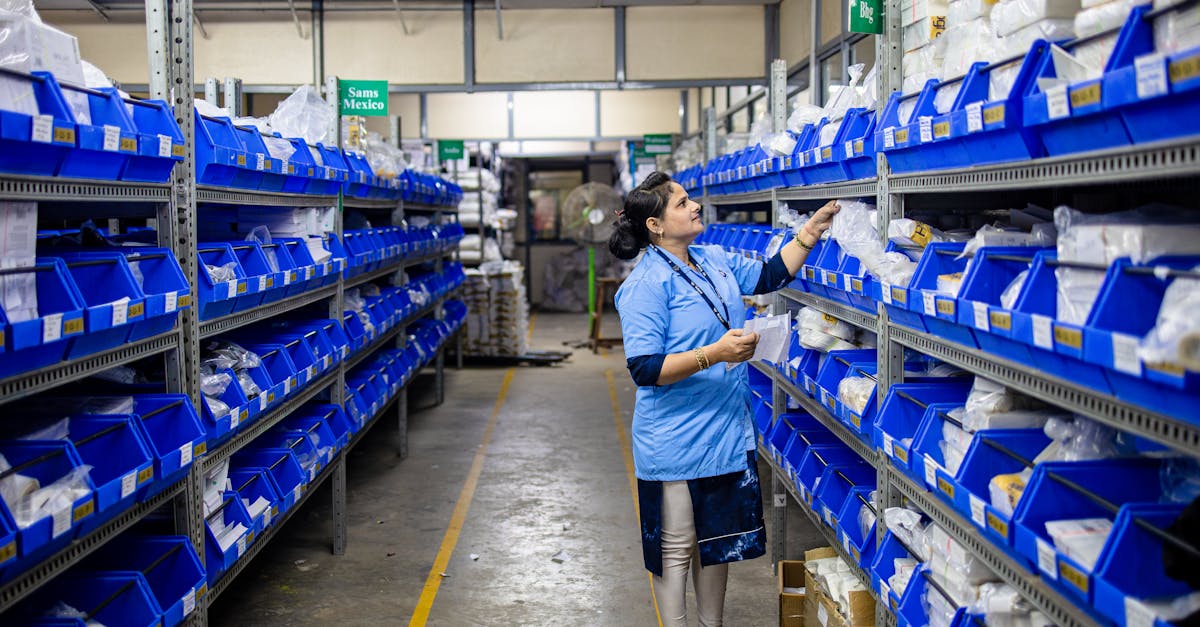
Case Picking involves moving full pallets or totes (typically 10-50kg). Piece Picking refers to individual SKU selection (often <1kg). The former is often handled by conveyors and automated storage retrieval systems (ASRS). The latter has traditionally required human dexterity. Recent advances in deep reinforcement learning and gripper design aim to close this gap, but the hardware must be robust enough to handle 24/7 variance in packaging shapes.
Covariant: AI-Driven Flexibility
Covariant Robotics has positioned itself not merely as a manufacturer of arms, but as a provider of autonomous intelligence. Their system pairs standard industrial arms with a proprietary "Covariant Brain" that uses visual AI to locate and grasp objects without pre-programmed paths for every SKU.
Deployment Status
Unlike early vision systems that required rigid fixtures, Covariant has moved beyond pilots. In 2023 and 2024, they reported commercial deployments with major logistics partners. Their hardware includes the Covariant Pick Arm, often mounted on mobile bases or fixed gantries. They utilize general-purpose end-effectors designed for variable shapes, moving away from custom grippers for every SKU.
Technical Specifications
- System Type: Vision-guided robotic arms with AMR integration options.
- Throughput: Claimed to match human speed in controlled tests, varying wildly by SKU density.
- Software: Continuous learning capability, though this requires data feedback loops.
India Availability: Covariant does not currently sell direct-to-consumer in India. Deployments occur via system integrators. A single cell (Arm + Vision + Software License) is estimated at $45,000 to $65,000 USD. Landed cost in India, factoring in customs duty (approx. 15-25% + GST), could range between ₹45L to ₹65L INR per cell. Full warehouse deployment requires significant infrastructure investment.
Symbotic: The Integrated Warehouse System
Symbotic represents a different approach: the total-system integrator. They do not just sell a robot; they sell a warehouse management system (WMS) architecture where robots are the infrastructure. Their high-throughput storage and retrieval systems (HST) are designed to replace conventional racking.
Deployment Status
Symbotic is one of the few companies with verified, large-scale shipping hardware. Their partnership with Walmart is the primary evidence of maturity. The system was deployed in 2021-2022, with full operational capability confirmed in 2024. This is a Tier 1 shipping hardware claim, not a pilot.
Technical Specifications
- Hardware: Autonomous Mobile Robots (AMRs) that operate vertically to lift and stack totes.
- Capacity: High density. Systems can store up to 10x more SKUs than traditional racking.
- Integration: Deep WMS integration required; not a plug-and-play solution.
India Availability: Symbotic is currently focused on North American and European logistics markets. For India, the capital expenditure (CAPEX) is prohibitive for most mid-tier logistics firms. A full Symbotic warehouse typically costs tens of millions of dollars ($10M+). For Indian enterprises, this is generally out of reach without massive venture backing or government infrastructure subsidies.
Traditional Pick-and-Place Arms
Beyond AI-first startups, traditional manufacturers like Fanuc, KUKA, and Universal Robots offer pick-and-place solutions that are proven and widely available in India.
Hardware vs. Software
These systems rely on deterministic programming rather than probabilistic AI learning. If a carton is placed slightly off-center, a traditional arm may fail without optical correction. However, they are more reliable for repetitive tasks.
- Standard Arm: 6-axis robot with a pneumatic gripper.
- Vision: 2D cameras for bin-picking.
- Reliability: High Uptime (99%+).
India Availability: High. Major system integrators in Pune, Chennai, and Gurgaon specialize in these. A basic piece-picking cell costs between ₹35L to ₹50L INR.
The Indian Market Reality
While US/EU markets push for labor cost reduction, the Indian logistics sector faces a different equation. Labor is relatively cheap, and the "last mile" environment is chaotic. High-precision robotics require stable environments.
Barriers to Entry
- Infrastructure: Consistent power, clean floors, and standardized racking are prerequisites for Symbotic or Covariant.
- ROI Timeline: A $60k cell takes 2-3 years to pay back in India due to labor cost arbitrage.
- Support: Hardware downtime requires local service. Import-dependent systems (like Symbotic) risk extended downtimes.
Conclusion
The Case & Piece Picking category is maturing. Covariant demonstrates the potential for flexible AI-driven picking, while Symbotic proves the viability of fully automated infrastructure. However, for Indian enterprises, the transition remains slow. Traditional pick-and-place arms offer immediate ROI, while AI-driven systems require long-term capital commitment. We recommend vendors validate claims by requesting on-site demos of the shipping hardware, not rendered concepts.
References
Manufacturer Data:
- Covariant: https://covariant.com
- Symbotic: https://symbotic.com
Industry Reporting:
- Robotics Business Review: "Symbotic and Walmart Expand Automated Fulfillment"
- TechCrunch: "Covariant raises funding for AI robotics"
Note: Pricing estimates are based on landed cost calculations including GST, customs duty, and integration fees. Actual costs vary by vendor.
✓ Key takeaways
- •Hands-on view of Shipping Reality vs. Concept Art: The State of Case & Piece Picking Automation inside our Case & Piece Picking library.
- •Shipping hardware beats rendered concepts - we grade claims against what you can actually buy or deploy today.
- •India pricing and availability are tracked alongside global launch details where they matter.
References
Related articles
More in Case & Piece Picking →