Case & Piece Picking: Shipping Hardware, Software Stacks, and India Market Reality
Case & Piece Picking in Warehouse Logistics
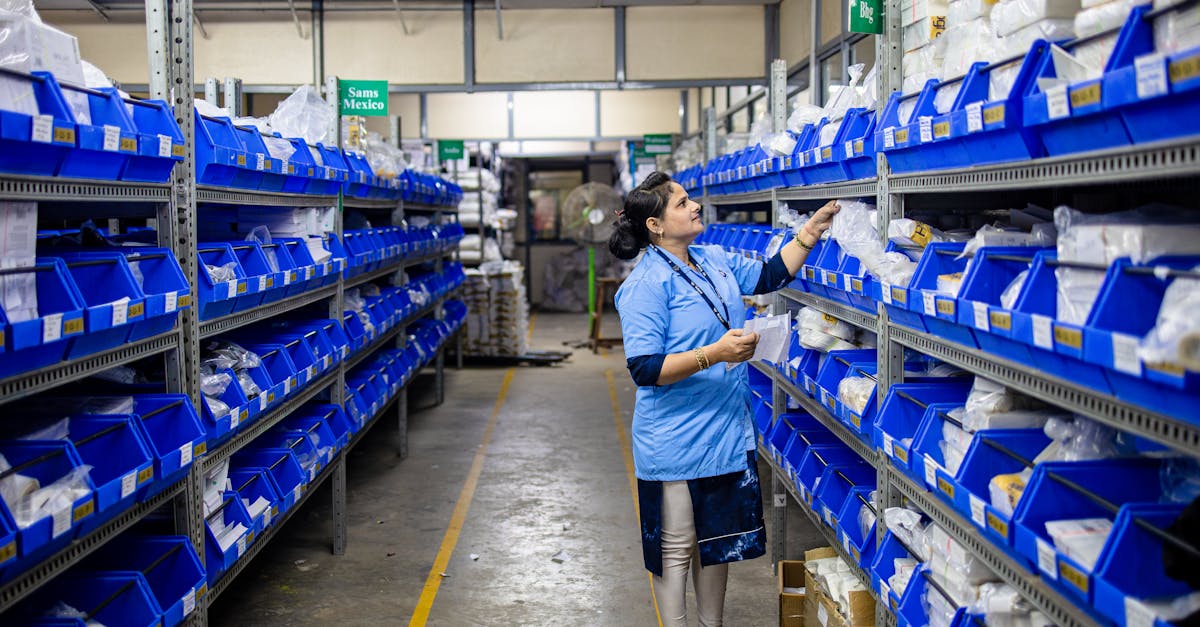
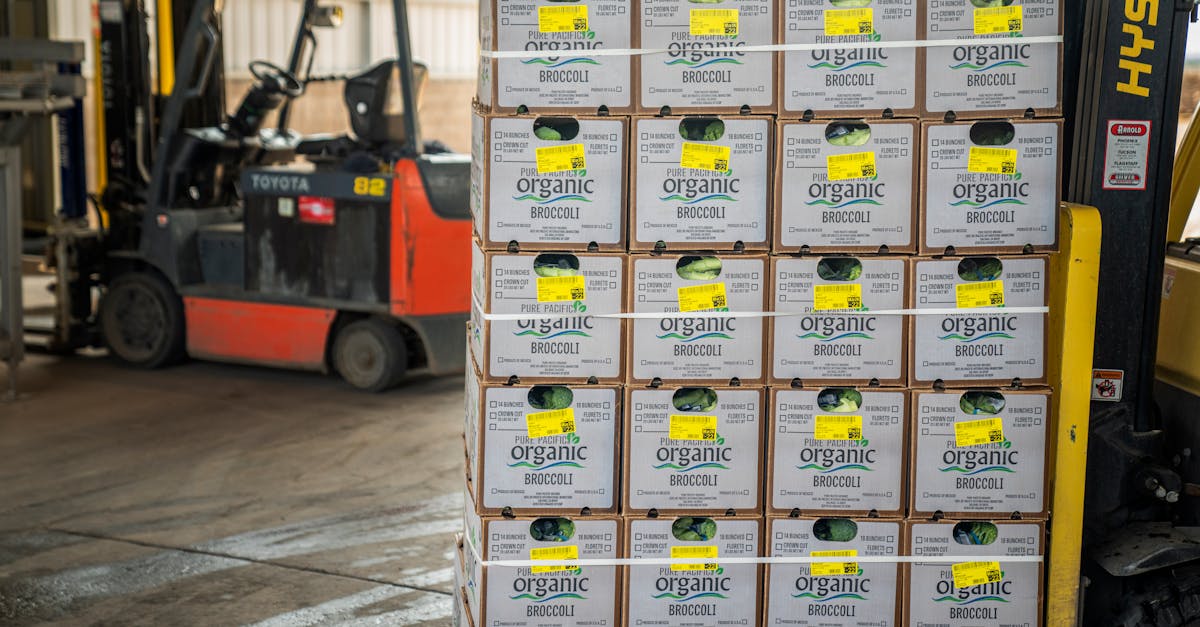
Case picking and piece picking remain the most labor-intensive operations in modern distribution centers. Case picking moves full cartons or totes from storage locations to shipping zones, while piece picking breaks down those cases to fulfill individual SKUs at the order level. Both tasks demand high cycle times, consistent accuracy, and rapid adaptation to fluctuating SKU profiles. Traditional automation addressed case picking through conveyors, sorters, and rigid pick frames, while piece picking relied on human workers or early-generation robotic arms with fixed teach pendants. The bottleneck has never been raw actuation speed; it is the ability to reliably perceive, plan, and execute variable grasps across unpredictable package geometries, lighting conditions, and packaging wear.
Pick-and-Place Architectures: Delta, SCARA, and Articulated Arms
Pick-and-place hardware falls into three primary categories, each with documented performance envelopes and integration constraints:
- Delta robots: Three-arm parallel mechanisms optimized for high-speed planar picking. Cycle times typically range from 0.3 to 0.6 seconds for lightweight items (under 1 kg). Reach is limited to 400–800 mm, making them suitable for conveyor scanning and fastener picking but inadequate for deep-bin or large-carton case handling.
- SCARA robots: Selective Compliance Articulated Robot Arm designs provide rigid vertical stiffness with planar compliance. Payloads of 3–10 kg and cycle times of 0.5–0.8 seconds make them standard for assembly-line part transfer and shallow-bin piece picking. They lack the reach flexibility required for high-density case storage retrieval.
- Articulated 6-axis arms: Industrial robots from Fanuc, Kawasaki, Yaskawa, and Universal Robots dominate flexible case handling. Cycle times typically range from 0.8 to 1.5 seconds depending on payload and reach. They support deep-bin grasping, pallet unloading, and variable case dimensions but require robust vision systems and real-time control stacks to avoid collisions in dense environments.
Hardware alone does not solve picking. The differentiator is the software layer: 3D vision segmentation, grasp pose optimization, force feedback, and simulation-to-reality domain adaptation. Manufacturers that ship complete hardware-software cells outperform those shipping components and expecting integrators to bridge the gap.
Covariant: The Software-Defined Manipulation Stack
Covariant approaches pick-and-place as a software-defined problem. The company trains universal manipulation models on massive datasets of grasping trajectories, packaging geometries, and environmental variations. Rather than manufacturing proprietary arms, Covariant partners with established robot OEMs and ships a real-time perception and control stack that runs on standard industrial controllers. The system ingests point clouds from stereo vision or LiDAR, generates grasp poses, and executes motion with adaptive force control. This architecture reduces integration friction because it runs on hardware that warehouses already stock or can procure through existing OEM channels.
Shipping Status and Deployment Grade
Grading Covariant by the mandated hierarchy:
- Shipping hardware: Covariant does not manufacture arms. Hardware ships through partners including Fanuc, Kawasaki, and Universal Robots. The company ships its software stack continuously, with documented production deployments across North America and Europe in consumer goods, grocery, and 3PL facilities. Independent reporting confirms active production lines using Covariant-manipulation cells, not just lab environments.
- Pilot deployments: Early pilots focused on fastener and small-SKU picking. Subsequent pilots expanded to case-level handling, with cycle time data published in technical briefs showing 0.7–1.2 second average pick cycles for mixed-case scenarios. Pilots are now transitioning to steady-state production in multiple regions.
- Announcements: Covariant has announced new OEM integrations, model updates, and capacity expansions. These announcements follow shipped hardware and operational pilot data, not speculative roadmaps. The company's public demos show on-stage production lines rather than rendered concept footage.
Covariant's value proposition rests on reducing integration time. By decoupling manipulation software from arm hardware, warehouses can retrofit existing cells or deploy new ones without vendor lock-in. The trade-off is reliance on third-party hardware maintenance and firmware updates, which requires clear SLA definitions in procurement contracts.
Symbotic: AI-Routed AS/RS and High-Density Case Handling
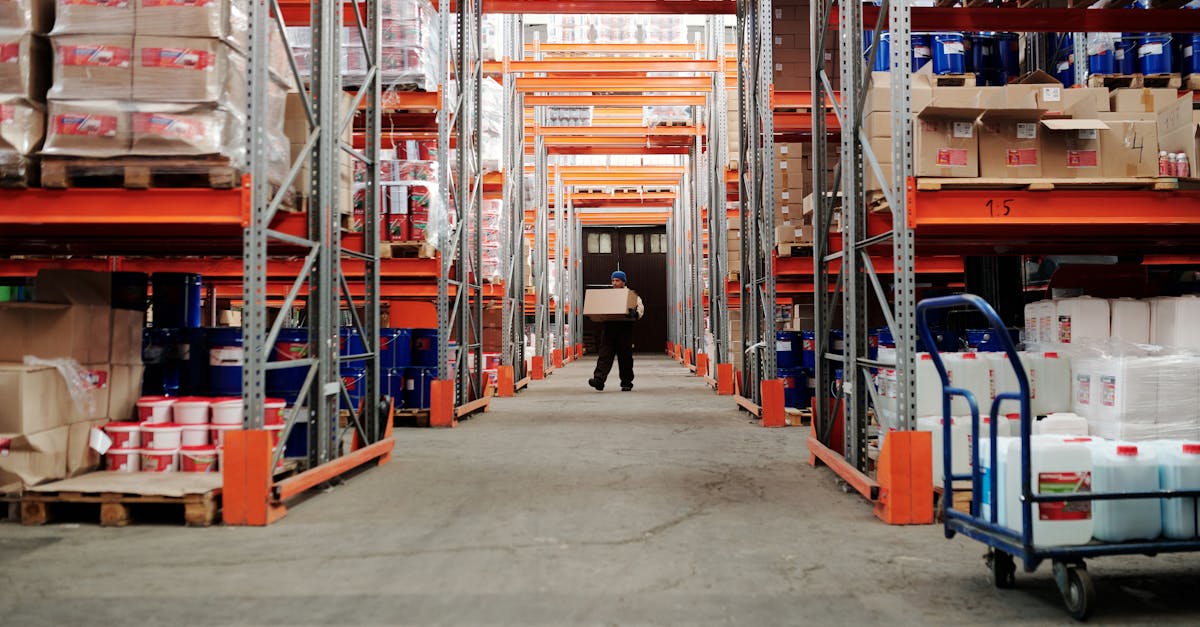
Symbotic operates in a different segment of the picking spectrum. Rather than standalone pick-and-place arms, Symbotic deploys an automated storage and retrieval system (AS/RS) where AI-routed mobile carriers move pallets and cases across elevated racking. The system focuses on high-density storage, rapid case retrieval, and automated put-away. Pick faces are fed to downstream sortation or manual/robotic packing stations. Symbotic's architecture prioritizes throughput consistency, inventory accuracy, and space utilization over fine-grained piece-level manipulation.
Deployment Scale and Hardware Reality
Applying the grading hierarchy to Symbotic:
- Shipping hardware: Symbotic has shipped complete DC automation suites to major retailers and 3PL operators. Full deployments include proprietary mobile carriers, rack structures, control software, and power systems. These are not pilot installations; they are multi-million-square-foot production facilities with documented throughput metrics and uptime records. Independent reporting and facility tours confirm active case-handling operations at scale.
- Pilot deployments: Early pilots were conducted in the late 2010s to validate AI routing algorithms and carrier stability. These pilots directly informed the production hardware releases. Symbotic's current deployments are the result of those validated pilots, not untested announcements.
- Announcements: Recent announcements focus on capacity expansion, software updates for routing optimization, and new facility commitments. These follow confirmed hardware shipments and operational data. The company's public materials emphasize production metrics rather than conceptual demonstrations.
Symbotic's model is capital-intensive but yields predictable case-handling throughput. It does not replace piece-picking arms but feeds them with accurately routed cases. Warehouses deploying Symbotic typically pair it with downstream Cobots or traditional pick frames for order consolidation. The system's strength lies in storage density and retrieval speed, not in fine manipulation.
Grading Claims: Hardware Shipments, Pilots, and Announcements
The pick-and-place market contains numerous claims that conflate simulation results with production reality. Grading by the established hierarchy clarifies the actual state of deployment:
- Hardware shipments lead: Delta, SCARA, and articulated arms ship globally in high volumes. Vision systems from Basler, FLIR, and Keyence ship as standard components. The bottleneck is no longer actuation or sensing; it is the integration of perception, grasp planning, and motion control into reliable production cycles.
- Pilots validate software stacks: Covariant and similar software-first companies use pilots to refine model generalization across packaging types. Pilot data shows diminishing returns on model training after ~50,000 grasped instances, with accuracy plateauing around 98–99.5% for standard cartons. Beyond that, edge cases dominate, requiring continuous OTA updates and site-specific calibration.
- Announcements lag deployment: Many vendors announce partnerships, roadmap features, or funding rounds that do not translate to shipped cells. The hierarchy forces a filter: if hardware hasn't shipped to a production line, the claim remains unverified. Symbotic's full deployments and Covariant's partner-shipped cells represent the current baseline. Announcements for new integrations or model versions are secondary to operational data.
This grading prevents overestimation of AI capabilities while acknowledging genuine progress in grasp generalization and routing optimization. Warehouses should request cycle-time logs, mean time between failures, and integration timelines before committing to procurement.
India Availability and Approximate INR Pricing
India's warehouse automation market is transitioning from AGV/AMR deployments to structured pick-and-place integration. Import duties, GST, and local integration costs significantly affect landed pricing.
Import Costs and Landed Estimates
- Entry-level pick-and-place cells: Delta or SCARA arms with standard vision and basic grasp software. Hardware cost: ₹8–12 lakhs. Landed cost with 10–15% import duty, 18% GST, and basic integration: ₹15–25 lakhs per cell.
- Mid-tier AI vision cells: 6-axis articulated arms with Covariant-style manipulation stacks, stereo vision, and force control. Hardware + software license: ₹25–35 lakhs. Landed cost with duties, GST, and site integration: ₹35–50 lakhs per cell. India availability exists through authorized OEM partners and system integrators; direct domestic manufacturing of the software stack remains limited.
- High-density AS/RS suites: Symbotic-class systems are not yet deployed in India. Procurement would require full import, civil works, and commissioning. Approximate landed cost for a 50,000 sq ft DC automation suite: ₹500–800 crores. This estimate includes hardware, software licensing, racking, power infrastructure, and integration. It is flagged as a landed cost estimate for large-scale projects and excludes real estate or facility retrofit costs.
Local Alternatives and Integration Pathways
Indian system integrators such as GreyOrange, WinRobotics, and AutoX primarily focus on AGV/AMR fleets and order-picking workflows. Some offer hybrid configurations with pick-and-place arms for case handling, but they typically rely on imported manipulation stacks or partner OEM hardware. Direct domestic production of AI vision manipulation software remains in early commercialization phases. Warehouses in India should plan for 6–12 month integration timelines, budget for 18% GST, and require vendor-provided cycle-time validation before finalizing procurement contracts.
References
- Covariant. Platform Overview & Partner Integrations. covariant.ai
- Covariant. Production Deployment Briefs. covariant.ai/research
- Symbotic. Technology & Solutions. symbotic.com
- Symbotic. Facility Deployments & Case Handling. symbotic.com/solutions
- GreyOrange. Warehouse Automation Portfolio. greyorange.com
- Indian Customs Tariff. Harmonized System Codes for Industrial Robots & Vision Systems. customs.gov.in
- Independent Industry Reporting. Warehouse Automation Procurement Cycles & Integration Timelines. various 2022–2024 technical briefs
✓ Key takeaways
- •Hands-on view of Case & Piece Picking: Shipping Hardware, Software Stacks, and India Market Reality inside our Case & Piece Picking library.
- •Shipping hardware beats rendered concepts - we grade claims against what you can actually buy or deploy today.
- •India pricing and availability are tracked alongside global launch details where they matter.
Related articles
More in Case & Piece Picking →