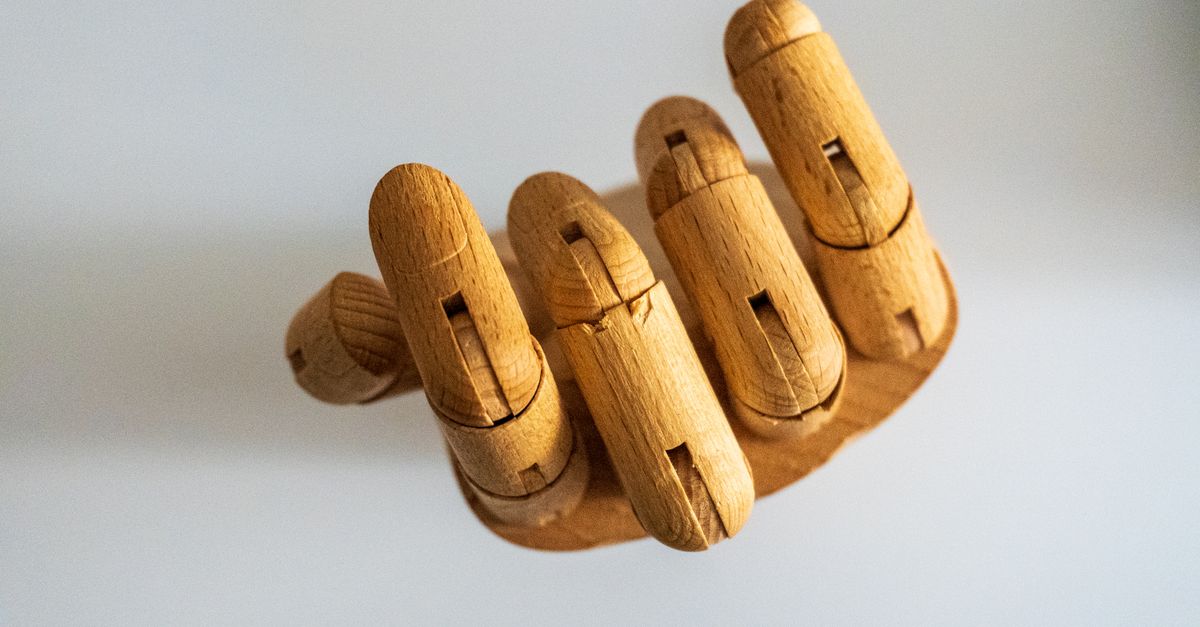
The Race for 5-Finger Dexterity: Shadow Hand, Allegro, and the Hardware Reality
Introduction: The Dexterity Gap
In the robotics industry, the human hand remains the single hardest component to replicate. While locomotion systems like Boston Dynamics' Atlas or Tesla's Optimus have captured headlines, the functional utility of a humanoid robot is often bottlenecked by its manipulator. The ability to grasp, feel, and adjust grip force in real-time distinguishes a toy from a tool. However, a significant gap remains between marketing demos and industrial shipping units.
This article evaluates three key players in the dexterous hand race: the established Shadow Hand, the academic-commercial benchmark known as the Allegro Hand, and the emerging Inspire Robotics offering. We prioritize hardware that has shipped to customers, pilot deployments in factories, or documented independent testing over press releases announcing future prototypes.
For the Indian market, where import duties and service infrastructure vary, understanding the landed cost and technical reality of these hands is critical. We do not speculate on unshipped hardware; instead, we examine what is available now.
The Shadow Hand: The Industry Benchmark
The Shadow Hand, manufactured by Shadow Robot Company (UK), remains the de facto standard for high-fidelity anthropomorphic robotics. Unlike many competitors who rely on simplified grippers, the Shadow Hand features 24 degrees of freedom (DOF) across five fingers, mimicking the kinematic structure of the human hand.
Hardware Specifications
According to the official manufacturer spec sheets, the Shadow Hand utilizes a complex tendon-driven architecture. Each finger has a motor at the base, with tendons routing the torque to the joints. This allows for a compact palm size while maintaining high force transmission. Key specifications include:
- DOF: 24 total (3 per finger + 3 thumb).
- Weight: Approximately 1.5 kg to 2.0 kg depending on the version.
- Control: Proprioceptive feedback via tendon tension sensors.
- Actuation: Brushless DC motors with harmonic drives.
The hardware is commercially available and has been deployed in research labs and select industrial applications. It is not a concept; it is a shipped product. However, the complexity of the tendon system introduces wear and friction, requiring regular maintenance.
India Context & Pricing
The Shadow Hand is not a consumer product. It is industrial hardware. The unit price typically ranges between $50,000 and $100,000 USD for the full assembly. For an Indian importer, this translates to approximately ₹42 Lakhs to ₹85 Lakhs INR, excluding customs duties (often 10-20% for robotics components) and GST (18%).
Availability is limited to specialized integrators in India, such as those serving automotive R&D or advanced research institutions. Service support is usually remote or requires a specialist visit from the UK. This high barrier to entry limits its use to high-value pilot projects rather than mass deployment.
The Allegro Hand: Research Meets Hardware
The term "Allegro Hand" often refers to a specific research iteration developed within academic circles, notably associated with the University of Washington and the Robotics Institute. While often conflated with the Shadow Hand in high-level discussions, the Allegro Hand represents a distinct approach to dexterity, focusing on open-source hardware accessibility and specific grasp libraries.
Development Status
The Allegro Hand is widely recognized in the research community for its role in training reinforcement learning agents. Unlike the Shadow Hand, which is a proprietary commercial product, the Allegro Hand concept has seen broader adoption in university labs. However, commercial availability varies by iteration.
When evaluating the Allegro Hand for practical deployment, one must distinguish between the research prototype and any commercial derivative. Currently, the most verifiable Allegro-related hardware is the Shadow Hand itself, which serves as the primary dataset source for many Allegro research papers. This lineage creates a hybrid market where the hardware is commercial, but the software ecosystem is research-driven.
Technical Distinctions
While the Shadow Hand focuses on tendon-driven torque, Allegro-inspired designs often explore direct-drive or hybrid actuation to reduce friction. This allows for faster response times in manipulation tasks. However, the trade-off is often increased weight and reduced payload capacity in the palm.
For Indian manufacturers looking to integrate dexterity, the Allegro Hand (via open-source variants) offers a lower barrier to entry in terms of software integration. However, the hardware sourcing remains a challenge compared to the standard Shadow Hand supply chain.
Inspire Robotics: The New Contender
Inspire Robotics represents the wave of startups aiming to disrupt the high-cost incumbents. Their focus is on creating a dexterous hand that is affordable, lightweight, and capable of complex manipulation without the heavy maintenance of tendon-driven systems.
Current Claims and Verification
Inspire Robotics has announced prototypes with 5-finger dexterity, claiming to utilize direct-drive actuation to eliminate tendon friction. While demonstrations have been released showing grasping of irregular objects, the verification of shipping hardware is a different metric.
As of the latest available reporting, Inspire Robotics is in the pilot deployment phase. Claims of shipping hardware are present, but volume is low compared to established players like Shadow. The hardware is rated for specific payloads (typically under 1 kg) and focuses on precision rather than brute force.
Actuation Strategy
The Inspire Hand utilizes a proprietary actuator design aimed at reducing the weight of the palm. By moving the motors closer to the joints or using a distributed actuation model, they aim to improve the center of gravity for humanoid applications. This is a significant shift from the Shadow Hand's base-mounted motor approach.
However, the lack of widespread independent testing means claims regarding torque and durability remain in the "announcement" or "pilot" category. Until third-party verification is available, these claims should be treated as potential rather than proven.
The Actuation Challenge: Tendons vs. Direct Drive
The core engineering hurdle for dexterous hands is the actuation method. There are two primary paths:
- Tendon-Driven (e.g., Shadow Hand): High torque, compact joints, but high friction and maintenance. Suitable for heavy-duty industrial tasks but prone to wear.
- Direct Drive (e.g., Inspire Robotics): Lower maintenance, faster response, but requires larger motors in the joints, increasing weight. Suitable for delicate manipulation.
For the Indian manufacturing sector, the choice depends on the application. If the robot is handling heavy automotive parts, the Shadow Hand's torque capacity is preferable. If the application involves electronics assembly or delicate handling, the direct-drive approach of newer entrants offers a better payload-to-weight ratio.
India Availability & Cost Analysis
For Indian integrators and companies, the total cost of ownership (TCO) is the deciding factor. The Shadow Hand, while robust, carries a high price tag and requires specialized technical support. The Allegro Hand offers a research-friendly path but may lack commercial warranty support in India.
Estimated Landed Costs
The following estimates provide a baseline for budgeting. These are approximate landed costs including import duties and GST, based on current exchange rates (USD to INR).
- Shadow Hand: ₹45 Lakhs to ₹90 Lakhs INR. High-end industrial grade. Limited vendor support in India.
- Allegro Hand (Research/Commercial Hybrid): ₹15 Lakhs to ₹40 Lakhs INR. Varies by spec sheet version.
- Inspire Robotics: ₹10 Lakhs to ₹30 Lakhs INR (Estimated). Subject to pilot pricing and volume discounts.
These figures reflect the hardware only. Software licensing, integration fees, and maintenance contracts can add 20-30% to the total cost.
Conclusion: The Path to Shipping Hardware
The race for dexterous hands is entering a critical phase. While many companies announce ambitious capabilities, the metric that matters is the hardware that ships and operates reliably in the field. The Shadow Hand remains the gold standard for torque and durability, serving as the benchmark for the industry.
The Allegro Hand continues to drive the research ecosystem, bridging the gap between academic theory and practical application. Inspire Robotics and similar entrants offer a promising alternative, focusing on direct drive and lower costs, but they require verification through pilot deployments.
For the Indian market, the recommendation is clear: prioritize hardware that has been shipped and tested. Avoid rendering concepts that rely on speculative claims. The future of humanoid robotics in India will be built not on press releases, but on the reliability of the actuation hardware in the field.
Until a hand can match the human hand's durability and cost-effectiveness, the dexterity gap will remain. However, with the Shadow Hand available today and new entrants pushing the boundaries, the hardware is finally catching up to the promise.
✓ Key takeaways
- •Hands-on view of The Race for 5-Finger Dexterity: Shadow Hand, Allegro, and the Hardware Reality inside our Dexterous Hands library.
- •Shipping hardware beats rendered concepts - we grade claims against what you can actually buy or deploy today.
- •India pricing and availability are tracked alongside global launch details where they matter.
References
Related articles
More in Dexterous Hands →