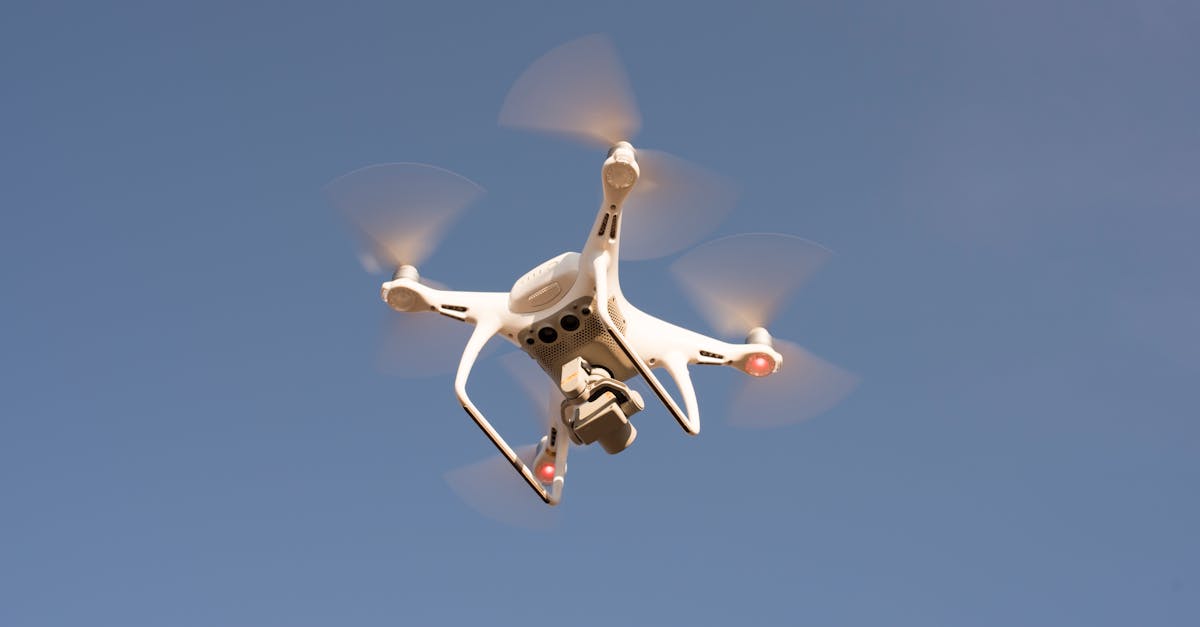
India’s DGCA Drone Rules: A Grounded Guide to Compliance, Weight Classes, and Market Reality

Understanding India’s DGCA Drone Framework
India’s civil aviation authority, the Directorate General of Civil Aviation (DGCA), governs all unmanned aerial systems (UAS) through the Drone Rules, 2021, issued under the Aircraft Act, 1934. The regulatory architecture replaces fragmented state-level permissions with a centralized digital compliance model. The framework distinguishes between hobbyist and commercial operations, establishes weight-based categories, mandates digital registration, and enforces geofenced flight envelopes. For robotics operators, understanding these rules is a prerequisite before integrating aerial platforms into ground-based automation workflows.
Historical Context and Regulatory Evolution
Prior to 2021, drone operations in India required case-by-case No Objection Certificates (NOCs) from multiple agencies, including the Ministry of Defence, Police, and local district authorities. This fragmented process delayed pilot deployments and discouraged commercial scaling. The Drone Rules, 2021, and the accompanying National Drone Policy (2021) streamlined approvals by introducing the Digital Sky platform, a single-window system for registration, flight clearance, and remote pilot certification. The regulatory shift prioritizes safety and accountability while reducing administrative friction for verified operators.
The Drone Rules, 2021: Core Structure
The rules classify drones by maximum takeoff weight, define airspace permissions, mandate type certification for commercial models, and establish a Drone Innovation Cluster (DIC) framework for testing. Key regulatory pillars include:
- Centralized registration via Digital Sky with Unique Identification Numbers (UIN)
- Mandatory Remote Pilot License (RPL) for commercial operations above the nano/micro threshold
- Geofencing enforcement through a No Permission, No Takeoff (NPNT) architecture
- Type certification requirements for drones exceeding 250 grams used commercially
- Insurance and liability frameworks aligned with civil aviation standards
Key Compliance Requirements for Operators
Digital Sky Platform and UIN Registration
All drones above 250 grams must be registered on the Digital Sky portal (digital-sky.dgca.gov.in). Upon registration, the DGCA issues a UIN, which must be physically affixed to the airframe. The platform tracks ownership, maintenance logs, and operational history. Hobbyist drones below 250 grams require a Digital Sky Pilot License but not a UIN. Operators must ensure that registration data matches the manufacturer’s type certificate and that any modifications to payload or propulsion systems are reported to maintain certification validity.
Remote Pilot Licensing and Training
Commercial operations require a Remote Pilot License issued by DGCA-approved training centers. The licensing pathway includes ground school instruction, simulated flight hours, and a practical competency assessment. The DGCA recognizes two primary license categories: Nano/Micro (up to 25 kg) and Small/Large (up to 150 kg). Training curricula cover airspace classification, emergency procedures, payload integration, and regulatory compliance. Operators must carry a valid digital license during flights, and the DGCA maintains a centralized registry of licensed pilots.
No Permission, No Takeoff (NPNT) and Geofencing
NPNT is a software-enforced constraint that prevents drone takeoff without explicit digital clearance from the Digital Sky platform. The system cross-references the operator’s flight plan with restricted airspace maps, including airports, military zones, and sensitive infrastructure. Geofencing is embedded in the drone’s flight controller or ground control station, and unauthorized flight attempts trigger automatic abort sequences. Manufacturers must certify that NPNT compliance is non-removable and tamper-resistant. Operators who bypass geofencing face immediate regulatory action.
Operational Categories and Weight Classes
Nano, Micro, Small, Medium, and Large Drones
The DGCA classifies drones by maximum takeoff weight (MTOW):
- Nano: Under 250 grams. No UIN required. Limited commercial use.
- Micro: 250 grams to 2 kg. Requires UIN and basic RPL for commercial use.
- Small: 2 kg to 25 kg. Requires type certification, RPL, and flight clearance.
- Medium: 25 kg to 150 kg. Requires advanced RPL, insurance, and operational approvals.
- Large: Above 150 kg. Treated similarly to manned aircraft for certification and airspace integration.
Weight thresholds directly impact registration costs, training requirements, and airspace access. Commercial payloads must be included in the MTOW calculation. Operators frequently misclassify drones by excluding battery weight, which can trigger compliance violations during inspections.
Permitted vs. Restricted Airspace
India’s airspace is divided into green (permitted), yellow (restricted), and red (prohibited) zones. Green zones allow automated flights under NPNT. Yellow zones require manual clearance from DGCA and local authorities. Red zones include airports, defense installations, and international borders, where flight is strictly prohibited. The Digital Sky platform updates airspace boundaries in real time, and operators must verify clearance before every deployment. Autonomous waypoint missions in yellow zones require prior written approval and often demand manned aircraft coordination.
Commercial Viability and Market Availability in India
Pricing and Domestic Manufacturing
India’s drone market has shifted from imported kits to domestically assembled systems under the Production Linked Incentive (PLI) scheme for Advanced Chemistry Cell batteries and UAS manufacturing. Shipping hardware now dominates the market, with pilot deployments following in agriculture, surveying, and logistics. Announcements of future models lag behind verified fleet deployments.
Approximate landed pricing for commercial drones in India (as of 2024) includes:
- Entry-level commercial (Micro, 250g–2kg): ₹1.2 lakh to ₹3.5 lakh. Suitable for inspection and mapping.
- Mid-tier commercial (Small, 2kg–25kg): ₹4.5 lakh to ₹12 lakh. Includes multirotor and VTOL fixed-wing platforms for surveying and delivery pilots.
- Heavy-lift and industrial (Medium, 25kg–150kg): ₹18 lakh to ₹45 lakh. Used in agriculture, mining, and cargo logistics.
- Specialized payloads (LiDAR, multispectral, thermal): ₹2 lakh to ₹8 lakh per unit, depending on sensor class.
Prices vary by import duty status, PLI subsidies, and component sourcing. Domestic manufacturers now offer type-certified platforms with NPNT compliance, but operators must verify that pricing includes registration fees, insurance, and RPL training costs.
Integration with Humanoid and Ground Robotics
Aerial and ground robotics are converging in inspection, agriculture, and security workflows. DGCA rules do not regulate ground-based humanoid or wheeled platforms, but operators deploying drone-ground swarms must ensure aerial units comply with UIN, RPL, and geofencing requirements. Ground robots operating in public spaces fall under municipal and traffic authorities, not DGCA. Cross-platform coordination requires separate compliance pathways: aerial systems follow DGCA digital clearance, while ground systems follow local municipal permits and data privacy laws. Operators must maintain distinct operational logs for each platform class.
Enforcement, Penalties, and Future Amendments
The DGCA enforces compliance through periodic audits, flight data logging requirements, and on-site inspections. Violations include unregistered UINs, unlicensed pilots, geofencing bypass, and unauthorized airspace entry. Penalties range from fines of ₹5 lakh to equipment confiscation, with repeat offenses triggering license revocation. The DGCA has introduced automated penalty notices through the Digital Sky portal for NPNT violations and expired registrations.
Future amendments are expected to address beyond-visual-line-of-sight (BVLOS) operations, drone-in-a-box deployments, and integration with urban air mobility corridors. The DGCA has signaled a phased approach: first standardizing NPNT and UIN tracking, then expanding BVLOS clearances for certified operators, and finally enabling autonomous corridor operations. Until BVLOS rules are formally published, all commercial flights must remain within visual line-of-sight (VLOS) with a designated visual observer.
Operators should monitor DGCA circulars and Digital Sky updates for changes to weight classifications, training center approvals, and airspace boundary revisions. Regulatory shifts are incremental, and compliance should be treated as a continuous operational requirement rather than a one-time setup.
References
- DGCA Drone Rules, 2021. Ministry of Civil Aviation, Government of India. https://dgca.gov.in/
- Drone Rules, 2021 (Official Gazette Notification). https://dgca.gov.in/sites/default/files/Drone%20Rules%202021.pdf
- Digital Sky Portal. DGCA Single Window System. https://digital-sky.dgca.gov.in/
- National Policy on Drones, 2021. Ministry of Civil Aviation. https://civilaviation.gov.in/policies
- Production Linked Incentive Scheme for Drones. Ministry of Civil Aviation & DPIIT. https://dpiit.gov.in/
- DGCA Circular on Remote Pilot License Categories and Training Centers. https://dgca.gov.in/circulars
- Press Information Bureau (PIB). Drone Policy Implementation and NPNT Framework. https://pib.gov.in/
✓ Key takeaways
- •Hands-on view of India’s DGCA Drone Rules: A Grounded Guide to Compliance, Weight Classes, and Market Reality inside our DGCA Drone Rules library.
- •Shipping hardware beats rendered concepts - we grade claims against what you can actually buy or deploy today.
- •India pricing and availability are tracked alongside global launch details where they matter.
References
Related articles
More in DGCA Drone Rules →