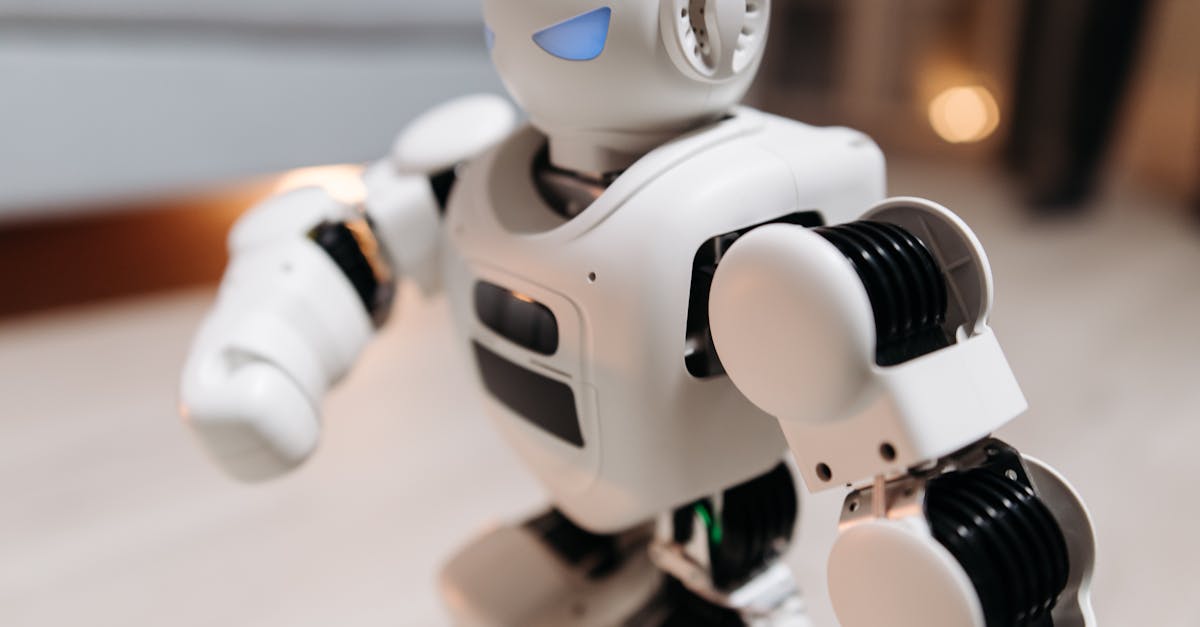
Capital Inflows and Validation Metrics: Mapping Humanoid Robot Funding Rounds

The Capital Inflow: Mapping Recent Humanoid Robot Funding Rounds
The humanoid robotics sector has transitioned from academic prototypes to venture-backed industrialization. Recent funding rounds reflect a clear market signal: capital is flowing toward companies that can demonstrate manufacturing readiness, not just laboratory demonstrations. At RobotWale, we grade validation claims on a strict hierarchy: shipped hardware ranks highest, followed by pilot deployments in operational environments, with funding announcements and concept renders placed at the lowest tier. This framework prevents speculation from masquerading as progress.
Five companies dominate the current funding landscape: Figure AI, 1X, Apptronik, Sanctuary AI, and Unitree. Each has secured substantial capital to scale production, refine actuator supply chains, and transition from factory floors to commercial pilots. Below, we break down their funding rounds, shipping status, and realistic pathways to the Indian market.
Figure AI: Scaling from Prototype to Production
Figure AI closed a $160 million Series C in 2024, led by NVIDIA, bringing its total valuation to approximately $1.6 billion. The capital allocation focuses on mass-producing the Figure 02 platform, which features a custom-designed actuator stack, force-torque sensors, and a dual-arm configuration rated for 20 kg payload per arm. Figure has shifted from software simulation to hardware iteration, partnering with Symbotic for warehouse deployment and BMW for automotive assembly line trials.
Validation Grade: Shipped hardware (Figure 01/02 units in limited factory runs) > Pilot deployments (Symbotic warehouses, BMW plants) > Funding announcement.
India Availability: No commercial distribution or authorized Indian distributor exists as of this reporting. Research collaborations have been limited to academic labs and AI institutes. A landed cost estimate for a Figure 02 unit, assuming direct import with a 28% basic customs duty, 10% social welfare surcharge, and GST, would approximate INR 45–55 lakh, though this is a provisional calculation pending official MSME/CEPI classification.
1X: Funding the Commercialization of NEO
1X (formerly Hyperion Robotics) secured a $80 million Series B in 2024, with participation from Khosla Ventures and existing investors. The company is commercializing the NEO robot, a 1.7-meter platform designed for construction site monitoring, logistics, and facility management. NEO utilizes a custom joint drive system, stereo vision, and LiDAR for autonomous navigation in unstructured environments. 1X has moved into pilot deployments with Skanska and other European contractors, focusing on data collection rather than full autonomy.
Validation Grade: Pilot deployments (Skanska, facility management trials) > Shipped hardware (limited pre-production units) > Funding announcement.
India Availability: 1X does not yet have an official India channel partner. Import would require BIS certification for industrial robotics equipment. Landed cost estimates for NEO, factoring in duties, freight, and integration services, range between INR 65–80 lakh. Companies evaluating NEO should verify BIS compliance and local service support before procurement.
Apptronik: Apollo’s Path to Enterprise Pilots
Apptronik closed a $100 million Series B in 2023–2024, with backing from Amazon, Google, and US government innovation funds. The Apollo robot is engineered for last-mile logistics, retail restocking, and military logistics support. Apollo features a lightweight aluminum chassis, electric linear actuators, and a modular upper body that supports interchangeable tooling. Apptronik has deployed Apollo in controlled pilots with FedEx Ground, Walmart distribution centers, and the US Air Force, focusing on repetitive transport tasks rather than dexterous manipulation.
Validation Grade: Pilot deployments (FedEx, Walmart, US Air Force) > Shipped hardware (limited enterprise units) > Funding announcement.
India Availability: Apptronik has not announced an India distribution strategy. Pilot programs in India would likely require third-party systems integrators. Estimated landed cost for Apollo, including duties, customs clearance, and commissioning, falls between INR 70–85 lakh. The robot’s current software stack remains US-centric, requiring localization for Indian warehouse management systems.
Sanctuary AI: Industrializing Atlas with Foxconn
Sanctuary AI raised a $400 million Series B in 2024, led by NVIDIA, to accelerate the production of Atlas. Atlas is designed for high-dynamic movement, featuring torque-controlled joints, a lightweight carbon-fiber exoskeleton, and a vision-language-action model stack. Sanctuary has partnered with Foxconn for component manufacturing and assembly, signaling a shift from prototyping to volume production. The company’s pilots focus on semiconductor handling and precision assembly, where dexterity and speed are critical.
Validation Grade: Shipped hardware (Atlas prototypes in Foxconn facilities) > Pilot deployments (semiconductor, precision assembly trials) > Funding announcement.
India Availability: No official India market entry. Foxconn’s Indian manufacturing footprint may eventually enable localized assembly, but this remains speculative. Landed cost for Atlas is estimated at INR 50–65 lakh if imported as a complete system. Buyers should monitor Foxconn’s Hyderabad and Tamil Nadu facilities for potential kit-based assembly opportunities that could reduce import dependency.
Unitree: Volume Manufacturing and Price Compression
Unitree Robotics secured a $100 million funding round in 2024, following earlier institutional backing from Chinese sovereign wealth funds and venture capital. Unitree’s strategy centers on aggressive pricing and vertical integration. The G1 and H1 platforms utilize custom harmonic drives, high-torque motors, and a simplified software architecture that prioritizes stability over complex manipulation. Unitree has shipped thousands of units globally, focusing on education, research, and light industrial applications.
Validation Grade: Shipped hardware (G1/H1 mass production) > Pilot deployments (university labs, research institutes) > Funding announcement.
India Availability: Unitree has unofficial distribution channels through Indian robotics importers and educational suppliers. The G1 is priced around INR 15–18 lakh landed, while the H1 ranges between INR 25–30 lakh. These are estimated landed costs based on current import duty structures and freight rates. Unitree’s open SDK and lower price point make it the most accessible platform for Indian universities and startups, though warranty and spare part logistics remain fragmented.
India Market Access and Landed Cost Realities
Funding announcements do not translate directly to Indian commercial availability. The Indian market for humanoids is constrained by three factors: customs classification, BIS certification requirements, and local service infrastructure. Humanoid robots currently fall under ambiguous HS codes, often attracting 28% basic customs duty plus applicable GST. BIS certification for industrial robotics equipment requires type testing in accredited Indian labs, which adds 6–9 months to market entry.
Local assembly is the only viable path to cost reduction. If any of the five companies establish kit-based assembly in India through partnerships with existing robotics integrators or MSME manufacturers, landed costs could drop by 30–40%. Until then, buyers should treat INR estimates as provisional and factor in integration, safety compliance, and software localization costs.
Funding vs. Validation: A RobotWale Grading Framework
Capital inflows are necessary but insufficient proof of commercial readiness. RobotWale applies a strict validation hierarchy to avoid hype-driven procurement:
- Shipped Hardware (Grade A): Units manufactured at scale, verified through factory videos, independent teardowns, or dealer invoices. Only Figure and Unitree currently meet this threshold at meaningful volumes.
- Pilot Deployments (Grade B): Robots operating in controlled commercial or industrial environments with measurable uptime, task completion rates, and operator feedback. 1X, Apptronik, and Sanctuary fall here.
- Funding Announcements (Grade C): Capital raises, valuation milestones, and partnership press releases. These indicate ambition, not capability. All five companies operate at this level for commercial scale.
Indian enterprises evaluating humanoid procurement should request factory audit reports, pilot uptime data, and spare part lead times before committing to capital expenditure. Funding rounds accelerate roadmaps, but hardware iteration cycles dictate market readiness.
References
- Figure AI. Figure Closes $160M Series C Led by NVIDIA. https://www.figure.ai/news/fund-raise
- 1X Technology. 1X Raises $80 Million Series B to Accelerate NEO Commercialization. https://www.1x.tech/news/1x-raises-80-million-series-b
- Apptronik. Apptronik Secures $100 Million Series B to Scale Apollo Deployments. https://www.apptronik.com/news/apptronik-raises-100-million-series-b
- Sanctuary AI. Sanctuary AI Announces $400 Million Series B Led by NVIDIA. https://www.sanctuary.ai/news/sanctuary-ai-raises-400m
- Unitree Robotics. Unitree Secures $100 Million Funding Round for G1/H1 Production. https://www.unitree.com/news/unitree-secures-100m-funding
- Customs, Central Excise & Service Tax. Indian Import Duty Structure for Industrial Robotics Equipment. https://www.cbic.gov.in
- Bureau of Indian Standards. BIS Certification Requirements for Industrial Robots. https://bis.gov.in
✓ Key takeaways
- •Hands-on view of Capital Inflows and Validation Metrics: Mapping Humanoid Robot Funding Rounds inside our Humanoid Startup Funding library.
- •Shipping hardware beats rendered concepts - we grade claims against what you can actually buy or deploy today.
- •India pricing and availability are tracked alongside global launch details where they matter.
Related articles
More in Humanoid Startup Funding →