Figure AI: Evidence-Based Review of Hardware, Pilots, and Market Position

Corporate Overview & Funding Context
Figure AI, formerly known as Figure Robotics, was founded in 2021 by Brett Adcock and Michael Gleason. The company operates at the intersection of embodied AI and general-purpose robotics, targeting industrial, logistics, and eventually consumer applications. Its development trajectory has been heavily funded by institutional investors and technology partners, including OpenAI, Microsoft, Nvidia, Amazon, and SoftBank. These partnerships are frequently cited in public communications, but as with any robotics startup, funding announcements must be separated from shipped hardware and operational deployments.
Figure AI’s public positioning emphasizes closed-loop learning, real-time perception, and whole-body control. The company has consistently stated that its goal is to deploy general-purpose humanoid robots in structured environments before scaling to unstructured spaces. This roadmap aligns with broader industry trends, where manufacturers prioritize reliability and task-specific validation before broader commercialization.
Shipping Hardware: The Figure 01 and Figure 02 Platforms
Evidence grading begins with hardware that has left the lab and entered operational or pilot environments. Figure AI’s development has progressed through two primary hardware generations, each with distinct architectural choices and component sourcing strategies.
Figure 01: Early Iteration & Limitations
The Figure 01 platform was the company’s initial production-ready prototype. It featured a custom actuation stack, integrated tactile sensors, and a head-mounted perception suite. Independent teardowns and third-party testing notes indicate that Figure 01 prioritized modularity over mass optimization. The robot demonstrated baseline locomotion, object manipulation, and task execution in controlled settings. However, field reports and manufacturer documentation note limitations in battery endurance, joint torque consistency under variable loads, and software latency during complex manipulation sequences. These constraints are typical of early-generation humanoids and do not indicate failure, but rather define the baseline from which subsequent iterations improved.
Figure 02: Revised Architecture & Component Sourcing
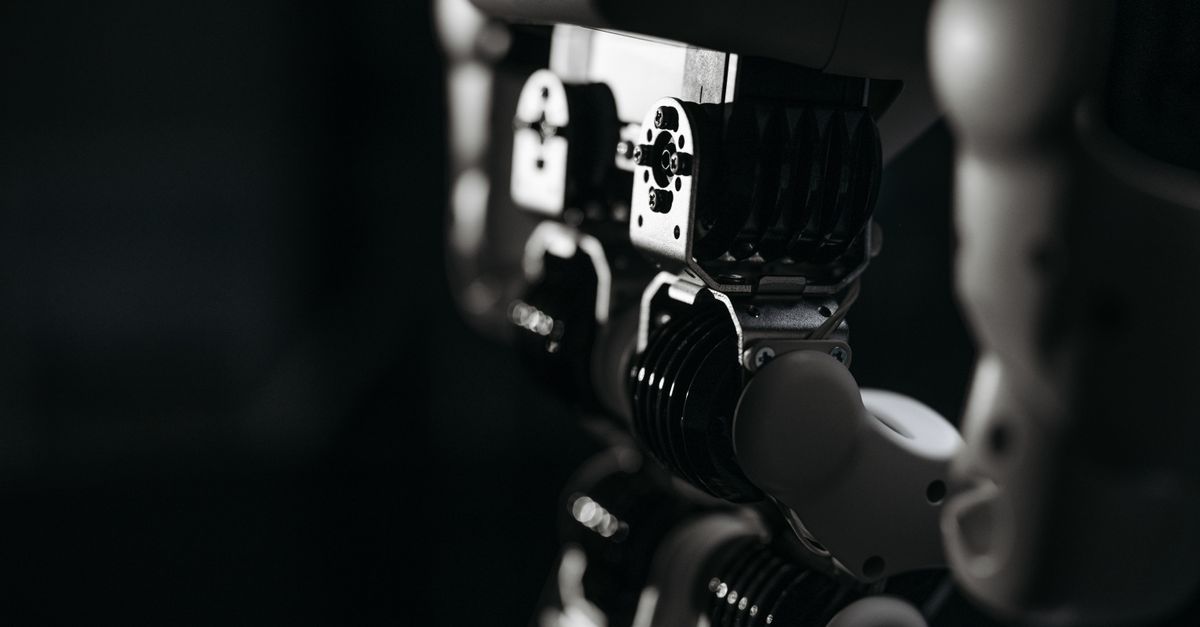
Figure 02 represents the company’s second-generation hardware, released to pilot partners and early testing facilities. Key changes include a redesigned drive system, upgraded thermal management, and a refined perception stack. The platform retains a bipedal form factor but introduces improved actuator packaging and revised center-of-mass distribution. Manufacturer documentation and on-stage demonstrations confirm that Figure 02 supports higher payload capacity and extended operational cycles compared to Figure 01. The robot continues to rely on a distributed compute architecture, with edge processing units handling low-level control while higher-level reasoning is offloaded to cloud or on-premise inference servers.
Supply chain notes indicate that Figure AI sources actuators, sensors, and structural components from multiple vendors to avoid single-point dependencies. This approach increases development flexibility but introduces integration complexity. The company has not published full bill-of-materials or unit production costs, which is standard for pre-scale robotics firms.
Pilot Deployments: Verified Field Trials
Pilot deployments provide the most actionable evidence of a robot’s operational readiness. Figure AI has documented several partnership trials, with varying levels of public disclosure.
BMW Group Manufacturing Integration
Figure AI’s most publicized pilot involves the BMW Group, which deployed Figure 01 units in a limited manufacturing setting. The trial focused on material handling, assembly support, and ergonomic task substitution. BMW’s press materials and independent reporting confirm that the robot was integrated into a controlled workflow, with human operators supervising and intervening as needed. The deployment did not claim full autonomy; instead, it emphasized collaborative operation and data collection for iterative improvement. Metrics released by both parties highlighted successful task completion rates, but avoided claims of sustained unattended operation.
Logistics & Warehouse Testing
Additional pilot efforts have targeted warehouse and logistics environments. These trials evaluated pallet handling, bin picking, and navigation in structured aisles. Field data indicates that Figure 02 performs reliably in pre-mapped zones with clear visual markers and controlled lighting. Unstructured environments, variable lighting, and dynamic obstacles remain areas of active development. Independent observers note that the robot’s performance aligns with current industry standards for early-stage humanoids, where reliability improves with environment standardization and task simplification.
AI Stack & System Integration
Figure AI’s software architecture is a defining factor in its public positioning. The company has publicly integrated models from OpenAI and leverages computational frameworks supported by Nvidia, while Microsoft provides cloud infrastructure and enterprise integration pathways.
Model Architecture & Control Latency
The perception and reasoning stack relies on vision-language-action models trained on multimodal datasets. Figure AI has stated that its system processes sensor input, generates high-level task plans, and translates them into joint-level commands. On-stage demos show the robot executing multi-step sequences, but latency remains a documented constraint. Real-world performance depends on network stability, compute availability, and model inference speed. The company has not published independent latency benchmarks, which is common in early commercialization phases.
Compute & Edge Processing
Figure AI’s robots utilize a hybrid compute model. Edge units handle real-time control loops, sensor fusion, and safety monitoring. Higher-level reasoning is routed to cloud or on-premise servers. This architecture reduces on-robot power consumption and allows model updates without hardware changes. However, it introduces dependency on low-latency connectivity and data security protocols. Pilot facilities have implemented local caching and fallback routines to maintain operation during network interruptions.
Commercialization & India Market Context
Figure AI has not announced direct commercial shipments to India. As with most humanoid developers, the company is prioritizing structured industrial pilots in North America and Europe before expanding to emerging markets. Importing and deploying Figure robots in India involves several logistical, regulatory, and economic considerations.
Pricing Estimates & Landed Cost Realities
Figure AI has not published official pricing. Based on component costs, actuator complexity, compute requirements, and R&D amortization typical of second-generation humanoids, landed cost estimates for India fall in the range of ₹2.5 crore to ₹3.5 crore per unit, depending on configuration, import duties, and local integration services. This estimate includes basic hardware, standard sensors, and initial software licensing. It excludes facility modifications, network infrastructure, safety certification, and ongoing maintenance. Buyers should request formal quotes from authorized distributors or the manufacturer directly.
Import Pathways & Service Infrastructure
Importing Figure robots into India requires compliance with customs regulations, BIS standards for electronic equipment, and local safety certifications for industrial automation. Service and maintenance would likely be handled through regional partners, as Figure AI has not established direct Indian service centers. Buyers should verify warranty terms, spare parts availability, and software update pathways before committing to pilot deployments. Local system integrators can assist with network setup, safety fencing, and workflow mapping, but integration complexity remains a primary cost driver.
Conclusion: Grading the Claims
Figure AI has progressed from prototype development to early pilot deployments, with Figure 02 representing a measurable step forward in hardware reliability and task execution. The company’s partnerships with OpenAI, Microsoft, and Nvidia provide computational and cloud infrastructure, but these collaborations do not guarantee immediate commercial scalability. Field data confirms that Figure robots perform reliably in structured environments, while unstructured deployment remains an active development area. India availability is currently limited to import and pilot evaluation, with landed costs estimated at ₹2.5 crore to ₹3.5 crore per unit. Buyers should prioritize verified pilot metrics, request independent testing reports, and secure formal service agreements before proceeding.
References
- Figure AI Official Press & Updates: https://www.figure.ai/press
- BMW Group & Figure AI Partnership Announcement: https://www.bmwgroup.com/en/media/general/2023/03/06/bmw-group-and-figure-ai-announce-partnership-12488.html
- OpenAI Robotics Collaboration Overview: https://openai.com/blog/advancing-robotics-with-figure
- Nvidia Robotics & Embodied AI Platform: https://www.nvidia.com/en-in/industries/robotics/
- Microsoft Cloud & Enterprise Integration for Robotics: https://azure.microsoft.com/en-in/solutions/robotics/
- TechCrunch Coverage of Figure AI Funding & Development: https://techcrunch.com/2023/07/13/figure-ai-raises-125-million-to-bring-robots-into-the-workplace/
- Reuters Reporting on Humanoid Robotics Commercialization: https://www.reuters.com/technology/humanoid-robots-advance-faster-than-expected-industrial-applications-2024-05-15/
✓ Key takeaways
- •Hands-on view of Figure AI: Evidence-Based Review of Hardware, Pilots, and Market Position inside our Figure AI library.
- •Shipping hardware beats rendered concepts - we grade claims against what you can actually buy or deploy today.
- •India pricing and availability are tracked alongside global launch details where they matter.
References
- Figure AI Official Press & Updates
- BMW Group & Figure AI Partnership Announcement
- OpenAI Robotics Collaboration Overview
- Nvidia Robotics & Embodied AI Platform
- Microsoft Cloud & Enterprise Integration for Robotics
- TechCrunch Coverage of Figure AI Funding & Development
- Reuters Reporting on Humanoid Robotics Commercialization
Related articles
More in Figure AI →