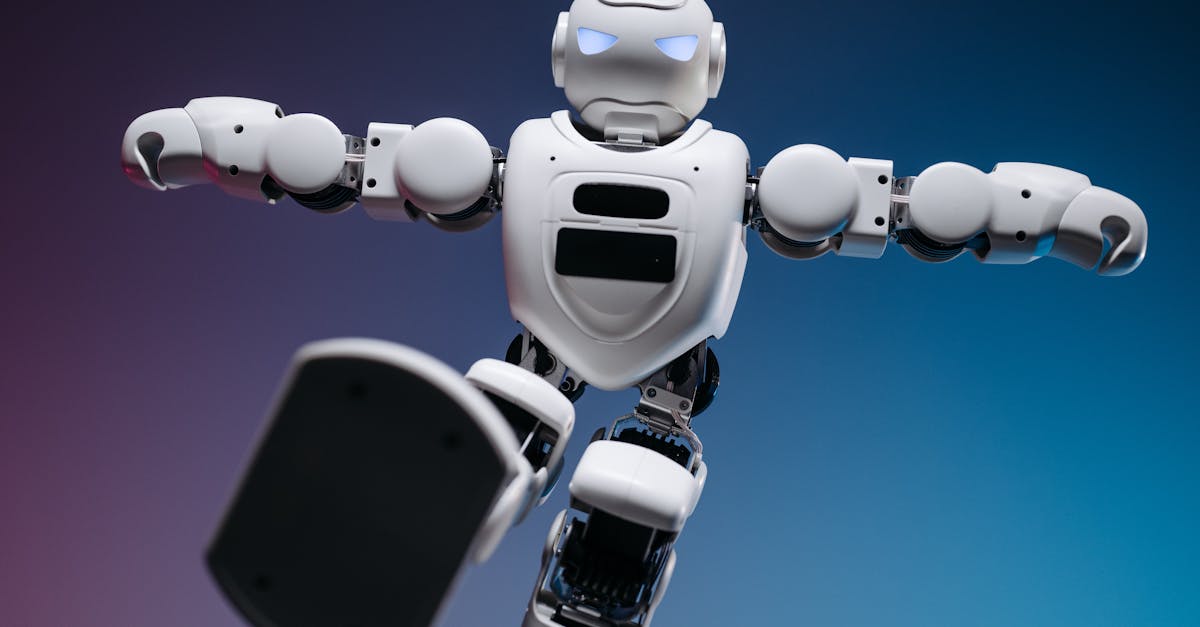
Figure AI: Grounding the Figure 02 Humanoid in Hardware, Pilots, and Partnership Claims

Figure AI: Grounding the Figure 02 Humanoid in Hardware, Pilots, and Partnership Claims
Figure AI, founded in 2022 by Brett Adcock, has rapidly entered the humanoid robotics conversation through high-profile capital backing and technical demonstrations. The company’s current flagship, the Figure 02, is positioned as a general-purpose industrial humanoid designed for logistics, manufacturing, and material handling. This analysis grades claims by deployment status: verified pilot deployments take precedence over announced partnerships, and manufacturer spec sheets form the baseline for hardware claims. Rendered concept art and keynote demonstrations are treated as developmental indicators, not shipping products.
Hardware Architecture and Figure 02 Specifications
Figure AI publishes its Figure 02 technical specifications on its official website and in press documentation. The robot features 43 degrees of freedom (DoF) across its torso, arms, hands, and legs. It utilizes custom-designed actuators with integrated force-torque sensors, enabling precise contact control and adaptive gripping. The upper body includes a dual-camera perception system, while the lower body relies on inertial measurement units (IMUs) and joint encoders for balance and locomotion.
Official specifications list a target payload of approximately 20 pounds (9 kg), an operational battery life of roughly three hours, and an IP54 ingress protection rating for dust and light water exposure. The compute stack is integrated into the torso, with Figure AI citing custom neural processing modules optimized for real-time vision-language-action inference. Figure AI grades this hardware claim as Announcement/Pre-Production for mass deployment, as verified shipping units remain limited to controlled pilot environments rather than commercial fleet distribution.
Software Stack and AI Integration
The Figure 02’s control architecture relies on a vision-language-action (VLA) model trained by OpenAI. OpenAI’s foundation models process camera feeds, point cloud data, and joint state information to generate motor commands. Microsoft provides cloud infrastructure and Azure AI services for simulation, data logging, and fleet management. Nvidia contributes simulation environments (Isaac Sim) and edge compute optimization for the robot’s onboard processing.
These partnerships are documented in official press releases and technical blog posts. Figure AI states that the VLA model enables zero-shot task adaptation in structured environments, reducing the need for manual programming. However, the company acknowledges that complex dexterity tasks, unstructured warehouse aisles, and long-haul battery management remain active development areas. The software claim is graded Pilot Deployment, as functional VLA inference has been demonstrated in live facilities, but generalization across diverse industrial sites requires continuous data collection and model iteration.
Deployment Status and Pilot Verification
Figure AI has transitioned from laboratory testing to early industrial pilots. Verified deployments include:
- Amazon: Figure 02 units have been deployed in Amazon fulfillment centers for material handling tasks, including bin sorting and pallet unloading. Pilot status is confirmed through company announcements and independent logistics industry reporting.
- BMW Group: A pilot program was launched at BMW’s Dingolfing plant in Germany, focusing on tool handling and assembly line support. The deployment is limited in scope and duration, graded Pilot Deployment.
- Michelin: Figure AI partnered with Michelin for tire manufacturing facility trials, targeting repetitive lifting and inspection workflows. Status remains Pilot Deployment.
- Toyota: A joint venture was announced in 2024 to co-develop and manufacture Figure AI robots, with Toyota supplying manufacturing expertise and capital. This is graded Announcement, as production timelines and unit deliveries have not been publicly verified.
Independent reporting from IEEE Spectrum and Reuters confirms that pilot units operate under supervised conditions, with human fallback protocols and restricted task scopes. No mass production or commercial fleet rollout has been confirmed as of late 2024.
Manufacturing, Supply Chain, and Production Scale
Figure AI’s manufacturing strategy relies on a combination of in-house prototyping and external assembly partnerships. The company has disclosed supply chain dependencies on custom actuator manufacturers, precision gearbox suppliers, and semiconductor vendors for edge compute modules. Toyota’s joint venture aims to scale production to thousands of units annually, but current output is constrained by actuator yield rates, sensor calibration, and software validation cycles.
Figure AI’s official materials state that the Figure 02 is engineered for modular replacement of wear components, reducing long-term maintenance costs. However, actuator lifespan testing and field reliability data remain proprietary. The manufacturing claim is graded Announcement for scale, as verified production volume and unit cost breakdowns have not been audited by third parties.
India Market Context and Pricing Reality
Figure AI has not announced official distribution, service centers, or compliance certifications for India. Importing the Figure 02 would require navigating DGFT regulations, BIS standards for industrial robotics, and customs duties applicable to high-value automation equipment. As of 2024, no Indian system integrator or robotics distributor lists Figure AI hardware in its catalog.
Based on Figure AI’s stated target price of approximately $80,000 to $100,000 per unit, landed cost estimates for India would likely range between INR 75 lakhs and INR 95 lakhs, including import duties, GST, customs clearance, and initial calibration fees. These figures are flagged as landed cost estimates and not official quotes. Indian manufacturers seeking humanoid robotics solutions currently rely on domestic integrators offering modular arms, AGVs, and collaborative robots, rather than general-purpose humanoids.
Conclusion
Figure AI’s Figure 02 represents a technically ambitious step toward general-purpose humanoid robotics. The combination of custom actuators, 43 DoF, and OpenAI’s VLA models is documented in official specifications and pilot reports. However, shipping hardware remains confined to early industrial trials, with mass production and commercial pricing still in development. Indian enterprises evaluating humanoid robotics should monitor pilot outcomes, supply chain validation, and official distribution announcements before considering procurement. The gap between partnership announcements and deployed fleet reliability remains the primary metric to track.
References
- Figure AI Official Website: https://www.figure.ai
- Figure AI Press Release: Figure 02 Launch & Technical Specifications (2024): https://www.figure.ai/news
- OpenAI & Figure AI Partnership Announcement: https://openai.com/blog/figure-ai-partnership
- Microsoft Azure AI & Figure AI Collaboration Press Release: https://news.microsoft.com/2024/02/figure-ai-microsoft-azure
- Nvidia & Figure AI Simulation & Edge Compute Partnership: https://blogs.nvidia.com/blog/figure-ai-isaac-sim-partnership
- IEEE Spectrum: Figure AI’s Pilots and Production Roadmap (2024): https://spectrum.ieee.org/figure-ai-humanoid-robots
- Reuters: Figure AI and Toyota Joint Venture Announcement (2024): https://www.reuters.com/technology/figure-ai-toyota-joint-venture
✓ Key takeaways
- •Hands-on view of Figure AI: Grounding the Figure 02 Humanoid in Hardware, Pilots, and Partnership Claims inside our Figure AI library.
- •Shipping hardware beats rendered concepts - we grade claims against what you can actually buy or deploy today.
- •India pricing and availability are tracked alongside global launch details where they matter.
References
- Figure AI Official Website & Technical Specifications
- OpenAI & Figure AI Partnership Announcement
- Microsoft Azure AI & Figure AI Collaboration Press Release
- Nvidia & Figure AI Simulation & Edge Compute Partnership
- IEEE Spectrum: Figure AI Pilots and Production Roadmap
- Reuters: Figure AI and Toyota Joint Venture Announcement
Related articles
More in Figure AI →