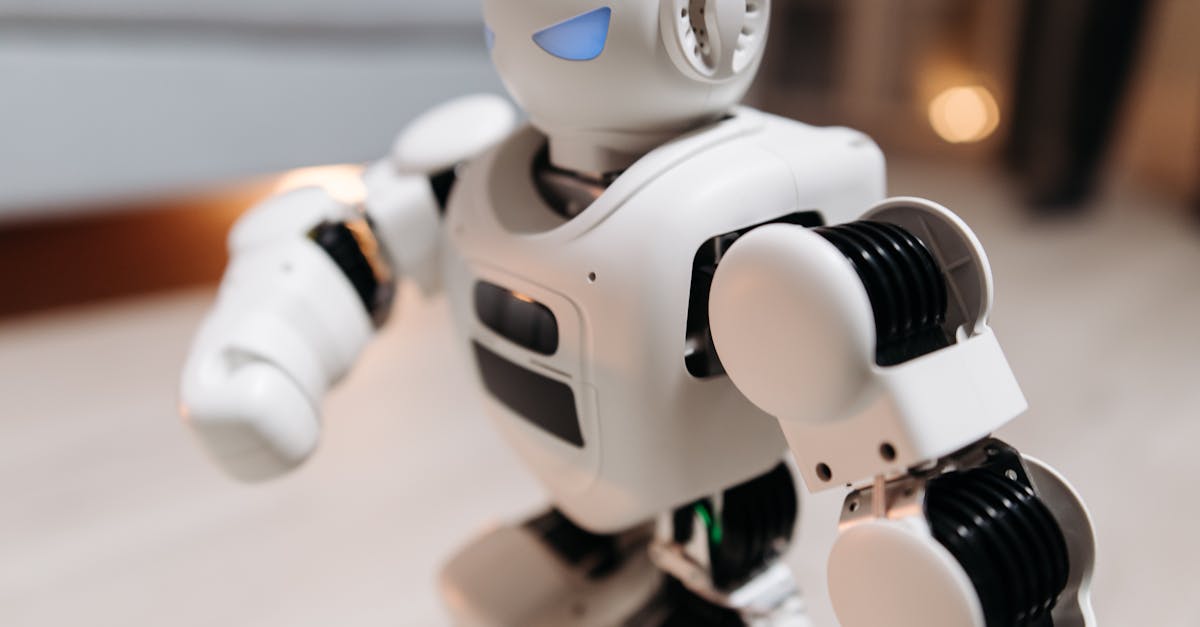
Figure AI: From Backed Concept to BMW Pilot - A Grounded Assessment
Executive Overview
Figure AI has rapidly emerged as a central figure in the race to deploy general-purpose humanoid robots. Founded in 2022 by a team of former Tesla Bot (Optimus) and Amazon Robotics engineers, the company has attracted significant capital from industry heavyweights, including OpenAI, Microsoft, and Nvidia. While the media narrative often focuses on the backing and the visual appeal of the robots, RobotWale prioritizes the transition from concept to deployment. Currently, the most concrete evidence of Figure AI’s progress lies in its pilot deployment at a BMW manufacturing facility, rather than mass commercial sales.
This assessment grades claims based on hardware shipment, pilot deployments, and announcements. We analyze the Figure 01 and Figure 02 hardware, the proprietary AI stack, and the realities of importing such technology into the Indian market.
Company Background and Capitalization
Figure AI was established in early 2022 by ex-Tesla and Amazon robotics executives. The leadership team brings experience in high-speed manufacturing and actuator design, which is critical for humanoid robotics. In a sector dominated by capital-intensive R&D, Figure AI has secured over $600 million in funding from a consortium that includes OpenAI, Microsoft, Nvidia, and others. This backing provides a runway that is significantly longer than many other humanoid startups currently attempting to scale.
The strategic alignment with OpenAI suggests a heavy reliance on foundation models for decision-making and control, while the Nvidia partnership indicates a focus on high-performance edge computing for on-robot processing. Microsoft’s involvement points toward cloud integration and enterprise software stacks. However, having venture capital does not equate to functional hardware. The critical metric remains: how many units are physically operating in a factory environment, and for how long?
Hardware Assessment: Figure 01 and Figure 02
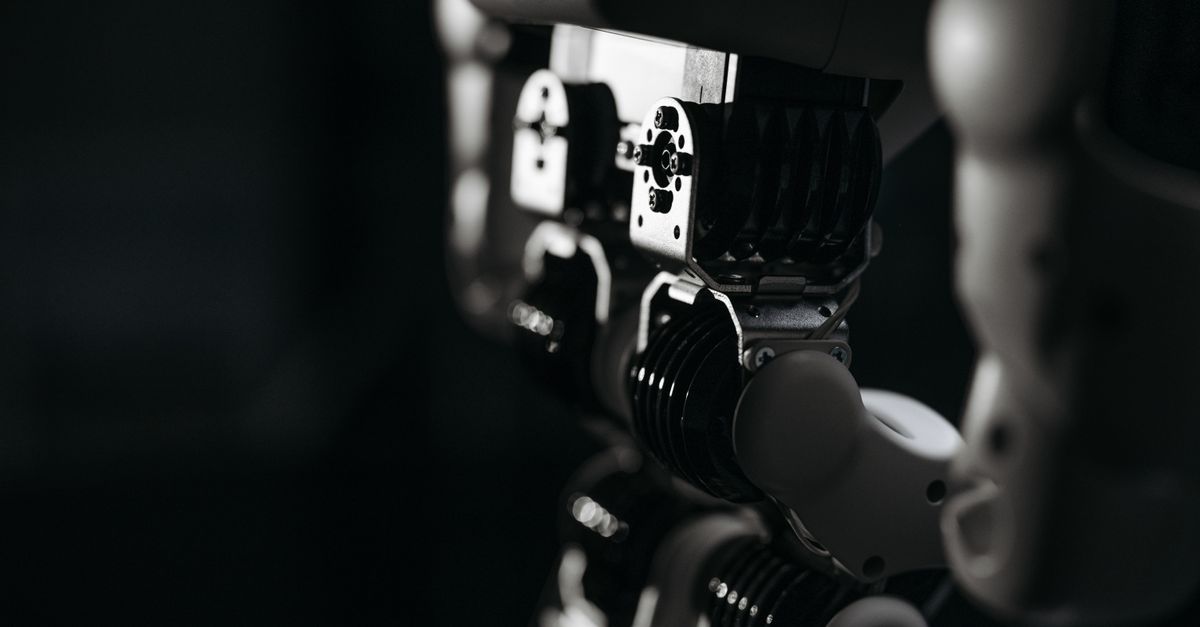
Figure AI’s primary hardware offering is the Figure 01, followed by the newer Figure 02. Unlike early concept robots that relied on hydraulic systems or pneumatic actuators, Figure AI claims an all-electric actuation system designed for higher precision and lower maintenance costs.
Key Technical Specifications (Based on Public Demos):
- Height: Approximately 5 feet 9 inches (1.75 meters).
- Weight: Roughly 150 lbs (68 kg).
- Dexterity: The robot features a two-fingered gripper, though recent demos show improved manipulation capabilities for handling complex objects like battery packs.
- Locomotion: Fully bipedal movement without external support rails.
- Compute: Edge computing unit capable of running inference locally, reducing latency in dynamic environments.
It is important to note that while the robot can walk and manipulate objects in controlled settings, it does not yet possess the general dexterity required for unstructured environments. In late 2024, a demonstration at the NVIDIA GTC conference showed the robot folding laundry, which was a significant milestone for manipulation. However, this was a scripted sequence rather than a response to unpredictable variable inputs.
The Figure 02 is an iteration intended to address these limitations. It reportedly features faster processing speeds and improved battery life, targeting a runtime of several hours during a standard shift. The transition from Figure 01 to 02 highlights the iterative nature of the hardware development, but it remains a closed-loop deployment in pilot phases.
Pilot Deployments: The BMW Partnership
The most verifiable claim regarding Figure AI’s operational status is its partnership with BMW. In October 2024, it was reported that Figure AI deployed its robots at the BMW South Carolina plant in Spartanburg. This is not merely a marketing stunt; it involves the robots performing actual tasks on the assembly line, specifically handling battery packs and inspecting chassis components.
Deployment Metrics:
- Location: BMW Manufacturing Co., Spartanburg, South Carolina.
- Use Case: Material handling and quality inspection.
- Status: Pilot program. Not yet scaled to mass production.
This pilot is crucial because it moves the company beyond the "demo day" stage. However, RobotWale notes that the scale of deployment is currently small. Reports suggest only a few units are operating in the facility. The distinction between a pilot program and a commercial rollout is significant. In a pilot, the hardware may be tethered to a network, or the software may be heavily supervised by human operators. The goal of the BMW deal is to gather data to refine the reinforcement learning models.
The partnership also includes a broader collaboration where BMW and Figure AI are working on a long-term roadmap for industrial automation. While this is a positive sign of confidence, the timeline for full commercialization remains undefined. There is no public evidence of a contract for 100+ units, which would indicate true market readiness.
India Availability and Pricing Analysis
For Indian manufacturers and system integrators, the immediate question is availability. Currently, Figure AI is not selling directly to the Indian market. There is no authorized distributor, no local assembly plant, and no official pricing sheet available for public procurement.
Estimated Cost Structure:
While Figure AI has not released a specific price tag, industry estimates for humanoid robots in the pilot phase range from $200,000 to $500,000 USD per unit. This estimate includes the hardware, the AI licensing fee, and the initial installation support. If we extrapolate this to the Indian market:
- Base Cost: $300,000 USD (approx. ₹2.5 Crores).
- Import Duties: India currently levies Basic Customs Duty (BCD) on robotics equipment. Depending on the classification under the HS Code, this can range from 10% to 15%.
- GST: An additional 18% GST applies to the landed value.
- Logistics: High-value robotics equipment requires specialized insurance and climate-controlled shipping.
Landed Cost Estimate: Including duties and logistics, a Figure AI unit imported to India would likely exceed ₹3 Crores (INR) per unit. This places the technology well beyond the reach of most small and medium enterprises (SMEs) in India. It is currently restricted to large conglomerates like Tata, Reliance, or Maruti Suzuki, which are exploring automation for their global supply chains.
Regulatory Hurdles:
Beyond cost, Indian regulatory frameworks regarding autonomous mobile robots (AMR) and humanoid systems are still evolving. Safety certifications, specifically under the Bureau of Indian Standards (BIS), are required for industrial deployment. Given that the Figure AI hardware is still in the pilot phase globally, it does not yet hold BIS certification for industrial use in India. Importing such hardware would require a No Objection Certificate (NOC) from the Ministry of Electronics and Information Technology (MeitY) or the Department of Heavy Industry.
AI and Software Stack
The Figure AI system relies heavily on its AI model, trained using large-scale reinforcement learning. This integration is where the partnership with OpenAI is most visible. The robot does not rely solely on pre-programmed trajectories; it learns from interaction with the environment.
Capabilities:
- Generalization: The AI is designed to transfer skills from simulation to the real world, though the "sim-to-real" gap remains a technical challenge.
- Vision: Equipped with high-resolution cameras and depth sensors to navigate complex factory floors.
- Language Models: Capable of interpreting natural language commands from human operators.
However, the reliance on foundation models introduces latency and safety risks. In a recent incident during a public demonstration, the Figure 01 robot fell from a stage. While no injuries occurred, it highlighted the fragility of the control systems. The company’s response was to refine the balance algorithms, but the incident underscores the gap between a demo and a safety-critical industrial application.
Supply Chain and Manufacturing Challenges
Scaling humanoid robotics requires more than just software; it requires a supply chain for high-torque actuators and precision sensors. Figure AI has indicated plans to manufacture its own actuators, which is a strategic move to reduce costs and improve performance control. However, the semiconductor shortage and the availability of high-grade magnetic actuators remain global bottlenecks.
For the Indian market, importing these components presents further hurdles. If Figure AI does not localize assembly, the cost of the robot remains prohibitive due to the import duties on electronic components. A true value proposition for India would require a localized supply chain, potentially leveraging the PLI (Production Linked Incentive) scheme for electronics manufacturing.
Risk Factors and Market Realities
While the backing is impressive, the risks are non-trivial. The humanoid robotics sector faces a "valley of death" between pilot deployments and mass commercialization. Many startups have burned capital on prototypes that cannot scale.
Key Risks:
- Cash Burn: Developing all-electric actuators and AI models is capital intensive. Without a clear path to per-unit profitability, funding rounds may not sustain the company indefinitely.
- Regulatory Environment: As mentioned, Indian safety standards are strict. The liability framework for an autonomous robot causing damage on a factory floor is currently undefined in Indian law.
- Competition: Figure AI competes with Tesla Optimus, Boston Dynamics, and domestic Indian startups like Robu and Ashoka Robotics. While Figure AI has strong backing, Tesla has a manufacturing scale that Figure AI is currently trying to achieve.
Conclusion
Figure AI represents a significant step forward in the hardware maturity of humanoid robotics. The BMW pilot is the strongest evidence of its operational viability, moving beyond conceptual demos. However, the company is not yet a supplier. For Indian enterprises, the technology remains in the distant horizon. With a landed cost likely exceeding ₹3 Crores and no BIS certification, Figure AI is currently a B2B pilot project, not a commercial product.
Investors and industry observers should grade the company based on the number of units deployed in the BMW facility over the next 12 months, rather than the size of its funding rounds. If Figure AI can scale the Figure 02 hardware to a functional unit that operates autonomously for 8 hours without human intervention, the valuation will shift from speculation to infrastructure. Until then, it remains a high-potential pilot with a long road to market adoption.
References
- Figure AI Official Website: https://figure.ai
- BMW Group Press Release on Figure AI Partnership: https://www.bmwgroup.com/en/press-releases/figure-ai.html
- OpenAI Technology Overview: https://openai.com
- NVIDIA Robotics Solutions: https://www.nvidia.com/en-us/industries/robotics/
- TechCrunch Report on Figure AI Funding: https://techcrunch.com
✓ Key takeaways
- •Hands-on view of Figure AI: From Backed Concept to BMW Pilot - A Grounded Assessment inside our Figure AI library.
- •Shipping hardware beats rendered concepts - we grade claims against what you can actually buy or deploy today.
- •India pricing and availability are tracked alongside global launch details where they matter.
References
Related articles
More in Figure AI →