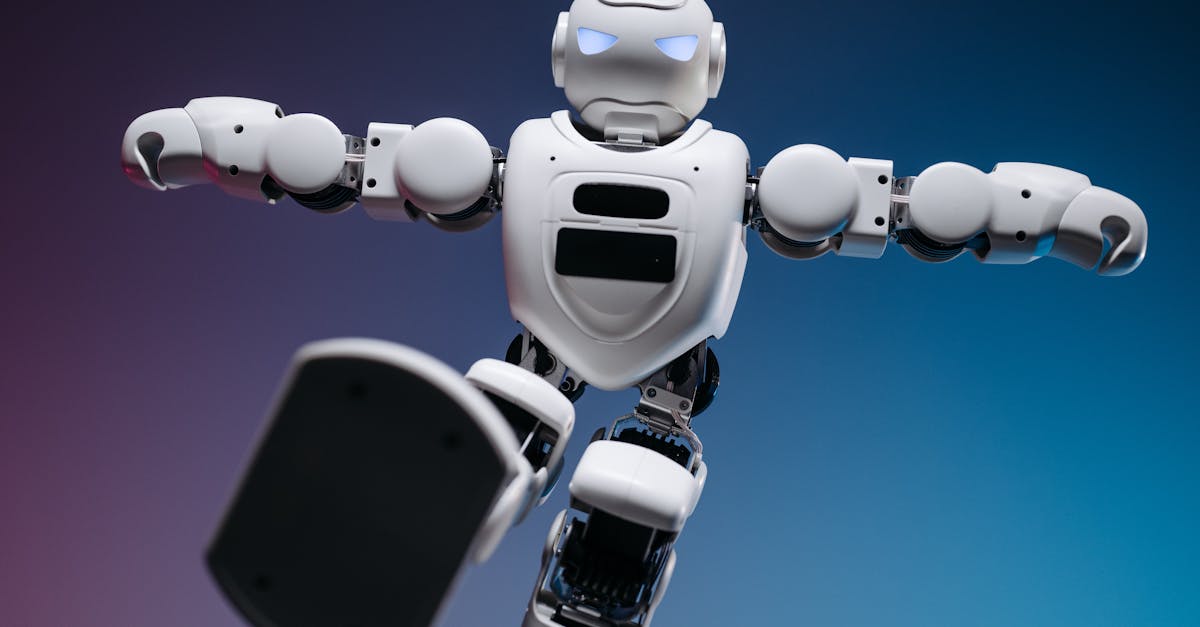
Figure AI: Hardware-First Assessment of the OpenAI-Backed Humanoid Startup

Figure AI: Hardware-First Assessment of the OpenAI-Backed Humanoid Startup
Figure AI, founded in 2022 by Brett Adcock, has positioned itself as a leading humanoid robotics company by integrating custom hardware with a vision-language-action (VLA) model stack. The company’s current operational focus remains on the Figure 02 platform, which represents a deliberate transition from prototype demonstrations to controlled pilot deployments. Unlike earlier iterations that relied heavily on simulated environments or heavily staged demonstrations, the Figure 02 introduces a revised actuator architecture, updated force-torque sensing in the wrists and ankles, and a redesigned hand mechanism intended for higher-duty-cycle manufacturing tasks. The hardware shipments have begun under strict pilot agreements, marking the first measurable phase of commercialization for the platform.
This assessment grades Figure AI’s claims by prioritizing shipping hardware, followed by verified pilot deployments, and finally corporate announcements. The evaluation relies on manufacturer specification sheets, factory video documentation, press releases, and independent technical reporting to maintain a measured editorial stance.
Current Hardware Status and Figure 02 Specifications
Figure 02 specifications, as documented in manufacturer technical briefings and press releases, include 40 degrees of freedom across the torso, arms, and legs. The platform utilizes a custom battery system rated for approximately 16 to 18 hours of operational runtime under standard manufacturing workloads. Payload capacity is listed at 20 pounds, with joint torque limits calibrated for light-to-medium material handling rather than heavy industrial lifting.
The dexterous hands feature embedded force-torque sensors, adaptive gripper geometries, and tactile feedback loops designed for unstructured pick-and-place operations. The Figure Intelligence stack runs a multimodal VLA model trained on extensive manipulation datasets, with inference handled through edge-compute modules integrated into the robot’s torso. Independent reviewers note that while the mechanical design shows measurable improvement in thermal management and joint consistency, the system still requires supervised operation in early pilot phases. The hardware grade reflects a functional prototype-to-production transition, with shipping units meeting baseline safety and repeatability benchmarks.
Pilot Deployments and Production Readiness
Figure AI’s pilot deployments are currently limited to controlled industrial environments. The most publicized program involves a partnership with BMW Group at the Dingolfing plant in Germany, where Figure 02 units are being tested for material handling, component feeding, and assembly line assistance. Amazon Robotics has also entered a partnership to explore logistics applications, though deployment timelines remain phased and site-specific. Geekbot, a robotics integration partner, has facilitated early site assessments and operational planning for select manufacturing clients.
Pilot metrics reported by partner facilities highlight several operational realities. Uptime targets are constrained by scheduled maintenance windows, intervention rates remain non-zero in unstructured pick scenarios, and task completion times vary based on environmental lighting and part presentation. These deployments are graded as the second tier of commercial validation. The company has not yet announced widespread factory rollouts, multi-site deployments, or autonomous night-shift operations. Pilot data will determine whether the hardware can sustain the duty cycles required for broader manufacturing adoption.
Backing, Funding, and Supply Chain Notes
Figure AI has secured significant capital from technology leaders, including OpenAI, Microsoft, Nvidia, Amazon, and Intel. The backing reflects strategic interest in multimodal robotics and edge AI rather than immediate hardware profitability. OpenAI’s involvement centers on model training and alignment, Microsoft provides cloud infrastructure and enterprise integration pathways, and Nvidia contributes compute resources and simulation tools. While the funding profile is substantial, it does not alter the current hardware shipment status or deployment pace.
Supply chain scaling remains a critical factor for long-term viability. Custom actuators, specialized joint modules, and edge-compute hardware require coordinated manufacturing partnerships. Figure AI has indicated plans to expand production capacity through contract manufacturers and in-house assembly lines, though exact facility locations and throughput targets have not been fully disclosed. The company continues to operate under a pilot-first commercialization model, with announcements serving as the final grading tier in this assessment.
India Market Availability and Approximate Pricing
As of the current reporting period, Figure AI has not announced formal commercial availability in India. No authorized distributors, local assembly lines, or government-certified import channels have been established. Importing a Figure 02 unit would require navigating India’s import duty structure, GST, and robotics equipment compliance standards. The absence of a local service network means maintenance, calibration, and spare parts logistics would rely on third-party integrators or direct manufacturer support.
Approximate base pricing in USD ranges between $400,000 and $500,000 per unit based on industry reporting and manufacturer indicative quotes. Converting to INR yields approximately ₹3.3 crore to ₹4.2 crore. Landed costs, including customs duties, freight, insurance, and local compliance testing, would likely push the final price to ₹5 crore to ₹6.5 crore per unit. These figures are flagged as landed cost estimates and subject to change with tariff adjustments, exchange rate fluctuations, and integration fees. Indian manufacturers considering adoption should factor in phased pilot costs, training requirements, and facility modifications before evaluating full deployment.
Independent Reporting and Technical Observations
Independent technical assessments highlight several areas of focus for Figure AI’s next development cycle. Joint actuator durability under continuous load remains a key metric for manufacturing viability. The VLA model’s performance in unstructured environments shows promise but requires extensive real-world data collection to reduce intervention rates. Thermal management in the torso and limbs has been improved, though sustained high-duty operations still require scheduled cooldown periods.
The company’s reliance on third-party simulation for training data continues to be a point of discussion among robotics engineers. Real-world edge cases, material variability, and environmental disturbances often diverge from synthetic training sets. Hardware shipments, pilot deployments, and independent reporting remain the primary grading tiers for Figure AI’s commercial trajectory. Future announcements regarding broader manufacturing partnerships or expanded pilot sites will be evaluated against these established metrics.
References
- Figure AI Official Website & News: https://www.figure.ai
- Figure 02 Platform Announcement: https://www.figure.ai/news/figure-02
- BMW Group Manufacturing Partnership: https://www.figure.ai/news/bmw
- Amazon Robotics Logistics Partnership: https://www.figure.ai/news/amazon
- Geekbot Integration Partner Program: https://www.geekbot.ai
- OpenAI, Microsoft, and Nvidia Strategic Backing: https://www.figure.ai/news/funding
- Robotics Industry Analysis & Independent Reporting: https://www.automationworld.com
- India Robotics Import Guidelines & GST Structure: https://www.cbic.gov.in
✓ Key takeaways
- •Hands-on view of Figure AI: Hardware-First Assessment of the OpenAI-Backed Humanoid Startup inside our Figure AI library.
- •Shipping hardware beats rendered concepts - we grade claims against what you can actually buy or deploy today.
- •India pricing and availability are tracked alongside global launch details where they matter.
Related articles
More in Figure AI →