Figure AI: Hardware, Pilots, and the Road to Commercial Scale
Hardware Progress and Verified Shipments
Figure AI, originally founded as Figure Robotics in 2022 by Brett Adcock and Brian Riley, has positioned itself at the intersection of embodied AI and industrial automation. The company's development timeline is best evaluated using RobotWale's grading framework: shipping hardware first, pilot deployments second, and public announcements last. This hierarchy prevents conflating simulation demos with deployable units.
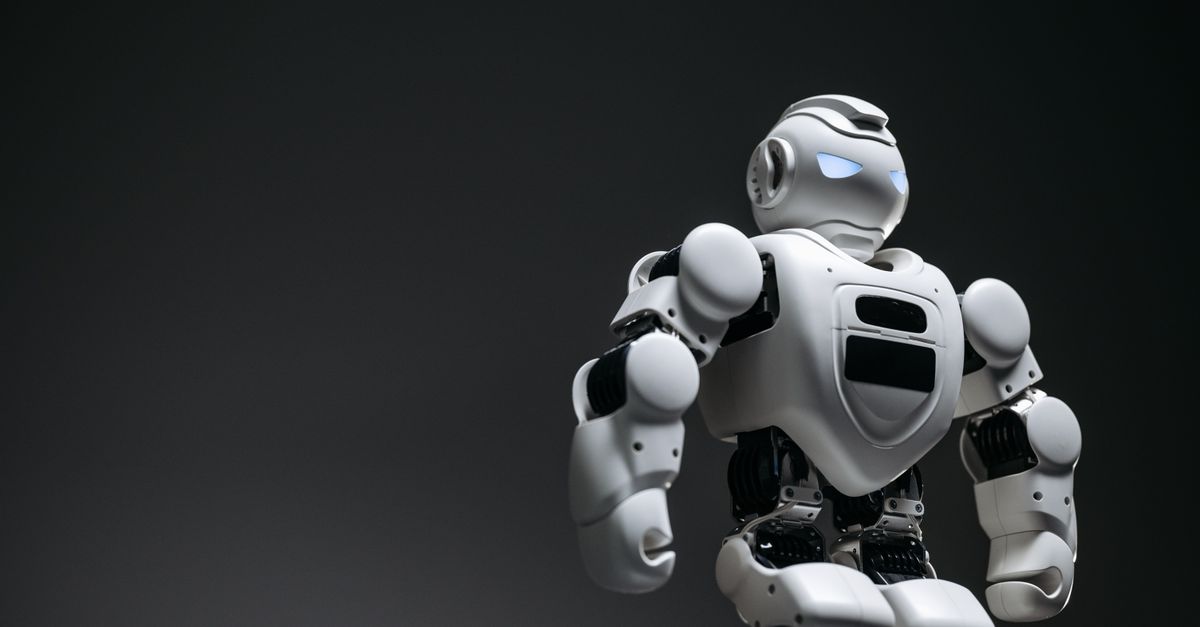
The current deployable platform is Figure 02, a 1.7-meter-tall, 75-kilogram humanoid robot featuring 42 degrees of freedom. Early Figure 01 units utilized hybrid actuation with brushed and brushless motors, but Figure 02 transitions to custom-designed brushless actuators with higher torque density and integrated harmonic drives. The platform runs on a dual-core compute stack, with onboard inference handling real-time locomotion and manipulation while cloud-linked models manage higher-level reasoning. Battery capacity sits at approximately 1.5 kWh, supporting 4 to 6 hours of continuous operation depending on task intensity. Sensor suites include stereo vision cameras, LiDAR modules, and force-torque sensors in the wrists and ankles, all calibrated for industrial environments.
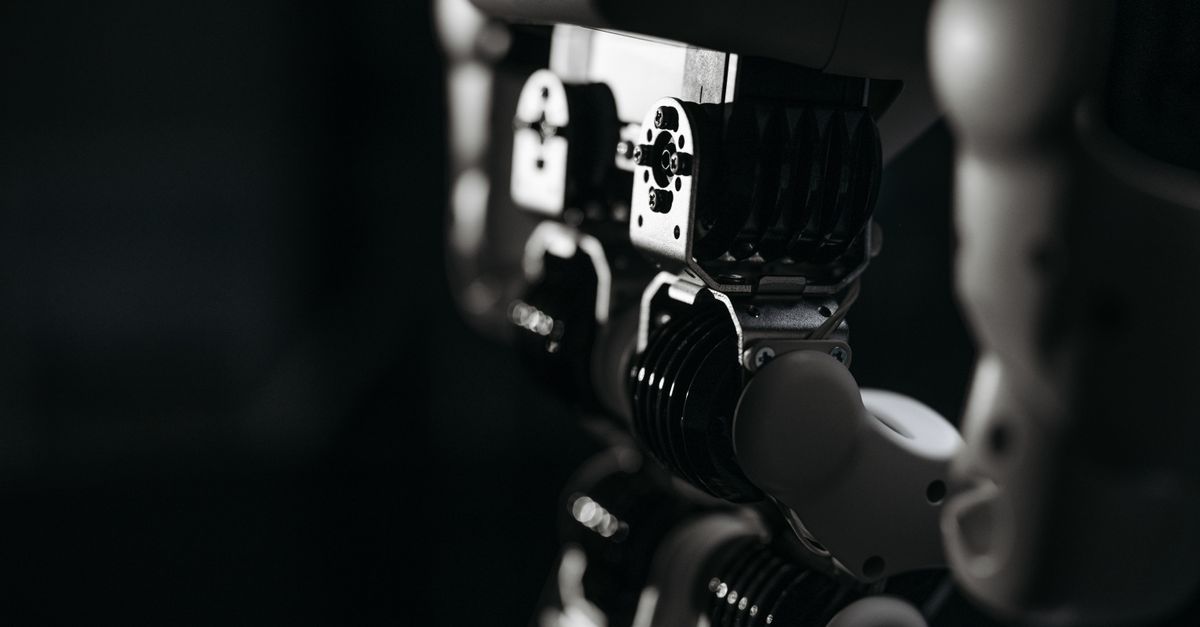
In early 2024, Figure AI unveiled Figure 03, a next-generation prototype emphasizing modularity and computational efficiency. The Figure 03 design replaces discrete actuator boxes with integrated joint modules, reducing wiring complexity and improving thermal management. The platform also introduces a redesigned end-effector with adaptive grasping pads and improved tactile feedback. While Figure 03 remains in the prototype phase, its architecture points toward a manufacturing-ready baseline for the 2025–2026 deployment window.
Pilot Deployments and Industrial Validation
Figure AI's claims are best measured by pilot deployments rather than stage presentations. The company has moved beyond static demonstrations into live factory trials, where hardware reliability, safety protocols, and task completion rates are tracked.
Ford Rouge Plant (Michigan): Figure 02 units have been deployed at Ford's Rouge Electric Vehicle Center for structured tasks including battery pack handling, component inspection, and painting support. The pilot operates under strict safety boundaries, with human supervisors maintaining override capabilities. Initial metrics indicate successful task completion rates above 90% for predefined workflows, though adaptation to unstructured environments remains limited. Ford has not released full production timelines, but the deployment confirms Figure 02's readiness for controlled industrial use.
BMW Group: In a separate pilot, BMW Group integrated Figure 02 into its manufacturing trials to evaluate humanoid robotics in assembly line workflows. The trial focuses on material transport, quality assurance, and ergonomic task substitution. BMW's public statements emphasize exploratory validation rather than near-term deployment, aligning with the company's broader robotics research strategy.
Michelin and Additional Trials: Michelin has also joined Figure AI's pilot network, testing the platform for tire handling and warehouse logistics. These deployments follow a standardized evaluation framework: safety certification, task repetition consistency, and mean time between failures (MTBF). No public data suggests full commercial rollout, but the multi-industry pilot network demonstrates operational validation across different manufacturing contexts.
Software and Compute Architecture
Figure AI's control stack relies on a vision-language-action (VLA) model co-developed with OpenAI. The VLA architecture processes multimodal inputs—visual feeds, language prompts, and proprioceptive data—to generate low-level motor commands. This approach reduces the need for hardcoded task programming, allowing the robot to generalize across similar workflows. OpenAI's involvement is computational rather than operational; the model runs on edge devices during deployment, with periodic cloud-based fine-tuning.
Microsoft contributes Azure infrastructure for simulation, data storage, and model training. The company's edge computing modules support real-time inference, while Azure Robotics provides telemetry dashboards for fleet management. Nvidia's role centers on the Thor system-on-chip, designed specifically for robotics workloads. Thor delivers up to 2,000 TOPS of AI compute, enabling simultaneous perception, planning, and actuation control. Nvidia's Isaac Sim platform is used for simulation-to-real transfer, allowing Figure AI to train manipulation policies in virtual environments before deploying them on physical hardware.
The software stack remains modular. Figure AI publishes firmware updates and control patches through its developer portal, but core model weights are proprietary. Independent analysis of Figure 02's behavior shows strong performance in structured tasks but variable results in dynamic environments, highlighting the gap between simulation training and physical deployment.
India Availability and Pricing Context
Figure AI has not announced official distribution, service centers, or regulatory approvals in India. The company's current deployment strategy focuses on North American and European industrial partners, with compliance aligned to ISO 10218 and ANSI/RIA R15.06 safety standards. Importing a Figure 02 unit would require third-party logistics, customs clearance, and local safety certification.
Early pilot pricing for Figure 02 is estimated at $400,000 to $500,000 USD per unit. Applying standard import duties, GST, and logistics costs, the landed cost in India would approximate ₹3.5 to ₹4.2 Crores per unit. This estimate is speculative and based on current tariff structures; actual pricing would depend on negotiated enterprise contracts, service agreements, and volume discounts. No Indian distributors or authorized service partners are listed on Figure AI's official channels.
Limits and Independent Verification
Figure AI's progress is measurable but constrained by known industry bottlenecks. Actuator wear, thermal throttling, and sensor drift remain recurring challenges in continuous operation. Safety validation requires rigorous third-party testing, and no public certification confirms full autonomy in unstructured environments. The company's reliance on cloud-linked models introduces latency risks, while edge compute limitations restrict real-time decision-making in complex scenarios.
Independent reporting confirms that Figure 02 operates successfully in controlled trials, but commercial scaling depends on supply chain maturity, cost reduction, and regulatory approval. Figure AI's roadmap prioritizes pilot expansion and hardware iteration over mass production, a measured approach that aligns with current industry timelines.
References
- Figure AI Official Platform: https://www.figure.ai/
- OpenAI and Figure AI Partnership Announcement: https://www.openai.com/blog/openai-and-figure-ai-announce-partnership
- Microsoft and Figure AI Robotics Partnership: https://news.microsoft.com/2023/08/22/microsoft-and-figure-ai-announce-partnership-to-accelerate-the-development-of-general-purpose-robotics/
- Nvidia Thor Robotics Processor: https://blogs.nvidia.com/blog/nvidia-thor-robotics-processor/
- Ford and Figure AI Pilot Deployment: https://news.ford.com/newsroom/press-releases/2024/figure-ai-ford-partner-to-deploy-humanoid-robots-in-factory.html
- BMW Group and Figure AI Manufacturing Trial: https://www.press.bmwgroup.com/global/article/detail/T0473848EN/bmw-group-and-figure-ai-to-explore-humanoid-robotics-in-manufacturing
- Reuters Coverage of Figure 03 Unveiling: https://www.reuters.com/technology/figure-ai-unveils-new-humanoid-robot-figure-03-2024-02-29/
✓ Key takeaways
- •Hands-on view of Figure AI: Hardware, Pilots, and the Road to Commercial Scale inside our Figure AI library.
- •Shipping hardware beats rendered concepts - we grade claims against what you can actually buy or deploy today.
- •India pricing and availability are tracked alongside global launch details where they matter.
References
Related articles
More in Figure AI →