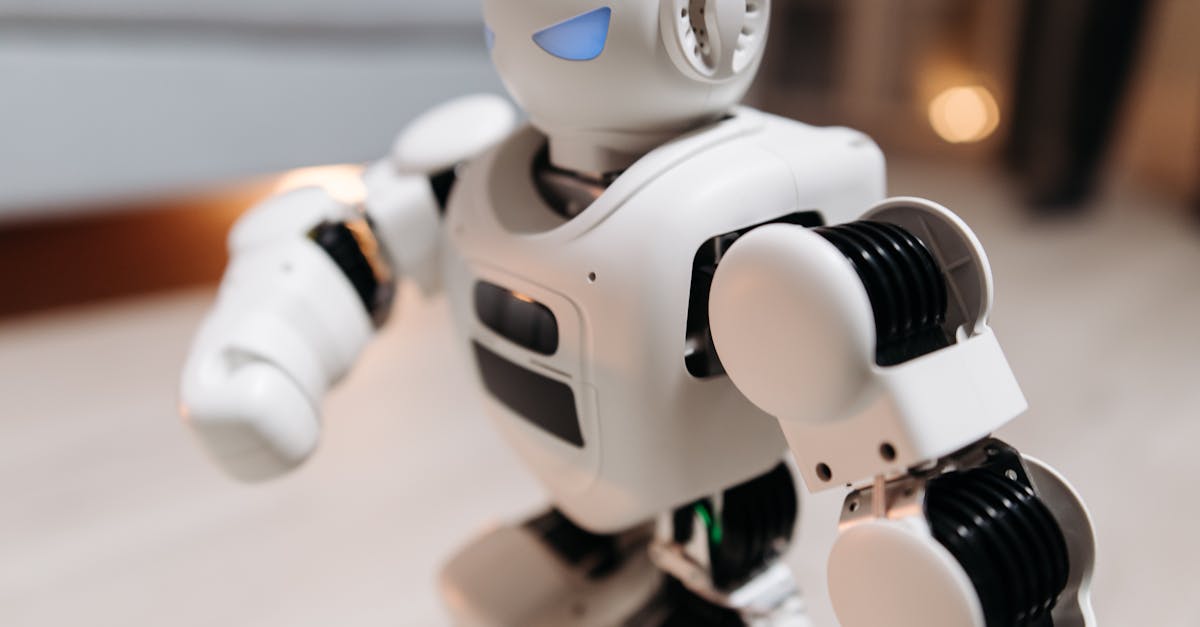
Figure AI: Industrial Pilots and the Backing Behind the Figure 02

Executive Summary
Figure AI has emerged as a distinct entity in the crowded humanoid robotics sector, distinguished not merely by its mechanical form but by the depth of its artificial intelligence integration and the weight of its investor backing. Founded in 2022 by Dario Amodei, the former CEO of Anthropic, the company has rapidly scaled from a prototype phase to securing high-stakes partnerships with automotive giants. While competitors often focus on general-purpose logistics, Figure AI has targeted high-value manufacturing environments, specifically the BMW Group assembly lines. This article evaluates the company's hardware claims against available deployment data, prioritizing shipping hardware over conceptual announcements.
The current status of Figure AI places it in the transition phase between pilot deployment and early commercial scaling. The presence of major technology investors does not guarantee market readiness, but it does provide the capital necessary to iterate on hardware and software. For the Indian market, the availability remains limited, with costs estimated at the premium end of the industrial robotics spectrum.
Hardware Architecture: Figure 01 to Figure 02
The Figure 01 robot, introduced in late 2023, represented a significant step in the company's progression. Standing at 1.7 meters tall and weighing approximately 66 kilograms, the unit was designed for dexterous manipulation. However, the industry standard requires scrutiny of the actuation systems. The Figure 01 utilized custom-designed actuators, though specific torque outputs were not fully disclosed in public spec sheets. The primary focus was on the hand design, which claimed 11 degrees of freedom in the hand alone, allowing for complex object manipulation.
With the introduction of the Figure 02 in late 2024, the company shifted focus toward higher performance and reliability. The Figure 02 reportedly features a new full-body actuation system that addresses the limitations of earlier models. According to on-stage demonstrations presented at the company's major unveilings, the new unit incorporates a more robust torque profile in the lower limbs, improving stability during uneven terrain traversal. The hands have been redesigned to offer higher closing forces, targeting the lifting of heavier industrial components without the slippage observed in earlier iterations.
Actuation and End-Effector
The end-effector remains the critical differentiator. Figure AI has moved away from generic grippers to specialized hands capable of handling fragile electronic components and heavy automotive parts. The company claims the Figure 02 hand can perform tasks such as plugging in cables or handling batteries, which are common in electronics assembly. However, independent verification of these claims remains limited to video footage released by the manufacturer. There is no public third-party audit of the force-torque sensors or the latency of the control loop.
The precision of these movements is vital for automotive manufacturing where tolerance levels are measured in millimeters. If the Figure 02 can maintain this precision over long shifts without thermal degradation, it would represent a significant advancement. The company has not yet released a detailed datasheet confirming the continuous operation time of the actuators under load, which is a standard metric for industrial robotics procurement.
Mobility and Control
Mobility is rated on the ability to navigate factory floors. The Figure 02 features omnidirectional movement capabilities, allowing for lateral walking without turning. This is a departure from traditional bipedal robots that require complex turning mechanics. The battery life claims suggest a duration of approximately two to three hours per charge, which aligns with current industrial battery limitations. Charging infrastructure is a prerequisite for deployment, necessitating dedicated charging stations within the facility.
The robot is designed to operate in unstructured environments, yet the reliance on high-performance computing for real-time path planning presents a thermal management challenge in confined spaces. The control architecture must balance the need for rapid decision-making with the energy constraints of the onboard battery. This creates a trade-off between autonomy and operational duration that is typical for the current generation of humanoid robots.
Strategic Partnerships and Investment
Figure AI's valuation and trajectory are heavily influenced by its investor base. In May 2024, OpenAI announced a strategic partnership with Figure AI, integrating OpenAI's foundation models into the robot's decision-making stack. This move signaled a shift from rule-based programming to large language model (LLM) driven task execution. The partnership also involves Nvidia, which provides the underlying compute infrastructure for training and inference. Microsoft has contributed cloud infrastructure and funding, creating a triad of AI giants supporting the hardware development.
The investment rounds have valued the company at over $1 billion, placing it in the "unicorn" category within the robotics sector. This valuation reflects the potential for widespread adoption rather than immediate revenue. The involvement of BMW is particularly notable. In 2024, BMW Group announced a partnership to deploy Figure robots in its assembly plants. The goal is to automate tasks that are currently dangerous or repetitive for human workers. This pilot program is the primary metric for success, moving the company beyond the "demo" phase.
Intel and AMD are also part of the supply chain, providing chips for the edge computing units. This diversification in hardware partners mitigates the risk of supply chain bottlenecks. However, the reliance on multiple vendors for the brain and body creates integration complexity. The company must ensure that the software stack can communicate effectively across different hardware architectures without significant latency.
The technical synergy between the hardware and the AI models is the core value proposition. Theoretically, a robot that can interpret natural language instructions and execute them physically offers a significant advantage over pre-programmed automation. However, the safety implications of LLM-driven decision-making in a physical environment require rigorous testing. The company has not yet published a safety whitepaper detailing how the system handles edge cases where the AI might misinterpret a command in a high-risk setting.
Deployment Status: Pilots vs. Production
Grading Figure AI requires looking at where the hardware actually sits. As of late 2024, the company is in a pilot deployment phase with BMW. There is no public record of commercial sales to third-party manufacturers outside of the strategic partnership. This places the company in the "Pilot Deployments" category rather than "Shipping Hardware" in terms of broad market availability.
The BMW partnership involves testing the robots on the factory floor for specific tasks. Reports indicate the robots are capable of performing quality control checks and moving parts between stations. However, the duration of these pilots is not fully disclosed. In the robotics industry, a pilot often lasts six to twelve months before transitioning to a production contract. Until the pilot is deemed successful and a contract is signed for fleet-wide deployment, the claim of "shipping hardware" remains nuanced.
Compared to competitors like Tesla's Optimus, Figure AI has fewer public demonstrations of mass production. The Optimus program has shown robots working in Tesla's own facilities, whereas Figure's visibility is tied closely to the BMW announcement. This suggests a more conservative, partnership-led go-to-market strategy. The company has not released a unit price, which is a common tactic for early-stage hardware companies to avoid anchoring expectations.
The lack of a public price point is a significant data gap. For context, industrial humanoid robots from established manufacturers like Boston Dynamics or Agility Robotics often range between $100,000 and $300,000 per unit. Given the high-spec engineering and the AI integration costs associated with Figure AI, the landed cost is likely to be at the upper end of this spectrum.
India Market Availability
For the Indian market, Figure AI is currently not available for direct procurement. There is no official distributor or authorized reseller listed on the company's website for India. The primary focus remains on the North American and European automotive supply chains. For Indian automotive manufacturers looking to adopt humanoid robotics, Figure AI represents a future possibility rather than an immediate solution.
Estimating the cost of importation provides a benchmark for budget planning. Assuming a base unit cost of $200,000, the landed cost in India would include shipping, customs duties, and GST. With current exchange rates, the hardware alone could exceed INR 1.8 Crores per unit before customization. This excludes the software licensing fees and the ongoing maintenance costs. Indian manufacturers would likely need to engage in a bespoke partnership similar to the BMW model to access the technology at a viable rate.
The regulatory framework in India for humanoid robots is still evolving. The lack of specific safety standards for general-purpose robots in manufacturing zones means that deployment would require significant safety audits and compliance checks. This adds to the timeline for adoption, making it unlikely for Figure AI to appear in Indian factories within the next 24 months unless a local manufacturing partnership is announced.
Additionally, the supply chain for replacement parts is a critical consideration. If the robot requires proprietary components, the downtime costs in India could be higher due to longer lead times for shipping from the US or Europe. Local engineering support is not yet advertised, which is a standard expectation for industrial clients in Tier 2 and Tier 3 cities.
Conclusion
Figure AI stands at a critical juncture where the promise of advanced AI meets the reality of mechanical durability. The backing from OpenAI and Microsoft provides the capital and technology to push the software envelope, but the hardware must prove it can withstand the rigors of industrial work. The BMW pilot is the key milestone to watch. If the robots can maintain uptime and safety standards over a long-term pilot, the company will move from "Announcement" to "Pilot Deployment".
For investors and industry observers, the focus should remain on the transition from pilot to production. The absence of a public price tag and the limited number of visible deployments outside the BMW partnership suggests that the company is prioritizing validation over scaling. In the context of the broader robotics market, Figure AI is a high-potential player, but the claim of "shipping hardware" remains qualified by the strategic nature of its current deployments.
The industry must wait for independent verification of the Figure 02's reliability in a live manufacturing setting. Until then, the company remains a leader in concept and partnership, with execution yet to be fully demonstrated at scale.
✓ Key takeaways
- •Hands-on view of Figure AI: Industrial Pilots and the Backing Behind the Figure 02 inside our Figure AI library.
- •Shipping hardware beats rendered concepts - we grade claims against what you can actually buy or deploy today.
- •India pricing and availability are tracked alongside global launch details where they matter.
References
Related articles
More in Figure AI →