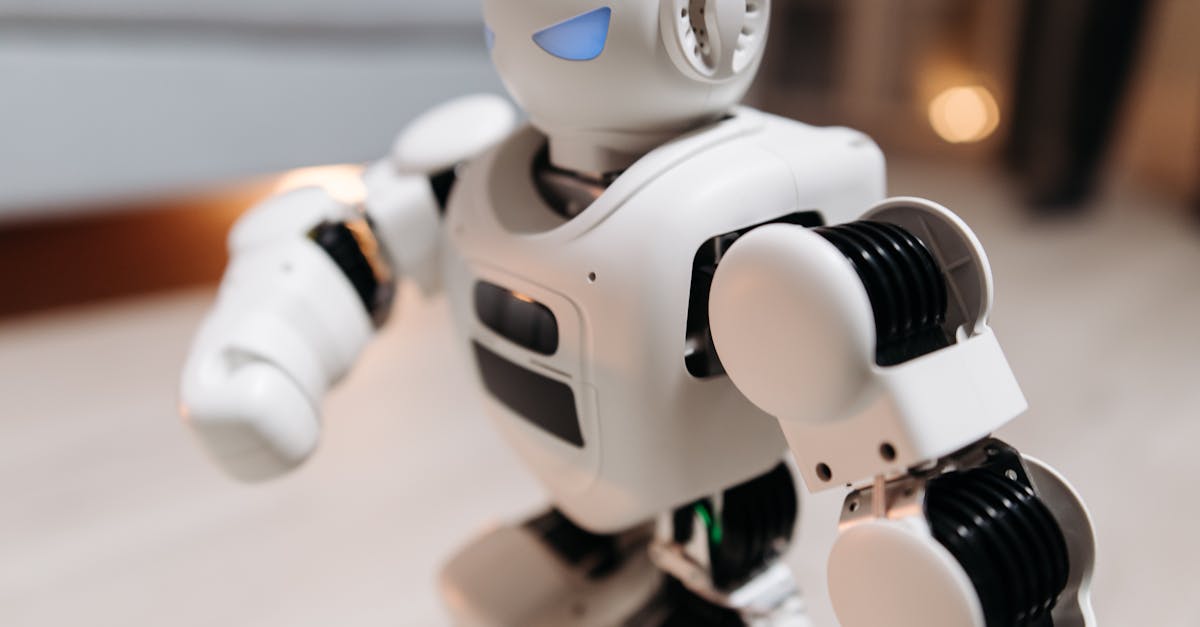
Figure AI: Grounding Hype in Manufacturing Reality

Figure AI: Grounding Hype in Manufacturing Reality
The humanoid robotics sector has transitioned from sci-fi concept to hardware prototype, and Figure AI stands at the forefront of this shift. Founded by brothers Alex and Amjad Ghorbani, the company has garnered significant attention for its strategic backing from OpenAI, Microsoft, and Nvidia. However, from an engineering and deployment perspective, the distinction between marketing announcements and shipping hardware remains the critical metric for evaluation. This analysis examines Figure AI's current operational status, focusing on hardware availability, pilot deployments, and the realistic timeline for commercial adoption in markets including India.
Funding and Backing: The Silicon Trio
Figure AI's capital structure reflects the convergence of AI model development and hardware manufacturing. In early 2024, the company secured over $200 million in funding, with strategic investment from OpenAI, Microsoft, and Nvidia. This triad of support is significant: OpenAI provides the foundational AI models, Microsoft offers cloud infrastructure and enterprise integration channels, and Nvidia contributes the computational hardware for training and edge deployment.
While such backing validates the technical ambition of the project, it does not guarantee immediate commercial success. In the robotics industry, capital efficiency often dictates survival. Figure AI must demonstrate that its robots can perform value-added tasks in industrial settings without requiring constant human intervention. The funding round was largely attributed to the promise of integrating large language models (LLMs) and vision-language-action (VLA) models into physical control systems.
Hardware Assessment: Figure 01 and the Shift to Figure 02
Figure AI’s hardware roadmap is divided into distinct generations. The Figure 01 served primarily as a validation platform for the control stack and actuator integration. While public videos showed the Figure 01 walking and performing simple tasks, the hardware was not sold to end-users. It was a developmental tool used to refine the kinematic chain and sensor fusion.
The current focus is on Figure 02. Announced at the World Artificial Intelligence Conference (WAIC) and subsequent industry showcases, the Figure 02 represents a move toward commercial viability. Unlike the Figure 01, which utilized a mix of hydraulic and electric actuators, the Figure 02 reportedly features a fully electric design with improved dexterity. The claims include a 40% increase in payload capacity and enhanced hand articulation for fine manipulation tasks.
From a spec-sheet perspective, the Figure 02 specifications have not been fully published in a standardized engineering document. Manufacturers typically release detailed datasheets only after the first unit ships. Until verified test data is available from independent third-party labs, claims regarding torque, battery life, and cycle rates remain provisional. The company has stated that the Figure 02 is intended for shipping in limited quantities to pilot partners by the end of 2024, pending regulatory and safety clearances.
Pilot Programs: The BMW Deployment
The most tangible evidence of Figure AI’s capability lies in its partnership with BMW. In 2024, Figure AI announced a collaboration to deploy humanoid robots at BMW manufacturing facilities. This partnership is often cited in press releases, but the specific operational scope requires scrutiny.
The deployment involves the Figure 02 robot assisting in the assembly of vehicles. Reports indicate the robot is tasked with handling heavy components, such as engine parts, and performing quality inspection. However, the current level of autonomy remains the primary point of contention. In most industrial robotics setups, the human operator retains oversight for safety-critical tasks. The Figure AI deployment is not currently a fully unattended operation but rather a collaborative system where the robot executes predefined or semi-autonomous tasks under supervision.
This distinction is crucial for cost analysis. A robot that requires a human operator standing next to it has a different economic value proposition than a fully autonomous agent. The BMW partnership serves as a proof-of-concept for reliability in a high-stakes manufacturing environment. The pilot is located in Munich, Germany, and potentially other European facilities. The success of this pilot will likely determine the timeline for broader rollout in North America and Asia.
AI Capabilities: OpenAI’s Influence
The integration of OpenAI’s technology into Figure AI’s control stack is a differentiator in the humanoid sector. Traditional robotics rely on pre-programmed paths or rigid state machines. Figure AI aims to leverage foundation models to allow the robot to interpret natural language instructions and adapt to dynamic environments.
For example, if a human operator instructs the robot to "pick up the bolt and place it in the tray," the system must understand the spatial relationship between the bolt, the tray, and the robot’s end-effector. This VLA (Vision-Language-Action) approach reduces the need for hard-coding every movement. However, reliability in a factory setting is paramount. Hallucinations in AI models can lead to hardware damage or safety hazards. Figure AI has invested heavily in safety layers to ensure that model outputs are constrained within physical limits.
The training data for these models comes from both simulated environments and real-world robot interaction logs. The Figure AI team has emphasized the importance of "sim-to-real" transfer, where policies trained in simulation are deployed on physical hardware. The Figure 02’s ability to handle this transfer effectively will be the true test of its AI stack.
India Availability and Pricing Landscape
For the Indian market, Figure AI does not currently offer direct sales channels. The company is focused on enterprise B2B deployments in North America and Europe. The lack of local presence means Indian manufacturers cannot purchase the Figure 02 directly through a local distributor.
Regarding pricing, industrial humanoid robots are not priced on a consumer electronics scale. While consumer prototypes may be estimated at $50,000, industrial-grade units with high payloads and safety certifications typically range from $150,000 to $250,000 per unit. For Figure AI, a landed cost estimate for the Indian market, including import duties, GST, and integration services, would likely exceed INR 2.5 crore per unit.
This pricing barrier places the technology out of reach for small and medium enterprises (SMEs) in India. Only large automotive or heavy manufacturing conglomerates could justify the capital expenditure (CapEx). Furthermore, the Total Cost of Ownership (TCO) includes maintenance, software licensing, and specialized engineering support. Until Figure AI establishes a local service center in India, maintenance downtime could significantly impact operational ROI.
Indian policy frameworks for robotics, such as the PLI (Production Linked Incentive) schemes, currently favor domestic manufacturing. Imported humanoid robots may not qualify for the same subsidies as locally assembled automation. This regulatory environment adds another layer of complexity to potential adoption.
Competitive Positioning and Market Reality
Figure AI operates in a crowded field. Competitors include Tesla (Optimus), Boston Dynamics (Atlas), Apptronik, and Agility Robotics. Each brings a different technical philosophy. Tesla focuses on volume manufacturing and cost reduction through vertical integration. Boston Dynamics prioritizes agility and balance. Figure AI leans heavily into the AI software stack.
The key differentiator for Figure AI is the alignment between the AI model and the hardware. If the OpenAI model can control the robot more efficiently than traditional control algorithms, it offers a software moat. However, hardware reliability is the foundation. Without a durable chassis and consistent actuator performance, the best AI model cannot compensate for mechanical failure.
Figure AI’s strategy of partnering with BMW suggests a focus on complex assembly rather than general logistics. This niche is valuable but narrow. To scale, the company must prove that the Figure 02 can operate in diverse environments, from warehouses to construction sites, without constant retraining.
Conclusion: Shipping Hardware First
Figure AI has successfully moved beyond the concept phase into the prototype and pilot deployment stages. The backing from OpenAI, Microsoft, and Nvidia provides a robust ecosystem for development. However, the editorial stance remains grounded in the "shipping hardware first" rule. Until the Figure 02 is demonstrated in a live, unassisted industrial shift with verified uptime metrics, the technology remains in the validation phase.
For the Indian market, the outlook is cautious. Direct sales are not available, and pricing remains prohibitive for most sectors. The focus should remain on the BMW pilot results. If the Figure 02 can demonstrate consistent performance in a BMW plant over a 12-month period, it will validate the technology. If not, the high burn rate may become a liability. Robotics is a marathon, not a sprint, and Figure AI must prove it can sustain operations beyond the initial funding runway.
References
✓ Key takeaways
- •Hands-on view of Figure AI: Grounding Hype in Manufacturing Reality inside our Figure AI library.
- •Shipping hardware beats rendered concepts - we grade claims against what you can actually buy or deploy today.
- •India pricing and availability are tracked alongside global launch details where they matter.
References
Related articles
More in Figure AI →