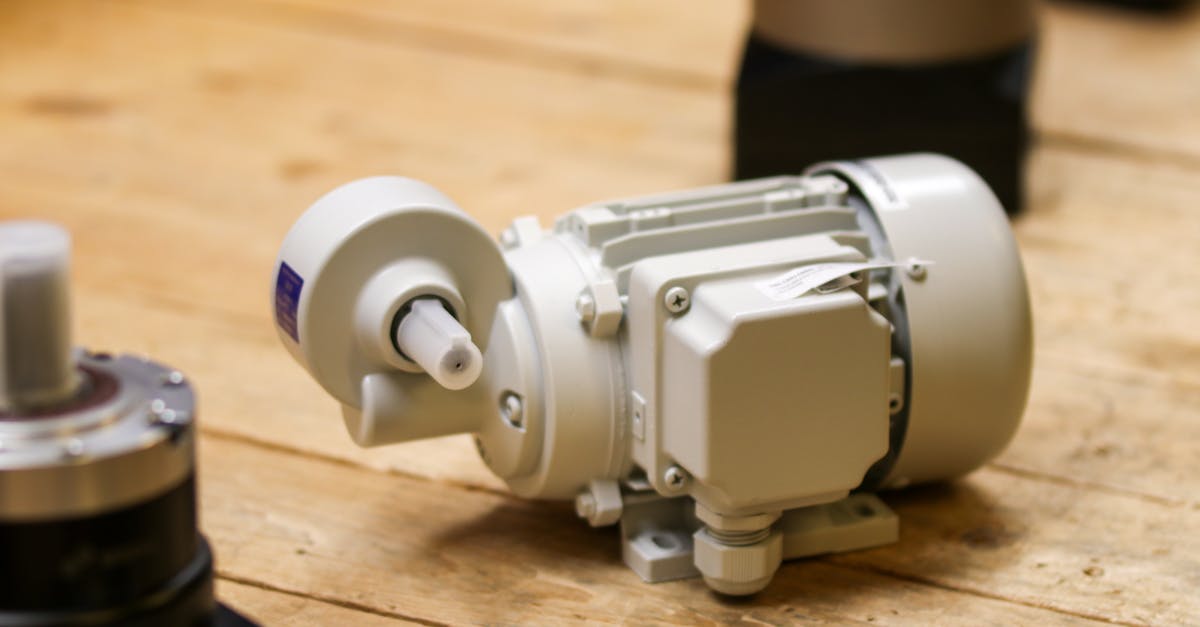
Harmonic Drives & Gearboxes: Precision Reducers in Modern Robotics
Introduction to Harmonic Drive Architecture
Harmonic drives, formally classified as strain wave gearboxes, operate on a mechanical principle distinct from conventional planetary or cycloidal reducers. The system relies on elastic deformation rather than rigid gear meshing to achieve high reduction ratios within a compact envelope. The core assembly comprises three primary components: a wave generator, a flex spline with a slightly smaller outer diameter than the circular spline, and a rigid circular spline with an internally toothed profile. When the elliptical wave generator rotates, it forces the flex spline into continuous elastic strain, creating two regions of tooth engagement known as the "conjugate zones." This simultaneous multi-tooth contact distributes load across dozens of teeth rather than a single point, enabling high torque density and near-zero backlash.
The technology was patented in the late 1950s and commercialized in the 1960s, primarily for aerospace and military applications where weight and precision were critical. Today, harmonic drives dominate collaborative robots, surgical manipulators, and humanoid actuators where compactness and positional repeatability dictate system architecture. Unlike planetary gears that rely on multiple planet wheels and rigid housings, harmonic drives achieve reduction ratios typically between 30:1 and 320:1 in a single stage, with some specialized variants reaching higher ratios through compound configurations.
Technical Specifications and Performance Metrics
Engineering selection of harmonic drives requires strict adherence to manufacturer datasheets rather than generalized marketing claims. Key performance indicators include torsional stiffness, backlash tolerance, fatigue life, and thermal limits.
Torsional Stiffness and Wind-Up
Torsional stiffness defines the gearbox's resistance to angular deflection under load. Harmonic drives exhibit higher torsional compliance compared to cycloidal reducers due to the elastic flex spline. This characteristic can be advantageous in force-controlled applications, such as human-robot interaction, but requires careful control loop tuning to prevent oscillation. Manufacturers typically publish stiffness curves in Nm/arc-min, which vary by frame size and input speed.
Backlash and Positioning Accuracy
Backlash in harmonic drives is measured in arc-minutes of rotational play between input and output. Grade 1 units (highest precision) typically specify backlash below 10 arc-min, while Grade 3 and 4 units may range from 20 to 35 arc-min. Zero backlash is a mechanical impossibility in strain wave systems; instead, manufacturers guarantee repeatable positioning within specified tolerances after break-in periods. Thermal expansion during prolonged operation can temporarily alter mesh clearance, requiring dynamic compensation in high-duty cycles.
Fatigue Life and Material Science
The flex spline is manufactured from high-cycle fatigue-resistant spring steel, often 51CrV4 or equivalent alloyed grades, heat-treated to achieve specific hardness profiles. Standard rating assumes 10,000 to 20,000 hours of operation under nominal torque. Shock loads, misalignment, or operation beyond rated peak torque accelerate crack propagation in the flex spline. Manufacturers explicitly warn against exceeding 120% of rated continuous torque for sustained periods, as this directly compromises fatigue life.
Manufacturing Realities and Global Supply Chain
Harmonic drive production demands precision machining, controlled heat treatment, and rigorous metrology. The circular spline is typically hardened steel, while the flex spline requires ultra-precision grinding to maintain tooth profile consistency. Wave generator bearings must support elliptical motion without inducing asymmetric wear.
The global market is dominated by a few established manufacturers who grade their products by precision class and torque capacity. Frame sizes are standardized across the industry, with common designations ranging from 25 to 325, indicating approximate output shaft diameter in millimeters. Selection between frames depends on required peak torque, speed, and mounting envelope.
- Grade 1: Aerospace, medical robotics, metrology. Backlash < 10 arc-min. Highest cost tier.
- Grade 2: Industrial arms, semiconductor handling. Backlash 10–15 arc-min. Balanced performance.
- Grade 3: Light automation, educational platforms. Backlash 15–25 arc-min. Cost-optimized.
- Grade 4: Prototype stages, low-cycle applications. Backlash > 25 arc-min. Budget tier.
Supply chain concentration remains a structural reality. Japanese and German manufacturers maintain dominant market share due to decades of process optimization, bearing sourcing, and quality control. Chinese manufacturers have scaled production rapidly, offering competitive pricing with varying consistency between batches. Independent testing confirms that Grade 3 and 4 units from emerging manufacturers can meet nominal specifications, but long-term reliability data is less extensive than established Japanese or European lines.
India Availability and Landed Cost Estimates
India's robotics hardware ecosystem relies heavily on imported harmonic drives. Domestic assembly of strain wave gearboxes exists at pilot scale, but precision manufacturing of flex splines and wave generator assemblies remains limited. Importers and authorized distributors serve the Indian market through channels in Bengaluru, Pune, Delhi-NCR, and Chennai.
Pricing fluctuates with foreign exchange rates, customs duties, and distributor margins. The following estimates represent typical landed costs for standard frame sizes as of recent trade cycles, clearly flagged as approximate:
- Frame 25–32: ₹18,000 to ₹35,000 per unit. Suitable for lightweight manipulators and joint actuators.
- Frame 50–100: ₹45,000 to ₹95,000 per unit. Common in 6-axis industrial arms and collaborative platforms.
- Frame 150–250: ₹1,10,000 to ₹2,40,000 per unit. Used in heavy payloads and humanoid lower-body joints.
- Frame 325+: ₹2,80,000 to ₹4,50,000+ per unit. Niche applications, custom mounting, and high-torque requirements.
These figures include basic GST but exclude customization, mounting hardware, or extended warranties. Procurement timelines typically range from 4 to 12 weeks for standard grades, with longer lead times for Grade 1 precision units. Indian system integrators frequently stock Grade 2 and 3 units to balance cost and performance, reserving Grade 1 for specialized deployments.
Engineering Trade-offs and Limitations
Harmonic drives are not universal solutions. Their mechanical characteristics dictate specific application boundaries.
- Shock Load Sensitivity: Sudden torque spikes can permanently deform the flex spline or damage wave generator bearings. Applications with high impact loading require mechanical fuses or alternative reducer types.
- Thermal Management: Continuous operation at high speeds generates heat within the flex spline. Excessive temperatures reduce material yield strength and alter mesh clearance. Manufacturers specify maximum input speeds that vary by frame size and lubrication type.
- Torsional Compliance: While beneficial for force control, compliance requires advanced impedance control algorithms. Systems relying on strict position control without feedforward compensation may experience settling delays.
- Replacement and Maintenance: Harmonic drives are generally treated as replaceable modules rather than serviceable components. Internal bearing failure or flex spline fatigue requires full unit replacement. Manufacturers do not publish field-repair protocols for the flex spline itself.
Integration into Humanoid and Industrial Platforms
Modern humanoid robots distribute actuation across 20 to 40 joints, with harmonic drives frequently assigned to high-precision upper-body and wrist actuators. Lower-body joints often combine harmonic drives with planetary stages or use direct-drive motors where torque density permits. Industrial arms utilize harmonic drives in wrist modules and selective compliance assembly robot (SCARA) configurations where compactness outweighs peak torque demands.
Manufacturer integration guidelines emphasize precise mounting surface flatness, coaxial alignment, and lubrication specification. Grease type directly influences operating temperature range and maintenance intervals. Synthetic polyalphaolefin (PAO) greases dominate high-cycle applications, while lithium-complex greases are specified for moderate-duty environments.
References
- Harmonic Drive Systems Inc. Official Datasheets and Technical Documentation. https://www.harmonicdrive.net
- Neugart GmbH. Strain Wave Gearbox Engineering Guidelines and Product Catalog. https://www.neugart.com
- Sumitomo Drive Technology. Precision Reducer Technical Specifications and Application Notes. https://www.sumitomodrive.com
- IEEE Spectrum. Robotics Hardware Supply Chain Analysis and Precision Actuator Market Reports. https://spectrum.ieee.org
- Indian Customs and Import Data Aggregators. Harmonic Drive Component Tariff and Landed Cost Tracking. https://www.customs.gov.in
- Manufacturer Press Releases and Factory Documentation. Shipping Hardware Validation and Production Capacity Updates. https://www.harmonicdrive.net/news
✓ Key takeaways
- •Hands-on view of Harmonic Drives & Gearboxes: Precision Reducers in Modern Robotics inside our Harmonic Drives & Gearboxes library.
- •Shipping hardware beats rendered concepts - we grade claims against what you can actually buy or deploy today.
- •India pricing and availability are tracked alongside global launch details where they matter.
Related articles
More in Harmonic Drives & Gearboxes →