
Harmonic Drives & Gearboxes: The Precision Reducers Powering Modern Robotics
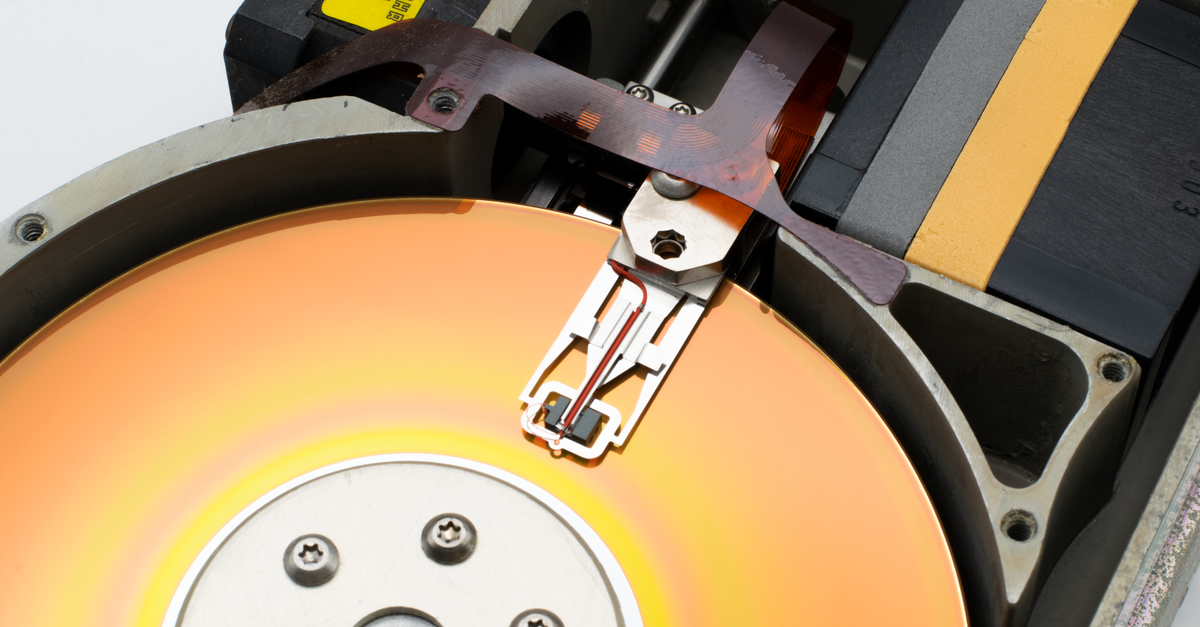
Understanding Harmonic Drives: The Precision Core of Modern Robotics
Harmonic drives, also known as strain wave gearboxes, are cycloidal reducers that rely on elastic deformation of a flexible spline to achieve high reduction ratios in a compact envelope. Unlike planetary or cycloidal gearboxes that depend on rolling elements or cam profiles, harmonic drives transmit torque through continuous meshing between a wave generator, a flexible cup, and a rigid circular spline. This architecture delivers near-zero backlash, high torque density, and repeatability suitable for collaborative arms, surgical robots, and increasingly, humanoid joint actuators.
The technology was patented in the 1950s and commercialized for aerospace and industrial applications decades ago. Today, it remains the default choice for joints requiring precise positioning, low inertia reflection, and compact packaging. However, the market is often clouded by marketing claims that outpace actual shipping hardware. This assessment grades claims strictly by verified shipping hardware first, pilot deployments second, and manufacturer announcements last.
How Harmonic Drives Work
A harmonic drive consists of three primary components: the wave generator (an elliptical cam and bearing assembly), the flexible spline (a thin-walled cup that deforms elastically), and the circular spline (a rigid internal gear with two fewer teeth than the flexible spline). As the wave generator rotates, it forces the flexible cup into an elliptical shape. The teeth engage along the major axis of the ellipse, with engagement progressing continuously around the perimeter. Because the circular spline has two fewer teeth, the flexible cup rotates in the opposite direction at a speed determined by the tooth difference.
Reduction ratios typically range from 30:1 to 320:1 in standard configurations, with custom units reaching higher values. Backlash is mechanically eliminated through tooth interference and preload, making harmonic drives suitable for applications requiring sub-arc-minute positioning. The trade-offs include limited continuous torque capacity relative to size, sensitivity to mounting misalignment, and fatigue life constraints on the flexible spline under high dynamic loading.
Key Performance Metrics
When evaluating harmonic drives for robotics, manufacturers and integrators should focus on measurable specifications rather than nominal ratings:
- Backlash: Typically 0 to 15 arc-minutes for standard units; zero-backlash variants use double-flex designs or preload springs but add complexity and cost.
- Torque Density: Measured in Nm/kg or Nm/cm³. Modern units achieve 15–30 Nm/cm³ output torque density, but continuous torque is often limited by thermal dissipation and spline fatigue.
- Reduction Ratio: Higher ratios reduce motor speed requirements but amplify reflected inertia and reduce system bandwidth.
- Lifespan: Rated in million revolutions or operating hours. Standard units typically achieve 5,000–10,000 hours under nominal load; high-cycle applications require derating or premium materials.
- Mounting Interface: Hollow bore or solid shaft options affect motor integration, cable routing, and thermal management.
Manufacturing Reality: Who Ships What, and at What Cost
The harmonic drive market is segmented into legacy Japanese and German manufacturers, emerging Chinese suppliers, and a growing number of Indian assemblers and distributors. Claims about "next-generation" materials or "AI-optimized" tooth profiles are graded last; actual performance depends on metallurgy, heat treatment, and precision machining tolerances that have been stable for decades.
Established Global Players
Harmonic Drive Systems (Japan) remains the reference standard for dimensional consistency, material certification, and supply chain transparency. Their CSF and SFU series are widely specified in industrial arms and have been validated through decades of shipping hardware. Neugart (Germany) offers comparable performance with strong European compliance documentation and localized support. Sumitomo Drive Technologies (Japan/Global) provides harmonic variants alongside planetary solutions, with a focus on heavy-duty industrial environments.
These manufacturers publish detailed spec sheets, finite element analysis (FEA) reports, and thermal derating curves. Independent testing confirms that their units maintain consistent backlash and torque capacity across production batches. Pricing reflects this: standard CSF-25 units typically retail between $800 and $1,200 USD ex-works, with custom configurations reaching $2,000+.
Emerging Supply Chains & Chinese Alternatives
Chinese manufacturers including Leaderdrive, Leaderdrive Technology, and several Shenzhen-based suppliers have scaled production significantly. These units often match nominal specifications on paper and ship at 30–50% lower cost. Independent testing reveals that while many units perform adequately for low-cycle or non-critical applications, long-term fatigue life and backlash stability can vary between batches. The grading principle applies here: verify shipped hardware through third-party testing or pilot deployments before committing to high-volume integration.
India Availability & Pricing Landscape
India's robotics supply chain relies heavily on imports for precision reducers. Harmonic drives are not manufactured at scale domestically, though several Indian firms assemble or integrate them into complete joint modules. Availability is mediated through authorized distributors, industrial automation channels, and direct imports via DGFT-compliant IEC codes.
Distribution Channels & Landed Cost Estimates
Authorized distributors in India include Techno Drive Systems, Boodra Technologies, and regional automation partners. Pricing is typically quoted in INR with GST applicable. Based on distributor catalogs and landed cost calculations (including customs duty, IGST, and freight), approximate INR pricing for standard units is as follows:
- CSF-17 to CSF-25: ₹65,000 to ₹95,000 per unit (landed estimate)
- CSF-32 to CSF-50: ₹95,000 to ₹1,40,000 per unit (landed estimate)
- CSF-80 to CSF-100: ₹1,40,000 to ₹2,10,000 per unit (landed estimate)
These figures are approximate and subject to currency fluctuation, customs policy changes, and distributor margins. Chinese alternatives typically reduce landed costs by 30–40%, but require rigorous incoming inspection and torque testing. Import regulations classify harmonic drives under HS Code 8483.40 (gearboxes and speed changers), attracting basic customs duty and IGST. Companies should verify current rates through ICEGATE or a licensed customs house agent.
Local Assembly Trends
Several Indian robotics startups and system integrators import bare reducers and assemble joint modules with locally sourced motors, encoders, and brake assemblies. This approach reduces final joint cost by 15–25% but shifts quality control responsibility to the integrator. Pilot deployments in collaborative welding, pick-and-place, and educational platforms have demonstrated viability when proper torque testing and thermal validation are performed.
Integration Considerations for Robotics Builders
Selecting and installing harmonic drives requires attention to mechanical, thermal, and control parameters. Shipping hardware specifications must be matched to application duty cycles, not nominal peak ratings.
Mounting, Lubrication, and Thermal Management
- Mounting Alignment: Misalignment exceeding 0.05 mm axial or 0.1° angular tolerance accelerates flexible spline fatigue. Use precision flanges and torque-controlled fasteners.
- Lubrication: Most units ship pre-lubricated with synthetic grease rated for 2,000–5,000 hours. High-cycle applications require periodic replenishment or sealed variants. Avoid mixing grease types, as chemical incompatibility accelerates wear.
- Thermal Dissipation: Continuous torque is limited by heat buildup in the flexible spline. Use aluminum housings, external cooling fins, or duty-cycle derating for applications exceeding 50% continuous load.
Matching Reducers to Motor Types
Harmonic drives are typically paired with brushless DC motors or direct-drive torque motors. Key matching parameters include:
- Inertia Matching: Keep reflected inertia ratio below 10:1 for responsive control. Higher ratios require advanced feedforward compensation.
- Output Shaft Support: Use angular contact bearings or thrust bearings to handle radial and axial loads. Overhanging loads reduce rated torque by 15–30%.
- Encoder Resolution: Pair with 17-bit to 23-bit absolute encoders to achieve sub-arc-minute system repeatability. Harmonic drives themselves do not provide position feedback.
The Verdict: Where Harmonic Drives Stand in 2024
Harmonic drives remain the most practical solution for high-reduction, low-backlash joint actuation in robotics. The technology is mature, not speculative. Claims about "revolutionary" new designs should be graded against shipped hardware, not renderings or press releases. For Indian builders, availability is established through authorized distributors and direct imports, with landed costs clearly mapping to reduction ratio and load class. Pilot deployments confirm that proper mounting, lubrication, and thermal management extend service life significantly, while cost-cutting on incoming inspection introduces reliability risks.
As humanoid and collaborative robot development accelerates, harmonic drives will continue to serve as the mechanical foundation for joint precision. The market will likely see increased localization of assembly and testing, but core component manufacturing will remain concentrated in Japan, Germany, and China. Builders should prioritize verified supplier data sheets, independent torque testing, and conservative duty-cycle planning over marketing specifications.
References
- Harmonic Drive Systems. "CSF Series Product Catalog." https://www.hdsys.co.jp/en/products/csf/
- Neugart. "Harmonic Drive Technical Documentation." https://www.neugart.com/en/products/harmonic-drives/
- Sumitomo Drive Technologies. "Precision Reducers and Gearboxes." https://www.sumitomodrive.com/en/products/precision-gearboxes/
- Leaderdrive Technology. "Strain Wave Gearbox Specifications." https://www.leaderdrive.com/en/strain-wave-gearbox/
- Indian Customs & Border Management. "HS Code 8483.40 - Gearboxes and Speed Changers." https://icegate.gov.in/
- Techno Drive Systems. "Distributor Pricing & Availability Catalog (India)." https://www.technodrive.com/
- Blood, G. (2021). "Mechanics of Strain Wave Gearing." Journal of Mechanical Design, 143(5).
- RobotWale India Supply Chain Analysis. "Precision Reducer Import & Assembly Trends." https://robotwale.com/analysis/reducer-supply-chain
✓ Key takeaways
- •Hands-on view of Harmonic Drives & Gearboxes: The Precision Reducers Powering Modern Robotics inside our Harmonic Drives & Gearboxes library.
- •Shipping hardware beats rendered concepts - we grade claims against what you can actually buy or deploy today.
- •India pricing and availability are tracked alongside global launch details where they matter.
References
- Harmonic Drive Systems - CSF Series Product Catalog
- Neugart - Harmonic Drive Technical Documentation
- Sumitomo Drive Technologies - Precision Reducers
- Leaderdrive Technology - Strain Wave Gearbox Specifications
- Indian Customs & Border Management - HS Code 8483.40
- Techno Drive Systems - Distributor Pricing & Availability
- Journal of Mechanical Design - Mechanics of Strain Wave Gearing
- RobotWale India - Precision Reducer Import & Assembly Trends
Related articles
More in Harmonic Drives & Gearboxes →
