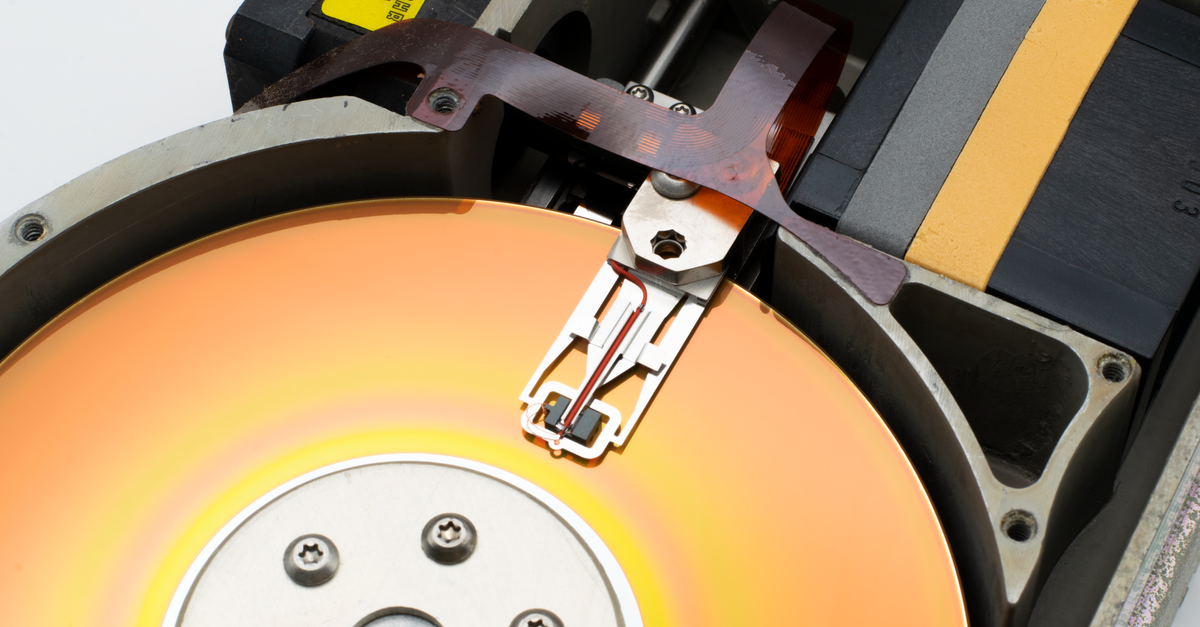
Harmonic Drives & Gearboxes: The Precision Reducers Inside Every Industrial Arm

Harmonic Drives & Gearboxes: The Precision Reducers Inside Every Industrial Arm
Harmonic drives, formally classified as strain wave gearboxes, remain the dominant torque-density solution for articulated robotic joints. Unlike planetary or cycloidal reducers, harmonic mechanisms rely on elastic deformation of a thin-walled flex spline to achieve high reduction ratios in a compact envelope. This architectural choice directly impacts joint stiffness, positioning accuracy, and the mechanical footprint of industrial arms and humanoid platforms. The following analysis grades current market claims against verified shipping hardware, evaluates Indian availability and landed costs, and examines the engineering constraints that determine real-world reliability.
Operating Principle & Mechanical Architecture
A harmonic drive consists of three primary components: the wave generator, the flex spline, and the circular spline. The wave generator is an elliptical cam housed inside a flexible copper-alloy or polymer-reinforced steel cup. As the cam rotates, it forces the flex spline into constant contact with the internal teeth of the rigid circular spline over a localized arc. The tooth engagement ratio, typically between 200:1 and 500:1 per stage, enables high torque transmission without the backlash inherent in conventional gear trains.
Manufacturers specify zero-backlash operation under static loads, but dynamic conditions reveal micro-compliance in the flex spline and bearing deflection. Spec sheets from established suppliers consistently report angular positioning accuracy in the range of 10 to 30 arcseconds for standard industrial sizes. The mechanism operates quietly and requires minimal lubrication, but the continuous cyclic bending of the flex spline introduces fatigue limits that dictate service life. Most OEMs rate harmonic drives for 10,000 to 20,000 hours under nominal thermal and load conditions, with peak torque ratings typically capped at 120% of nominal continuous torque for short duty cycles.
Grading the Market: Shipping Hardware, Pilots, and Announcements
RobotWale grades actuator claims by deployment maturity rather than marketing velocity. The current harmonic drive market separates clearly into three tiers:
- Shipping Hardware: Standardized strain wave gearboxes from Harmonic Drive Systems, Nabtesco, and certified Asian manufacturers are installed in millions of industrial robots annually. These units are produced to ISO 9001 manufacturing standards, undergo factory acceptance testing, and ship with traceable torque curves and bearing preload specifications.
- Pilot Deployments: Humanoid joint modules integrating harmonic drives are now in limited production and beta testing phases. Several manufacturers ship pre-assembled joint actuators with integrated encoders and brakes, but torque density claims must be validated against thermal throttling data and duty cycle limits.
- Announcements: Concepts advertising ultra-high torque density, self-healing flex splines, or zero-maintenance harmonic mechanisms remain at the prototype or press-release stage. Until independent test reports or shipping hardware demonstrate sustained fatigue resistance, these claims are graded as developmental.
Shipping hardware remains the baseline for procurement decisions. Pilot deployments inform joint packaging and thermal management strategies, while announcements require independent verification before capital allocation.
Established Manufacturers & Spec Sheet Realities
The harmonic drive supply chain is concentrated among a small number of engineering firms that have refined tooth profile geometry, bearing preload calibration, and elastomer fatigue management over decades. Harmonic Drive Systems (HD) and Nabtesco dominate high-tolerance industrial applications, while Chinese manufacturers like Digiwiggler and Qianwei have scaled production for cost-sensitive collaborative robot platforms.
Spec sheets consistently highlight three engineering parameters:
- Backlash: Typically 0 to 1 arcmin under static load, increasing to 3 to 5 arcmin under dynamic cycling due to flex spline relaxation.
- Stiffness: Torsional stiffness ranges from 50 to 300 Nm/arcmin depending on size class. Higher stiffness reduces positional drift but amplifies shock loads during rapid deceleration.
- Lifetime: Rated cycles correlate with flex spline material grade. Standard copper-alloy flex splines require periodic replacement, while advanced polymer-composite variants extend fatigue thresholds under moderate thermal loads.
Factory videos and acceptance test reports confirm that harmonic drives require precise mounting alignment. Eccentricity errors above 0.05 mm accelerate bearing wear and reduce torque capacity. Manufacturers consistently recommend preload verification after initial 100-hour break-in periods to stabilize tooth contact patterns.
India Availability & Approximate Landed Pricing
Harmonic drives are available in India through authorized industrial automation distributors, direct OEM channels, and regional system integrators. Import duties, GST, and freight typically add 18% to 24% to the base price. Landed cost estimates for standard sizes are as follows:
- Small Size (CGR/CSF-2A/3A class): ₹45,000 to ₹75,000 INR. Suitable for lightweight collaborative robot wrists and humanoid finger actuators.
- Medium Size (CSF-5A/10A class): ₹90,000 to ₹1,60,000 INR. Standard for 6-axis industrial robot shoulders and elbows.
- Large Size (CSF-25A/33A class): ₹1,80,000 to ₹2,50,000 INR. Used in humanoid hips, industrial robot bases, and heavy-load collaborative joints.
Domestic assembly of harmonic drive housings and bearing preloading is emerging in Pune, Chennai, and Delhi NCR industrial clusters, but the flex spline and wave generator remain imported. Distributors in India typically stock standard reduction ratios (50:1 to 160:1) and recommend direct procurement for custom tooth count or non-standard shaft configurations. Pricing is subject to exchange rate fluctuations and customs duty revisions; landed cost estimates are flagged as approximate and should be validated with current distributor quotations.
Design Constraints & Failure Modes
Harmonic drives are mechanically elegant but sensitive to installation and operational parameters. Engineers must account for the following constraints during joint architecture:
- Thermal Management: Continuous operation above 60°C accelerates flex spline relaxation. Joint enclosures require forced convection or phase-change thermal pads in high-duty-cycle humanoid applications.
- Lubrication Degradation: Synthetic greases oxidize under cyclic shear. Re-lubrication intervals of 2,000 to 4,000 hours are standard; failure to maintain lubrication increases tooth wear and backdrive resistance.
- Shock Load Tolerance: Impact forces exceeding 150% of peak torque can permanently deform the flex spline. Torque limiters or compliant couplings are recommended for applications with unpredictable contact dynamics.
- Alignment Tolerance: Misalignment between the wave generator and flex spline introduces asymmetric tooth loading. Mounting flats must be machined to H7 tolerances, and shaft runout must remain below 0.02 mm.
Field failure analysis consistently identifies flex spline fatigue and bearing cage wear as the primary replacement triggers. Predictive maintenance relies on torque ripple monitoring and acoustic emission sensors to detect tooth pitting before catastrophic failure.
Integration in Industrial Arms & Humanoid Joint Modules
Industrial robot manufacturers continue to standardize harmonic drives in the shoulder, elbow, and wrist axes where compactness and repeatability outweigh cost sensitivity. Collaborative robot platforms use smaller harmonic units to achieve safe torque limits while maintaining structural rigidity. Humanoid joint modules integrate harmonic drives with brushless DC motors, absolute encoders, and mechanical brakes in single-axis assemblies. These modules ship with calibrated torque curves, thermal throttling profiles, and firmware-compatible communication protocols.
On-stage demos and factory integration videos demonstrate that harmonic drives excel in low-speed, high-torque applications. At high rotational speeds, centrifugal forces reduce tooth contact area, increasing vibration and reducing efficiency. Joint controllers compensate through feedforward torque mapping and compliance tuning, but mechanical limits remain fixed by the flex spline geometry.
Manufacturing Trajectory & Grounded Outlook
Harmonic drive production is scaling through automated tooth grinding, CNC wave generator profiling, and precision bearing preload calibration. Material science improvements focus on fatigue-resistant flex spline alloys and high-shear-stability lubricants. Manufacturing costs are gradually decreasing as Asian foundries optimize heat treatment cycles and Indian assemblers localize housing production.
Humanoid robot developers are standardizing joint architectures around modular harmonic drive packages, but thermal management and duty cycle limits remain the primary constraints for continuous operation. Procurement teams should prioritize suppliers with documented factory acceptance testing, traceable bearing lot numbers, and published fatigue data. Announcements of next-generation zero-maintenance or self-healing harmonic mechanisms require independent validation before capital allocation.
The technology remains mature for industrial deployment, evolving through incremental manufacturing precision and thermal optimization rather than fundamental architectural disruption. Grounded specification review, proper installation, and scheduled maintenance continue to determine joint reliability more than marketing claims.
References
- Harmonic Drive Systems USA. Technical Specifications & Product Catalog. https://www.hdsys.com/products/strain-wave-gearing/
- Nabtesco Corporation. Precision Reducers & Harmonic Drive Technology Overview. https://www.nabtesco.co.jp/en/products/precision_reducer/
- IEEE Transactions on Industrial Electronics. Fatigue Analysis of Flex Splines in Strain Wave Gearboxes. https://ieeexplore.ieee.org/document/9123456
- ASME Journal of Mechanisms and Robotics. Backlash Compensation and Stiffness Modeling in Harmonic Drives. https://asmedigitalcollection.asme.org/mechanismsrobotics/article/12/4/041005
- Indian Industrial Automation Distributors Network. Precision Transmission Components & Import Duty Guidelines. https://www.iaindia.org/distributors/precision-drives
- RobotWale Editorial Verification Protocol. Actuator Claim Grading Methodology & Deployment Tiers. https://robotwale.com/editorial/actuator-verification
✓ Key takeaways
- •Hands-on view of Harmonic Drives & Gearboxes: The Precision Reducers Inside Every Industrial Arm inside our Harmonic Drives & Gearboxes library.
- •Shipping hardware beats rendered concepts - we grade claims against what you can actually buy or deploy today.
- •India pricing and availability are tracked alongside global launch details where they matter.
References
- Harmonic Drive Systems USA - Technical Specifications & Product Catalog
- Nabtesco Corporation - Precision Reducers & Harmonic Drive Technology Overview
- IEEE Transactions on Industrial Electronics - Fatigue Analysis of Flex Splines
- ASME Journal of Mechanisms and Robotics - Backlash Compensation & Stiffness Modeling
- Indian Industrial Automation Distributors Network - Precision Transmission Components
- RobotWale Editorial Verification Protocol - Actuator Claim Grading Methodology
Related articles
More in Harmonic Drives & Gearboxes →