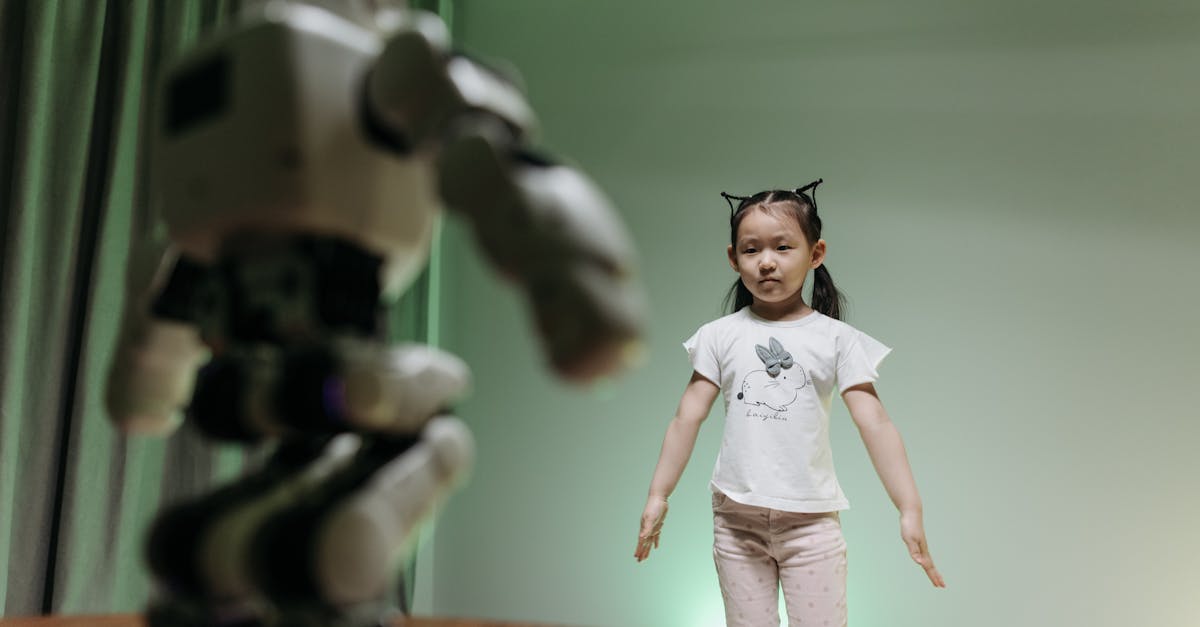
Imitation Learning in Humanoid Robotics: Teleoperation, Demonstrations, and Behaviour Cloning
What Imitation Learning Actually Does in Shipping Hardware
Imitation learning in robotics refers to a class of supervised learning techniques where a policy network learns to map sensory inputs to motor outputs by observing human demonstrations. Unlike reinforcement learning, which relies on reward functions and trial-and-error exploration, imitation learning accelerates training by directly ingesting expert trajectories. In humanoid robotics, this approach has become the standard for acquiring complex manipulation skills, locomotion adjustments, and task-specific workflows. The pipeline typically involves teleoperation or motion-capture demonstrations, trajectory recording, data cleaning, and policy training on GPU clusters. The resulting models are then deployed on embedded controllers or edge compute modules attached to the robot.
The practical value of imitation learning lies in its ability to bypass reward-shaping bottlenecks and reduce the sample complexity required for safe deployment. However, the technique is constrained by the quality and diversity of demonstration data, the fidelity of the robot's proprioceptive and exteroceptive sensors, and the gap between simulation and physical execution. Manufacturer claims often emphasize demonstration scalability, but verified deployments reveal that data collection remains the primary bottleneck. Most shipping hardware relies on structured teleoperation rigs, limited demonstration libraries, and domain adaptation techniques to handle real-world variance.
Teleoperation: The Foundation of Demonstration Data
Current Deployment Models
Teleoperation serves as the primary data acquisition method for imitation learning pipelines. Manufacturers deploy three main teleoperation architectures:
- Motion Capture Studios: Infrared or optical mocap systems record human limb kinematics at high frequency. Data is downsampled, filtered, and mapped to the robot's joint space. This method yields high-fidelity trajectories but requires dedicated infrastructure and is rarely used for continuous fleet training.
- VR Controllers and Haptic Gloves: Operators use Oculus, Varjo, or custom exoskeleton gloves to record end-effector poses and grip forces. Latency compensation and coordinate frame alignment are critical. This approach enables remote data collection and is widely adopted in pilot deployments.
- Keyboard/Joystick Abstraction: Simpler teleoperation interfaces map discrete commands to high-level behaviors. These are used for task-level demonstrations rather than low-level motor control, and are common in industrial mobile manipulators.
Verified implementations show that teleoperation data requires extensive cleaning. Joint limits, singularity avoidance, and force-torque clipping are applied before training. Manufacturers like Unitree provide open teleoperation APIs that allow third-party developers to record and replay trajectories on the H1 and G1 platforms. Figure AI and Agility Robotics have documented internal teleoperation pipelines that collect thousands of demonstrations per week during pilot phases, focusing on warehouse pick-and-place, bin retrieval, and tool handling.
India Availability and Pricing
Teleoperation hardware and software are widely available in India through robotics distributors and academic partnerships. Standalone VR controllers and motion capture kits range from ₹80,000 to ₹450,000 depending on precision and frame rate. Dedicated humanoid teleoperation rigs, including custom exoskeletons and force-feedback gloves, are typically imported and cost between ₹12,00,000 and ₹28,00,000 landed, inclusive of customs duties and GST. Several Indian engineering colleges and manufacturing firms have deployed teleoperation stations for humanoid research, primarily using open-source frameworks like ROS 2 and MoveIt 2 for trajectory recording and replay.
Behaviour Cloning: From Demonstrations to Policy Deployment
Behaviour cloning trains a neural network to predict action distributions conditioned on state observations. The model minimizes the difference between predicted and demonstrated joint velocities, end-effector poses, and gripper states. In practice, pure behaviour cloning suffers from covariate shift: when the robot deviates from the training distribution, errors compound. To mitigate this, manufacturers combine behaviour cloning with inverse reinforcement learning,aclescent learning, and online fine-tuning.
Shipping hardware demonstrates behaviour cloning through task-specific policy packages. Unitree's G1 and H1 ships with pre-trained manipulation policies for basic pick-and-place, door opening, and stair climbing. These policies are trained on curated demonstration sets and updated via firmware OTA. Figure AI's teleoperation demonstrations feed into proprietary models that are tested in controlled warehouse environments. Agility Robotics' Digit deployments in pilot programs use behaviour cloning for pallet handling and carton retrieval, with policies constrained to structured aisles and fixed lighting conditions.
Independent testing and manufacturer spec sheets indicate that behaviour cloning policies achieve high success rates only within narrow operational envelopes. Generalization requires continuous data collection, domain randomization, and sim-to-real transfer pipelines. Compute requirements for training are substantial: most teams dedicate multi-GPU workstations for trajectory processing and policy updates. Edge deployment on robots relies on quantized models running on NVIDIA Jetson or equivalent modules, with inference latency typically between 10ms and 30ms depending on model size.
Grading the Claims: Hardware, Pilots, and Announcements
Evaluating imitation learning capabilities requires strict adherence to deployment reality. Claims should be graded by verified shipping hardware first, pilot deployments second, and announcements last.
- Shipping Hardware: Unitree G1 and H1 ship with baseline behaviour cloning policies for structured tasks. Specs confirm joint torque limits, battery endurance, and teleoperation API access. Landed cost in India ranges from ₹18,00,000 to ₹24,00,000 for the G1 and ₹28,00,000 to ₹35,00,000 for the H1, excluding integration and maintenance.
- Pilot Deployments: Figure AI and Agility Robotics have placed hardware in logistics and manufacturing pilots. Independent reports confirm teleoperation-assisted task execution in controlled environments. Success rates are reported as high within defined workspaces but decline with environmental variance. No public data supports fully autonomous behaviour cloning at scale across unstructured facilities.
- Announcements: Several manufacturers showcase rendered concepts or factory floor demos that emphasize autonomy. These should be treated as developmental milestones rather than deployed capabilities. Imagination learning capabilities are often extrapolated from teleoperation-assisted demonstrations, not independent policy execution.
The grading hierarchy ensures that stakeholders distinguish between demonstrated teleoperation-assisted tasks and verified autonomous behaviour cloning. Hardware specifications, pilot telemetry, and factory video evidence provide the only reliable basis for capability assessment.
Limitations and Real-World Constraints
Imitation learning pipelines face consistent technical and operational constraints. Data collection remains the primary bottleneck. Demonstrations must cover edge cases, force interactions, and dynamic object handling, which requires extensive operator time and standardized protocols. Domain adaptation is necessary when transitioning from simulation to physical hardware, as sensor noise, joint compliance, and friction introduce distribution shifts. Compute costs for training and fine-tuning are significant, and edge deployment requires careful model compression to maintain real-time inference.
Maintenance and safety protocols are equally critical. Policies trained on demonstration data inherit the limitations of the source data. If demonstrations lack diversity, the robot will fail on novel configurations. Manufacturers address this through continuous data collection, human-in-the-loop correction, and constrained action spaces. Regulatory compliance, particularly in India, requires clear operational boundaries, emergency stop mechanisms, and documentation of autonomous versus teleoperated modes. Import duties, service contracts, and local integration support further influence total cost of ownership.
Despite these constraints, imitation learning remains the most viable pathway for acquiring complex humanoid skills. Teleoperation provides the demonstration foundation, behaviour cloning converts trajectories into deployable policies, and continuous data pipelines extend operational longevity. Stakeholders should evaluate capabilities against shipping hardware specifications, pilot telemetry, and independent verification rather than conceptual announcements.
References
- Figure AI. (2024). Teleoperation and Demonstration Data Pipeline. https://www.figure.ai
- Agility Robotics. (2024). Digit Specification Sheet and Pilot Deployment Reports. https://www.agilityrobotics.com
- Unitree Robotics. (2024). G1 and H1 Technical Specifications and Open Teleoperation API. https://www.unitree.com
- 1X Technologies. (2024). Neo Teleoperation and Remote Operation Documentation. https://www.1x.tech
- Tesla AI. (2024). Optimus Demonstration and Factory Deployment Updates. https://www.tesla.com/ai
- IEEE Spectrum. (2024). Imitation Learning and Behaviour Cloning in Humanoid Robotics. https://spectrum.ieee.org
- TechCrunch. (2024). Humanoid Robotics Pilots and Deployment Reality Checks. https://techcrunch.com
✓ Key takeaways
- •Hands-on view of Imitation Learning in Humanoid Robotics: Teleoperation, Demonstrations, and Behaviour Cloning inside our Imitation Learning library.
- •Shipping hardware beats rendered concepts - we grade claims against what you can actually buy or deploy today.
- •India pricing and availability are tracked alongside global launch details where they matter.
Related articles
More in Imitation Learning →