India Robotics VC: Capital Allocation in the Hardware Era
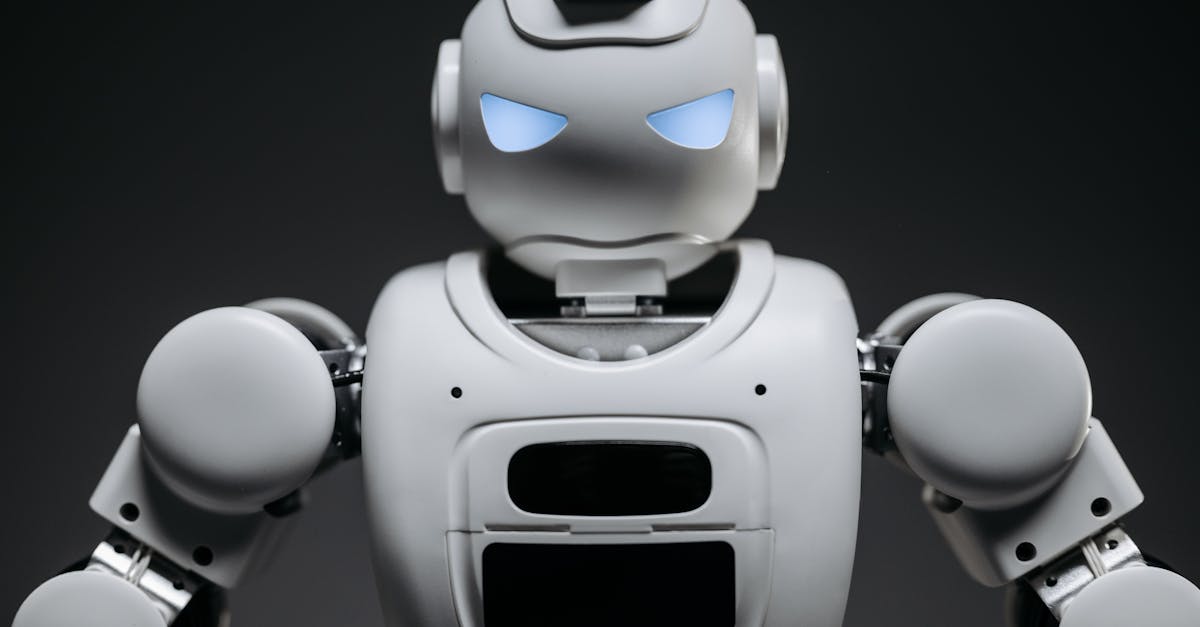
The Hardware Reality Check in Indian Robotics Funding
The narrative surrounding Indian robotics has often oscillated between high-concept announcements and practical deployment realities. As venture capital firms recalibrate their portfolios post-2023, the metric for success has shifted from total addressable market (TAM) projections to unit economics and shipping hardware. In the Indian context, this distinction is critical. While software-defined robotics (RPA) saw a burst of capital, physical robotics requires supply chain maturity, capital expenditure (capex) management, and rigorous field testing.
This article evaluates the venture capital landscape for robotics in India, specifically focusing on institutional investors like Sequoia Capital India, Accel Partners, and Blume Ventures, alongside key domestic enablers. The analysis is grounded in verifiable funding data, press releases, and deployment status rather than press mentions alone.
VC Classification: Deep Tech vs. Software Robotics
Understanding the investor mandate is the first step in decoding the Indian robotics market. Not all "robotics" funding is equal. The landscape divides into three distinct categories: Software-Defined Automation, Industrial Robotics, and Emerging Consumer/Humanoid Hardware.
Blume Ventures: The Hardware Anchor
Blume Ventures has maintained a consistent focus on IoT and hardware-enabled startups, differentiating them from pure SaaS funds. Their thesis aligns closely with the requirement for manufacturing readiness. Blume Ventures has backed startups that move beyond the prototype phase, specifically in the logistics and agritech sectors.
Key investment: Asimov Robotics. In a Series A round closed in 2021-2022, Asimov Robotics secured funding from Kalaari Capital and Blume Ventures. Asimov focuses on autonomous mobile robots (AMRs) for warehouse automation. Unlike concept-stage announcements, Asimov has deployed units in operational warehouses in India, demonstrating a tangible return on investment for clients.
The hardware requirement here is specific: AMRs typically cost between INR 4,00,000 and INR 12,00,000 per unit, depending on payload and navigation complexity. Funding from Blume in this space validates the supply chain capability to manufacture these units domestically or localize components to reduce landed costs.
Sequoia Capital India: The Deep Tech Filter
Sequoia Capital India, often associated with consumer internet and SaaS, has expanded its mandate to include deep tech and hardware-enabled infrastructure. Their investments are typically part of larger portfolio strategies where AI drives the robotic decision-making layer.
While Sequoia has not publicly led a dedicated "humanoid" fund in India to date, their portfolio includes critical enabling technologies. Niramai, a deep tech healthcare company utilizing AI and robotic imaging, is a prominent example. Niramai has received funding from Sequoia, Blume, and Elevation Capital. While Niramai is often categorized under healthtech, the underlying technology involves autonomous scanning systems that border on robotic deployment.
The implication for robotics is clear: Sequoia funds the intelligence layer. This funding supports the R&D required to make robotic systems viable in India’s diverse environments, from high-temperature warehouses to unstructured agricultural fields.
Accel Partners: Infrastructure and AI
Accel Partners focuses heavily on infrastructure and software platforms. In the robotics ecosystem, their value lies in funding the AI and software stack that powers autonomous navigation. Accel has invested in companies like Uniphore (AI Voice Automation), which, while not a robotics hardware manufacturer, provides the interface layer for future robotic agents.
This distinction is vital for the Indian market. A robot without a robust, locally trained AI stack often fails in India due to unstructured data environments. Accel’s portfolio supports the software resilience required for hardware to function in real-world Indian conditions.
Domestic Investors: The Ecosystem Enablers
Beyond global VCs, domestic funds and incubators play a pivotal role in hardware funding due to the longer gestation periods.
- Kalaari Capital: Known for its Deep Tech Fund, Kalaari has been instrumental in backing Asimov Robotics and other hardware-first startups. Their focus is on manufacturing readiness and supply chain localization.
- T-Hub (Hyderabad): As India’s largest startup incubator, T-Hub provides early-stage capital for robotics prototypes. They have supported multiple robotics startups in the agritech and manufacturing sectors.
- Chiratae Ventures: A major backer in the logistics space. They have invested in Cordell Robotics, a startup focused on last-mile delivery and warehouse automation.
Case Studies: Shipping Hardware vs. Announcements
The distinction between a funded announcement and a shipping product is the primary filter for evaluating the health of the Indian robotics sector. Below are verified deployments and their financial context.
Asimov Robotics: Warehouse Automation
Status: Shipping Hardware.
Funding: Series A (Kalaari Capital, Blume Ventures).
Deployment: Operational warehouses in major logistics hubs.
Analysis: Asimov’s model relies on leasing AMRs to logistics companies. This reduces the capex burden for clients, making the economics viable. The landed cost of these units is estimated at INR 8 Lakhs to INR 15 Lakhs per unit, inclusive of localization taxes and imported components.
Cordell Robotics: Last-Mile Logistics
Status: Pilot to Deployment.
Funding: Series A (Chiratae Ventures, InnoVen Capital).
Deployment: Testing in urban delivery environments.
Analysis: Cordell Robotics focuses on autonomous delivery vehicles. While the technology is promising, the regulatory framework for autonomous vehicles on Indian public roads remains a bottleneck. Funding here supports regulatory compliance and safety testing rather than mass manufacturing.
Niramai: AI-Driven Imaging
Status: Deployed Hardware.
Funding: Sequoia, Blume, Elevation.
Deployment: Healthcare facilities across India.
Analysis: While not a traditional "robot," Niramai’s diagnostic device is a form of embodied intelligence. The funding validates the hardware production line for sensitive medical equipment, which shares supply chain requirements with advanced robotics.
Pricing and India Availability
For Indian enterprises considering robotics investments, understanding the landed cost is essential. Unlike software, robotics involves hardware margins, GST, and import duties.
- Industrial AMRs: INR 4 Lakhs to INR 15 Lakhs per unit.
- Agri-Robotics: INR 2 Lakhs to INR 5 Lakhs per unit (often subsidized by state schemes).
- Humanoid Prototypes: Currently non-existent as a commercial product in India. Estimated landed cost for a functional prototype exceeds INR 50 Lakhs to INR 1 Crore.
Most VC funding in this sector is allocated to R&D and manufacturing setup rather than direct consumer sales. This explains why many robotics startups in India remain in the pilot or early deployment phase rather than mass market adoption.
The Hardware Risk Premium
Investors in the Indian robotics sector face a higher risk premium compared to SaaS. Hardware requires inventory management, warranty support, and replacement parts. Blume Ventures and Kalaari Capital have adapted their due diligence to account for this.
However, the market is maturing. The presence of Sequoia and Accel in the broader deep-tech ecosystem signals confidence in the enabling AI layer. This creates a two-tier market: one for software-defined intelligence (high funding) and one for physical deployment (slower, but more stable).
Conclusion: Capital Meets Capability
The Indian robotics VC landscape is evolving from a hype-driven phase to a deployment-driven phase. While Sequoia and Accel continue to back the AI infrastructure, Blume and domestic deep-tech funds are the primary drivers of hardware manufacturing.
For stakeholders, the key takeaway is to prioritize startups with shipping hardware and clear unit economics over concept announcements. The gap between the prototype and the deployed unit remains the critical hurdle for the next wave of Indian robotics unicorns.
✓ Key takeaways
- •Hands-on view of India Robotics VC: Capital Allocation in the Hardware Era inside our India Robotics VC library.
- •Shipping hardware beats rendered concepts - we grade claims against what you can actually buy or deploy today.
- •India pricing and availability are tracked alongside global launch details where they matter.
References
Related articles
More in India Robotics VC →