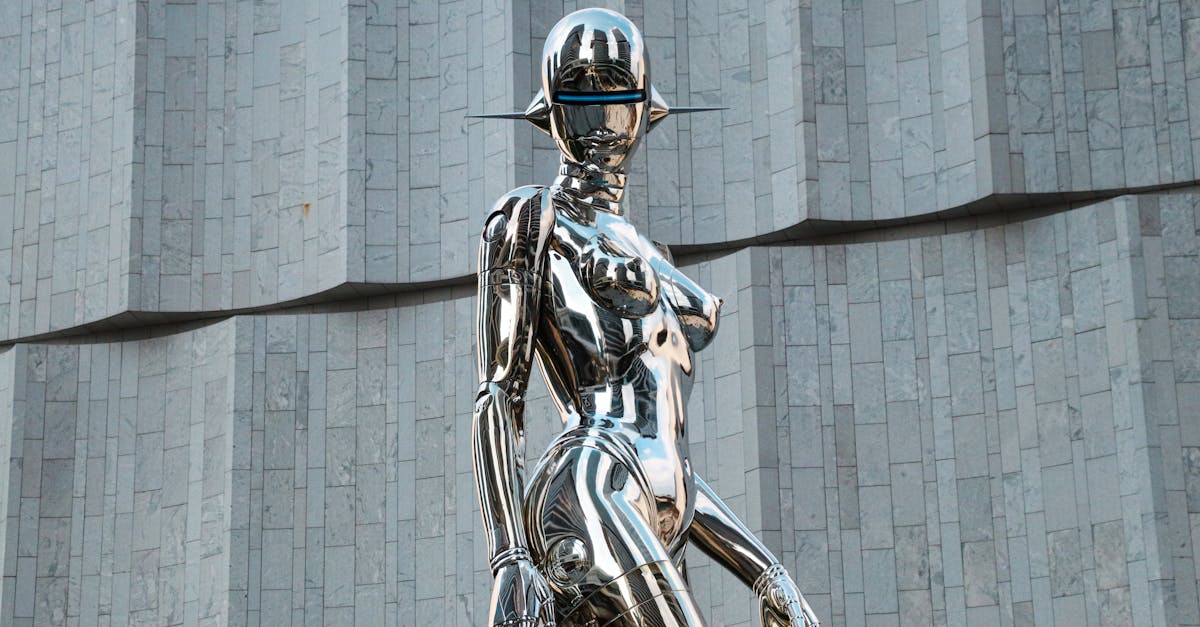
Tesla Optimus: From AI Day Concept to Factory Floor

Tesla Optimus: From AI Day Concept to Factory Floor
Tesla's Optimus programme has moved through multiple public unveilings, internal prototyping cycles, and factory floor deployments. As with any robotics initiative, the gap between stage presentations and shipping hardware remains the critical metric. This analysis grades Optimus by actual hardware iteration, pilot deployment data, and public announcements, prioritising verifiable factory testing over marketing timelines. The focus is on mechanical architecture, actuator refinement, sensor integration, and the realistic path to commercial deployment.
Generation 1: Establishing the Baseline
Optimus Gen 1 was introduced at Tesla's 2022 AI Day. The initial public demonstration featured a functional prototype built on a custom exoskeleton frame with integrated actuators, a central battery pack, and vision-based navigation. The design prioritised a compact footprint, roughly 5'8\" in height, with a focus on bipedal stability and basic manipulation. Key Gen 1 specifications included a simplified hand with limited degrees of freedom, a nominal walking speed targeting roughly 1.5 miles per hour, and a battery architecture designed for approximately two to three hours of continuous operation.
Gen 1 served primarily as a proof-of-concept for Tesla's integration strategy: custom actuators paired with Tesla's existing AI training stack and vision pipelines. The prototype demonstrated basic gait control, obstacle avoidance via camera feeds, and rudimentary object manipulation. However, the hand mechanism lacked the dexterity required for complex assembly tasks, and the actuator torque density was constrained by early thermal management limits. Gen 1 confirmed the viability of Tesla's vertical integration approach but did not represent a production-ready platform.
Generation 2: Actuator Refinement and Locomotion Targets
Optimus Gen 2, unveiled at the 2023 AI Day, introduced measurable hardware improvements. The most significant upgrades centred on the hand and wrist assemblies, which expanded to approximately 70 degrees of freedom compared to Gen 1's 11. This shift enabled finer grip control, palm manipulation, and the ability to handle fragile components without excessive force. The walking speed was increased to roughly 2.25 miles per hour, reflecting updated motor control algorithms and revised joint compliance settings.
Gen 2 also featured redesigned actuators with improved thermal dissipation, lighter structural materials, and integrated force/torque sensors at each joint. The central compute stack was updated to leverage Tesla's latest neural network inference hardware, allowing faster perception loops and dynamic balance corrections. Battery capacity remained in the 2–3 hour operational window, with modular replacement designed for continuous factory shifts. These changes moved Optimus closer to functional utility, though the platform remained in the pilot phase rather than commercial shipping.
Hardware Architecture and Sensor Fusion
Optimus relies on a tightly integrated hardware stack designed to minimise supply chain complexity. The core components include:
- Custom Actuators: Brushless DC motors with planetary gearboxes, encoders for position feedback, and thermal sensors for load monitoring.
- Sensor Suite: Stereo vision cameras for depth perception, IMU units for balance tracking, and joint torque sensors for force regulation during manipulation.
- Compute Architecture: Onboard neural processing units trained via Tesla's vision-language models, enabling real-time navigation, object recognition, and task execution without external cloud dependency.
- Power Management: High-density lithium-ion cells with modular swappable packs, thermal management loops, and regenerative braking during deceleration phases.
The architecture prioritises reliability over maximum payload. Optimus is designed for light-to-medium duty tasks, such as part transport, basic assembly, and inspection, rather than heavy lifting or high-velocity logistics. The bipedal design introduces dynamic stability challenges that Tesla addresses through predictive gait planning and real-time joint torque adjustment.
Deployment Status: Pilots Over Promises
Grading Optimus requires separating verified deployments from public timelines. As of mid-2024, Tesla has conducted internal factory pilots at its Fremont and Austin facilities. These pilots focus on repetitive tasks: bin picking, component transport, and line-side material handling. The data collected from these tests informs actuator tuning, control loop latency, and safety protocols. No commercial shipping has occurred, and Tesla's production targets remain announcements rather than fulfilled hardware deliveries.
Industry observers note that humanoid robotics faces consistent scaling hurdles: actuator wear, battery degradation under cyclic loads, software generalisation across unstructured environments, and safety certification for human-adjacent operations. Tesla's pilot deployments demonstrate incremental progress, but the programme has not yet crossed the threshold into verified commercial deployment. Claims regarding mass production timelines should be graded as announcements until independent verification of shipping hardware and customer pilot contracts materialises.
India Availability and Landed Cost Estimates
Tesla has not announced official distribution, partnerships, or regulatory approvals for Optimus in India. The platform remains restricted to internal testing and limited US-based pilot programmes. If Tesla were to enter the Indian market, imported units would face standard customs duties, IGST, and logistics costs. Based on current prototype pricing models for advanced humanoid platforms, a landed cost estimate for India would range between ₹1.2 Crore and ₹1.8 Crore per unit, depending on exchange rates, import tariffs, and localisation requirements. This estimate is clearly flagged as a projection and should not be treated as official pricing.
Indian manufacturing sectors have shown interest in humanoid robotics for automotive assembly, electronics handling, and logistics. However, regulatory clearance, after-sales support networks, and software localisation for Indian workplace standards would need to be established before commercial adoption. Until Tesla publishes official India distribution plans, availability remains at zero.
Conclusion
Tesla Optimus has progressed from a Gen 1 proof-of-concept to a Gen 2 platform with improved dexterity, faster locomotion, and refined actuator design. The programme's strength lies in vertical integration, custom hardware development, and vision-based AI training. However, the platform remains in the pilot deployment phase, with no verified commercial shipping or international distribution. Grading Optimus by hardware reality rather than announcements reveals a programme advancing steadily but still navigating the engineering and regulatory hurdles inherent to bipedal humanoid robotics. For Indian markets, availability remains unconfirmed, and cost projections are speculative until official import pathways are established.
References
- Tesla AI Day 2022 Presentation: https://www.youtube.com/watch?v=88ZjbqoDj8Y
- Tesla AI Day 2023 Presentation: https://www.youtube.com/watch?v=JdxIF44m1Yw
- Tesla Official Optimus Blog Post: https://www.tesla.com/Optimus
- Reuters: Tesla's humanoid robot faces manufacturing hurdles: https://www.reuters.com/technology/tesla-humanoid-robot-faces-manufacturing-hurdles-2024-03-15/
- IEEE Spectrum: Inside Tesla's Optimus Robot: https://spectrum.ieee.org/tesla-optimus-robot
- Tesla Q2 2024 Shareholder Letter: https://ir.tesla.com/financials/quarterly-results
✓ Key takeaways
- •Hands-on view of Tesla Optimus: From AI Day Concept to Factory Floor inside our Tesla Optimus library.
- •Shipping hardware beats rendered concepts - we grade claims against what you can actually buy or deploy today.
- •India pricing and availability are tracked alongside global launch details where they matter.
References
Related articles
More in Tesla Optimus →