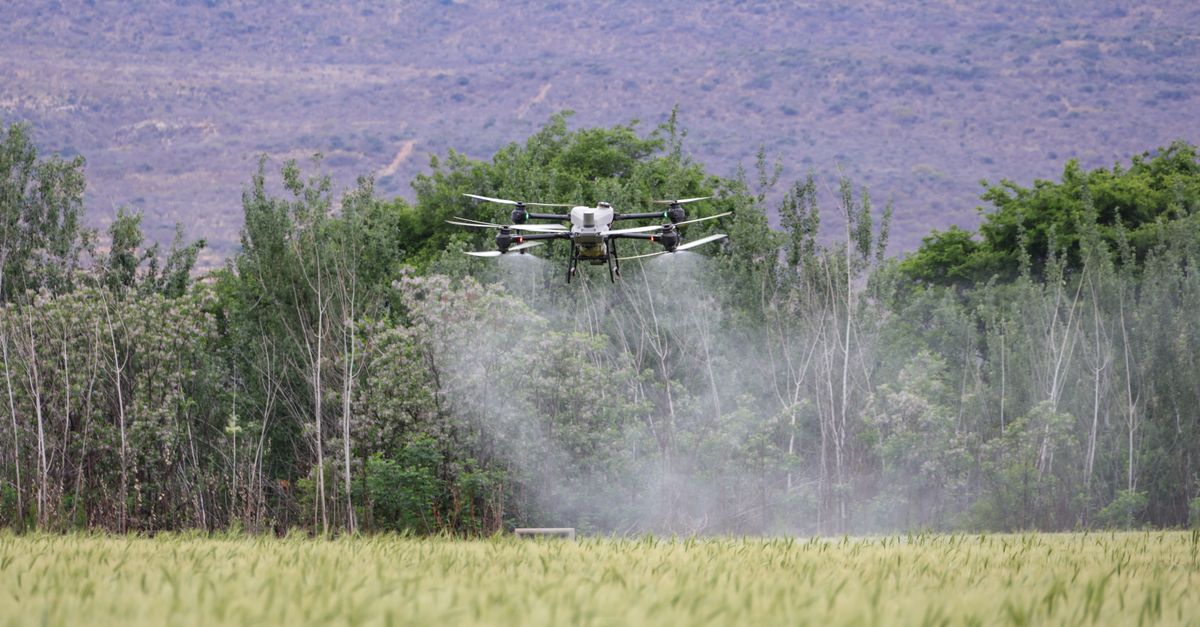
Agricultural Drones in India: Hardware Reality vs. Market Hype

The Current State of Agri-Drones in India
The integration of unmanned aerial systems (UAS) into Indian agriculture has moved beyond pilot programs into nascent commercial deployment. However, the gap between marketing claims and operational reality remains significant. This analysis grades available hardware, focusing on shipping units versus announced concepts. The primary metric for success in this sector is not flight time alone, but payload capacity, spray uniformity, and the total cost of ownership relative to manual labor.
DJI Agras: The Global Workhorse
Despite the rise of domestic manufacturers, DJI remains the dominant supplier of spraying drones in India. The Agras series, specifically the T20P and T30 models, are the most widely deployed units in the country. These are not concept vehicles; they are shipping hardware with verified specifications.
DJI Agras T20P and T30 Specifications
The DJI Agras T20P carries a 20-liter liquid payload. It utilizes the DJI Smart Flight Battery system, which supports rapid swap-outs. The maximum spraying rate is approximately 1.5 kilograms per hectare per pass. The T30 model upgrades this to a 30-liter payload with improved flight stability in wind speeds up to 10 meters per second.
Key specifications for the T20P include:
- Payload: 20 Liters (Liquid Pesticides/Fertilizers)
- Flight Time: Up to 10 minutes under heavy load
- Spray Rate: 0.6 to 1.5 kg/ha
- GPS Accuracy: RTK centimeter-level positioning
While the T30 offers better efficiency for large farms, the T20P remains the entry-level standard for smaller holdings due to its lower cost and maneuverability. The DJI Smart Agriculture App allows operators to map fields and automate flight paths, reducing the need for manual piloting skills.
Availability and Pricing in India
DJI India has established a network of authorized distributors and service centers. The landed cost for a T20P unit, including the controller and multiple batteries, typically ranges between ₹8 lakhs and ₹10 lakhs. For the T30, the price often exceeds ₹12 lakhs. These are high capital expenditures for individual farmers, which has led to the rise of the Service Provider model.
Service providers, often called 'Drone Sevak' under the PM-KUSUM scheme, purchase the hardware and sell spraying services to farmers. This reduces the barrier to entry for farmers who do not wish to own the asset. However, the maintenance cost of DJI components, particularly the spraying pumps and nozzles, remains a factor in the total cost of ownership.
Indian Startups and Domestic Manufacturing
The Directorate General of Civil Aviation (DGCA) has liberalized regulations to encourage indigenous manufacturing. This has allowed Indian startups to compete on cost and after-sales support. Garuda Aerospace and Idea Forge are notable players in this space, though their scale differs significantly from DJI.
Garuda Aerospace
Garuda Aerospace claims to be the first Indian company to receive type certification for an agricultural drone from the DGCA. Their focus is on the 'Drone-as-a-Service' (DaaS) model. Unlike importing finished units, Garuda emphasizes the assembly and calibration of drones within India to qualify for government subsidies.
Garuda's flagship sprayer carries a 20-liter payload and is designed for easy maintenance in rural environments. The company has deployed units in states like Punjab, Haryana, and Maharashtra. However, their annual shipment volume is significantly lower than DJI's. The pricing for Garuda's units is competitive, often ranging between ₹5 lakhs and ₹7 lakhs, offering a margin of savings over imported hardware.
Garuda's partnership with the Indian Air Force and various state governments highlights their operational reliability. They have also integrated the 'DAS' (Drone as a Service) platform, which connects farmers directly with pilots. This reduces the friction of finding a service provider.
Other Domestic Players
Companies like Idea Forge Technology have also entered the agri-drone space. They focus on multi-rotor platforms that are ruggedized for dust and moisture. While their exact model specifications are less publicized compared to DJI, their units are designed for the specific terrain of Indian farms.
The key differentiator for Indian startups is the supply chain. Sourcing batteries and motors locally can reduce lead times and repair costs. However, the quality control of domestic electronics often lags behind established global brands like DJI. The reliability of the flight controller in high-temperature conditions remains a critical testing ground for these startups.
Regulatory Framework and Compliance
Operating agricultural drones in India requires strict adherence to the DGCA's Public Aircraft Operator (PAO) guidelines. The 'Digital Sky Platform' is the central portal for drone registration and flight permissions.
Remote Pilot Training
Operators must be certified remote pilots. Training is mandatory through authorized training centers. This ensures that the person flying the drone understands the airspace and the safety protocols. The training includes modules on emergency landings and battery management.
The DGCA also mandates the installation of Remote Identification (Remote ID) systems. This allows authorities to track the drone's location in real-time. While this adds complexity to the hardware, it is non-negotiable for legal compliance.
No-Fly Zones and Permissions
Flying over restricted areas, such as airports, government buildings, and dense urban centers, is prohibited. Farmers must file flight permissions for each operational day. This administrative burden is a significant hurdle for widespread adoption. Many service providers argue that the paperwork discourages small-scale operators.
Economic Viability and ROI
The economic argument for agri-drones is based on labor savings and input efficiency. Manual spraying requires significant physical effort and exposes workers to chemical hazards. Drones reduce the labor requirement by approximately 90%.
Cost Per Acre
The market rate for drone spraying services typically ranges from ₹1,000 to ₹1,500 per acre. This is competitive with manual labor rates, which have risen due to labor shortages. However, the drone service provider must cover the cost of fuel (batteries), maintenance, and depreciation.
For a farmer, the ROI is realized in the reduction of chemical wastage. Drones apply a finer mist, which leads to better absorption by crops. This can reduce the overall chemical cost by 10-15%. For high-value crops like cotton or sugarcane, this saving is significant.
Service Provider Model
The most viable business model for the near future is the Service Provider. A single T20P unit can service approximately 100 acres per day during peak seasons. With an average of 100 days of operation, the revenue potential covers the capital cost of the drone within two to three seasons. However, this assumes consistent maintenance and high utilization rates.
Conclusion
The agricultural drone sector in India is transitioning from hype to hardware. While DJI Agras units dominate the market due to their proven reliability, domestic players like Garuda Aerospace are gaining traction through cost-effective solutions and regulatory compliance. The success of this sector depends less on flight technology and more on the regulatory ecosystem and service infrastructure.
For the Indian farmer, the drone is not a luxury but a tool for efficiency. As the DGCA continues to refine the Digital Sky Platform and the government expands the Drone as a Service (DAS) schemes, the adoption rate is expected to grow. However, until maintenance networks and spare parts are available in every district, the operational uptime will remain a challenge.
References
DJI Agriculture. (2024). DJI Agras T20P Specification Sheet. https://www.dji.com/agriculture/products/
Garuda Aerospace. (2023). Garuda Aerospace Type Certification for Agri Drone. https://www.garuda-aero.com/
Digital Sky Platform. (2024). Drone Registration and Flight Permission Guidelines. https://sky.dgca.gov.in/
Ministry of Civil Aviation. (2023). Drone Rules 2021 and Amendments. https://dcb.gov.in/
✓ Key takeaways
- •Hands-on view of Agricultural Drones in India: Hardware Reality vs. Market Hype inside our Agricultural Drones library.
- •Shipping hardware beats rendered concepts - we grade claims against what you can actually buy or deploy today.
- •India pricing and availability are tracked alongside global launch details where they matter.
References
Related articles
More in Agricultural Drones →