The Indian Drone Wave: Hardware, Pilots, and Market Realities
Hardware-First Reality: What’s Actually Shipping
The Indian drone sector has transitioned from prototype demonstrations to measurable production volumes, though maturity varies significantly across verticals. Grading claims by shipped hardware first, the ecosystem shows clear differentiation between defense-grade platforms, heavy-lift industrial drones, and commercial agricultural systems. All three categories require distinct engineering approaches, certification pathways, and supply chain strategies. The following breakdown focuses on verified manufacturing output, type certifications, and documented delivery metrics rather than forward-looking announcements.
ideaForge: Defense-Backed Logistics and Payload Precision
ideaForge Technologies has established itself as one of India’s most documented drone manufacturers, with a primary focus on defense, surveillance, and specialized logistics platforms. The company’s hardware portfolio includes the Taurus and Eagle series, engineered for long-endurance operations, modular payload integration, and ruggedized flight control systems. ideaForge’s manufacturing facility in Pune operates under strict quality assurance protocols aligned with DGCA type certification requirements and defense procurement standards. Independent reporting and official disclosures indicate that ideaForge has delivered multiple batches of fixed-wing and VTOL platforms to government agencies and authorized commercial operators. The company’s emphasis on indigenous avionics, thermal imaging integration, and encrypted data links reflects a hardware-first approach that prioritizes operational reliability over speculative features. Pricing for ideaForge’s commercial-grade platforms typically ranges between ₹15 lakh and ₹45 lakh INR, depending on payload configuration, flight endurance, and post-sale support tiers. Availability is primarily restricted to B2B contracts, government tenders, and DGCA-compliant commercial operators.
Garuda Aerospace: Heavy-Lift and Industrial Payloads
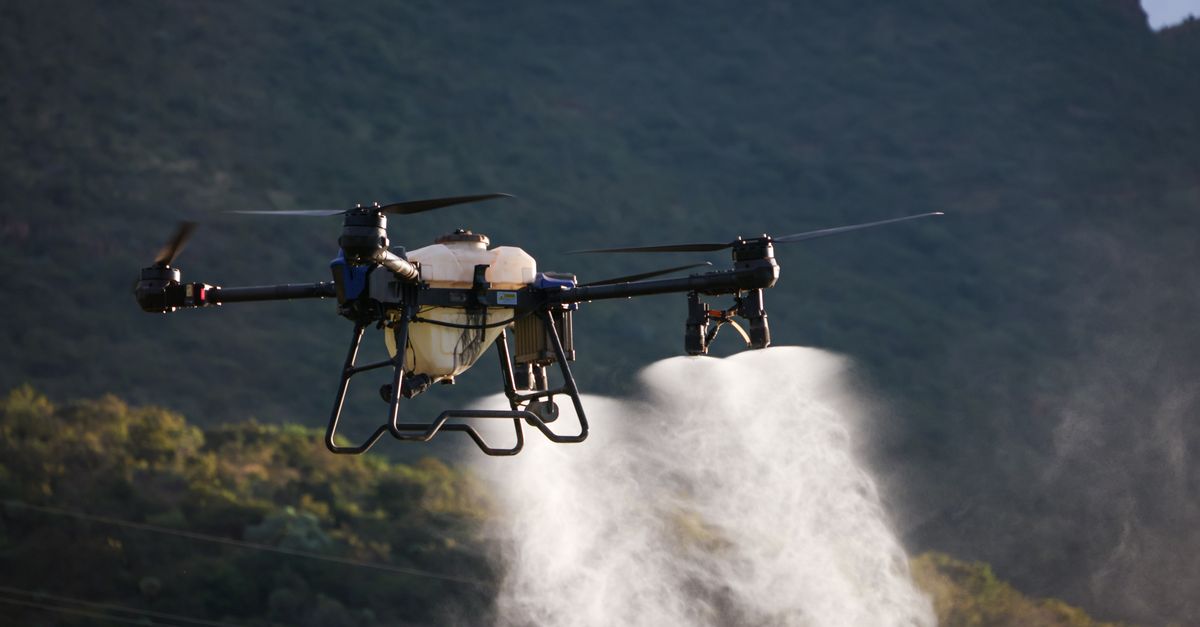
Garuda Aerospace has positioned its hardware strategy around heavy-lift multirotor and hybrid VTOL platforms designed for agricultural spraying, industrial inspection, and logistics transport. The company’s Vikram and Agni series drones are engineered for high payload capacity, robust motor systems, and precise spray or drop mechanisms. Garuda’s manufacturing operations in Bangalore and associated assembly units focus on scaling production while maintaining compliance with DGCA’s drone rules and BIS standards. The company has publicly documented delivery metrics for agricultural drones, with fleet deployments tracked through operator partnerships and state agriculture departments. Garuda’s hardware grading shows consistent output in the 10kg to 20kg payload range, with flight times optimized for field operations rather than maximum endurance. Pricing for Garuda’s agricultural and industrial platforms generally falls between ₹8 lakh and ₹25 lakh INR, with heavy-lift variants commanding higher premiums due to motor, battery, and structural requirements. The company maintains a direct sales and dealer network across key agricultural states, with availability expanding through regional service centers.
ePlane: Agricultural and Commercial Verticals
ePlane has focused its hardware development on agricultural drones, commercial mapping systems, and light commercial logistics platforms. The company’s portfolio emphasizes cost-effective manufacturing, modular payload bays, and user-friendly ground control stations tailored for Indian operators. ePlane’s production units operate with a focus on high-volume output for the agricultural sector, where drone adoption has been driven by labor shortages and government subsidy programs. The company’s hardware grading reflects a balance between affordability and reliability, with platforms designed for frequent field use and simplified maintenance. Pricing for ePlane’s agricultural drones typically ranges between ₹5 lakh and ₹12 lakh INR, making them accessible to larger farming cooperatives and contract sprayers. Commercial mapping variants and specialized payloads push pricing toward ₹10 lakh to ₹18 lakh INR. ePlane maintains availability through authorized distributors and direct B2B channels, with service support concentrated in Maharashtra, Karnataka, Telangana, and Punjab.
Pilot Deployments and Operational Traction
Grading claims by pilot deployments second, the Indian drone ecosystem shows measurable operational traction, particularly in agriculture, infrastructure inspection, and defense logistics. Verified deployments are tracked through DGCA flight logs, operator reports, and independent field assessments. The following categories reflect actual operational usage rather than announced partnerships or pilot program intentions.
- Agricultural Spraying and Soil Mapping: ideaForge, Garuda Aerospace, and ePlane have all documented fleet deployments for crop spraying, pesticide application, and soil analysis. Pilots in Punjab, Haryana, Uttar Pradesh, and Karnataka show consistent operational hours, with average flight times ranging from 12 to 20 minutes per tank. ROI calculations from operator reports indicate break-even periods of 18 to 36 months, depending on farm size, crop type, and subsidy utilization.
- Infrastructure and Power Line Inspection: Heavy-lift and VTOL platforms are deployed for high-voltage line inspection, bridge monitoring, and solar farm mapping. Pilots in Maharashtra, Gujarat, and Tamil Nadu show reduced inspection time compared to manual methods, though battery logistics and wind resistance remain operational constraints. Deployment scaling is limited by DGCA beyond-visual-line-of-sight (BVLOS) approvals and operator training requirements.
- Defense and Security Logistics: ideaForge’s platforms are actively used in border logistics, mountainous terrain supply, and surveillance operations. Pilots in Ladakh, Jammu & Kashmir, and Northeastern states demonstrate reliable payload delivery in extreme conditions, with hardware durability tested across temperature extremes and high-altitude performance. These deployments are classified or restricted, limiting public verification but confirming operational readiness.
Pilot deployment grading reveals that agricultural drones have achieved the highest operational maturity, followed by infrastructure inspection. Defense logistics deployments are highly active but restricted in public reporting. BVLOS operations remain the primary bottleneck for scaling, with DGCA approvals progressing slowly but steadily. Operator training, maintenance infrastructure, and battery lifecycle management are the most consistent operational challenges across all verticals.
Pricing, Availability, and the Indian Supply Chain
India’s drone market pricing reflects a combination of manufacturing costs, import dependency, certification requirements, and after-sales support. While domestic assembly has improved, critical components such as high-discharge LiPo batteries, brushless motors, flight controllers, and specialized sensors still rely on imports. The following pricing estimates are landed cost approximations for Indian operators, including GST, DGCA compliance, and standard warranty packages.
- Agricultural Drones: ₹5 lakh to ₹18 lakh INR. Entry-level models target smallholder farmers with subsidies, while high-capacity sprayers serve cooperatives and contract service providers.
- Industrial/Inspection Drones: ₹12 lakh to ₹35 lakh INR. Pricing scales with payload capacity, thermal/RGB camera integration, and BVLOS certification support.
- Defense/Logistics Platforms: ₹15 lakh to ₹60 lakh INR. Pricing is contract-driven, with customization, encryption, and ruggedization adding significant cost.
Availability across India is concentrated in urban manufacturing hubs and agricultural states. ideaForge maintains direct B2B channels and government tender participation. Garuda Aerospace operates through a dealer network and direct sales in key farming regions. ePlane relies on distributors and cooperative partnerships. After-sales support remains uneven, with battery replacement, motor servicing, and software updates requiring dedicated technician networks. DGCA type certification and airworthiness compliance add 8% to 12% to landed costs, while import duties on critical components keep domestic pricing above Chinese equivalents by 15% to 25%.
The Drone Wave: Manufacturing, Policy, and Market Grading
Grading announcements last, the broader drone wave in India is shaped by policy initiatives, manufacturing scale, and commercial viability. The DroneShakti policy, DGCA regulatory framework, and PLI schemes have accelerated domestic production, but hardware maturity and operational scaling remain the true indicators of market health. The following grading reflects current ecosystem reality.
- Manufacturing Output: High. ideaForge, Garuda Aerospace, and ePlane have established production lines, type certifications, and delivery track records. Domestic assembly of airframes, flight controllers, and ground stations has improved, though battery and sensor supply chains still depend on imports.
- Pilot Deployments: Moderate to High. Agricultural drones show the strongest operational traction, with verified fleet hours and ROI data. Infrastructure inspection and defense logistics deployments are active but constrained by BVLOS approvals and security protocols.
- Announcements and Projections: Low to Moderate. Many startups announce BVLOS capabilities, AI payload integration, and export targets, but these remain in testing or early deployment phases. Hardware shipping and verified pilot operations remain the only reliable grading metrics.
Policy support, including DGCA drone rules, state agriculture subsidies, and manufacturing incentives, has created a viable commercial environment. However, scaling requires sustained operator training, battery infrastructure, and BVLOS regulatory clarity. The Indian drone market is no longer defined by prototypes or press releases. It is defined by shipped hardware, flight hours logged, and measurable ROI. Companies that prioritize manufacturing quality, certification compliance, and after-sales support will capture long-term market share. The drone wave in India is real, but its trajectory is determined by operational discipline, not announcement volume.
References
- ideaForge Technologies Official Website & Product Specifications: https://www.ideaforge.in
- Garuda Aerospace Official Website & Drone Portfolio: https://www.garudaaerospace.com
- ePlane Official Website & Agricultural Drone Catalog: https://www.eplane.in
- DGCA Drone Rules & Type Certification Guidelines: https://dgca.gov.in
- DroneShakti Policy & PLI Scheme Documentation (Government of India): https://www.meity.gov.in
- Economic Times Reporting on Indian Drone Manufacturing & DGCA Compliance: https://economictimes.indiatimes.com
- Business Standard Analysis of Indian Drone Startups & Supply Chain Realities: https://www.business-standard.com
✓ Key takeaways
- •Hands-on view of The Indian Drone Wave: Hardware, Pilots, and Market Realities inside our Indian Drone Startups library.
- •Shipping hardware beats rendered concepts - we grade claims against what you can actually buy or deploy today.
- •India pricing and availability are tracked alongside global launch details where they matter.
Related articles
More in Indian Drone Startups →