Nvidia Isaac Ecosystem: Sim, Lab, and Groot in the Real World
The Reality of Simulation in Robotics
The robotics industry has long suffered from a disconnect between simulation promises and physical reality. Nvidia’s Isaac ecosystem attempts to bridge this gap, offering a comprehensive software stack designed for robotics developers. As of late 2024, the core components—Isaac Sim, Isaac Lab, and Groot—represent a significant shift in how humanoid and mobile robots are trained. However, for Indian robotics startups and hardware manufacturers, the path from simulation to deployment involves significant cost and infrastructure hurdles that are often overlooked in press releases.
Isaac Sim: High-Fidelity Physics and Rendering
Isaac Sim is the foundation of the stack, built on the Omniverse platform. It provides photorealistic rendering and physics simulation using NVIDIA PhysX. While the software allows for the creation of complex environments, its utility is strictly bound by the hardware required to run it. Isaac Sim is not a lightweight tool; it requires high-end GPUs to render scenes in real-time with the fidelity necessary for robotic perception training.
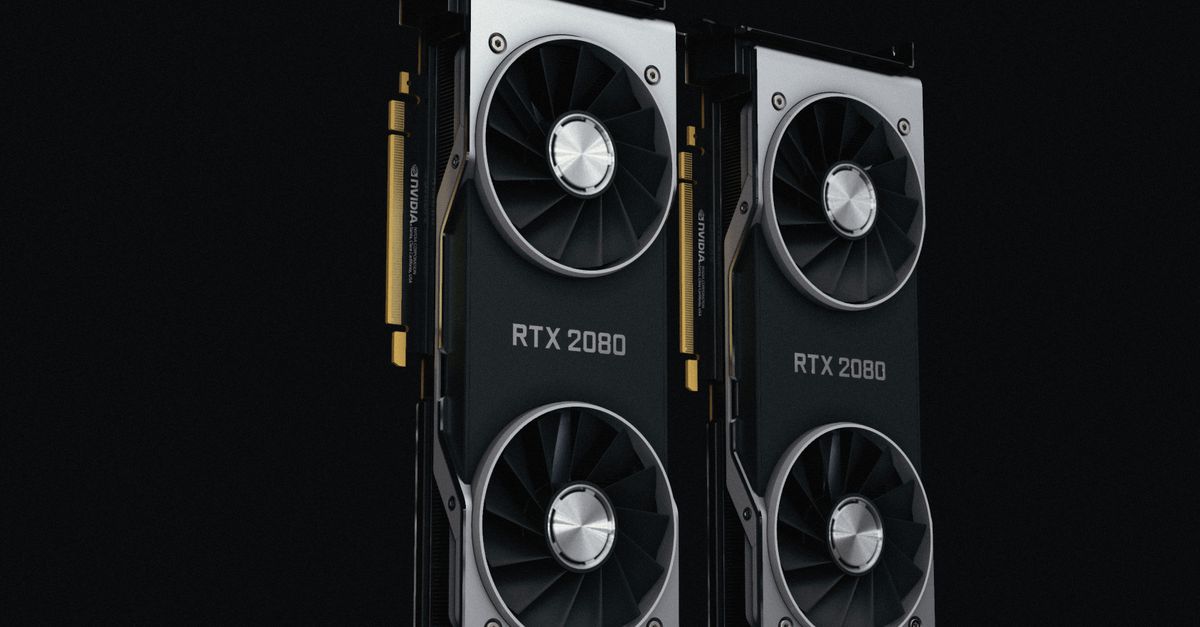
For Indian developers, this creates a barrier to entry. Running Isaac Sim locally typically demands workstation-grade hardware, such as NVIDIA RTX 6000 Ada Generation GPUs or the newer H-series data center GPUs. A single RTX 6000 Ada workstation can cost between INR 15 lakhs and INR 25 lakhs, depending on the configuration and dealer markups. This excludes the cost of high-performance CPUs and RAM, which often push the total landed cost toward INR 30 lakhs.
Cloud access is the alternative, but it introduces latency and cost complexities. Nvidia’s AI Factory in the cloud offers access to these resources, but pricing is often in USD. For example, renting an H100 instance can cost upwards of $10 to $15 per hour. For a startup in India, this equates to an hourly compute cost of approximately INR 850 to INR 1,200. Over a month of continuous training, this expenditure exceeds INR 6 lakhs, making it viable primarily for well-funded pilots rather than early-stage prototyping.
Hardware Grading
- Shipping Hardware: RTX 4090, RTX 6000 Ada, H100.
- Deployment: Omniverse Cloud is available, but local deployment is rare outside Tier-1 labs.
- Announcements: Future optimization for lower-end GPUs remains speculative.
Isaac Lab: Reinforcement Learning at Scale
Isaac Lab builds upon Isaac Sim, specifically designed for reinforcement learning (RL). Unlike standard simulation tools, Isaac Lab provides a scalable interface for training robotic policies. The software leverages the physics engine to simulate thousands of parallel environments, accelerating the training process. This is crucial for training humanoid robots, where the safety margin for physical testing is non-existent.
The primary claim of Isaac Lab is rapid iteration. Developers can train a policy in simulation and deploy it to hardware with minimal modification. However, the “sim-to-real” gap remains a technical challenge. While Isaac Lab provides tools for domain randomization to bridge this gap, successful deployment still requires extensive fine-tuning on physical hardware. As of now, there are limited public examples of Isaac Lab-trained robots operating autonomously in unstructured industrial environments in India.
Most pilot deployments utilizing Isaac Lab are occurring in controlled settings. For instance, manufacturing cells in automotive plants are more likely to see this technology than general logistics warehouses. The software requires specific integration with the robot’s control stack, often necessitating ROS 2 compatibility. This adds a layer of engineering overhead that small Indian robotics firms may struggle to manage without dedicated AI engineering teams.
Deployment Readiness
Isaac Lab is currently graded as “Advanced Pilot” rather than “Commercial Ready.” While the simulation is robust, the transition to physical hardware involves significant risk. Manufacturers relying on this stack must budget for a 20% to 30% hardware iteration cycle to correct for physical discrepancies not fully captured in simulation.
Groot: Foundation Models for Manipulation
Nvidia Groot represents the AI layer of the Isaac ecosystem. It is a foundation model designed for robot manipulation, utilizing imitation learning to replicate human demonstrations. The technology allows robots to learn tasks from video data or motion capture, reducing the need for extensive reinforcement learning training loops.
Despite the advanced capabilities, Groot is not yet a plug-and-play solution for all robotic forms. It is primarily optimized for humanoid and dual-arm configurations. For Indian humanoid robot manufacturers developing custom kinematics, adapting Groot requires significant software engineering. The model relies heavily on high-quality datasets, and the availability of diverse manipulation data in the Indian context is currently limited.
Availability is currently restricted to Nvidia’s developer partners. There is no public API for Groot that allows third-party developers to upload their own datasets and generate models directly via a web portal. Access is typically granted through the Isaac Developer Program, which vetting process focuses on established hardware manufacturers. This limits the technology’s reach to early adopters rather than the broader developer community.
Claims vs. Reality
- Claims: Groot can learn new tasks from a single video demonstration.
- Reality: Requires significant clean-up of motion data and specific sensor calibration.
- Hardware: Requires massive GPU memory for inference at scale.
India Context: Cost and Infrastructure
For the Indian robotics sector, the Nvidia Isaac stack presents a dual-edged scenario. On one hand, the software stack is world-class and reduces the time-to-market for training algorithms. On the other hand, the infrastructure cost is prohibitive for many startups. The reliance on proprietary Nvidia hardware for the training phase creates a vendor lock-in scenario.
Local hardware availability is another concern. While Nvidia GPUs are sold in India through authorized distributors like Sify or Croma, the supply chain for high-end data center GPUs (H100, A100) is unreliable. Lead times can extend from months to quarters. This impacts the ability of Indian labs to maintain continuous training pipelines. Furthermore, the electricity cost in India is lower than in the US, but the upfront capital expenditure (CAPEX) for the necessary computing rigs remains a barrier.
Approximate cost estimates for an Isaac Sim development setup in India are as follows:
- Workstation (RTX 6000 Ada): INR 18,00,000 (Hardware only).
- Software License (Enterprise): INR 10,00,000 per year (Estimate).
- Cloud Compute (Monthly): INR 5,00,000+ (For heavy training).
These figures are estimates and exclude taxes, import duties, and maintenance contracts. For startups, this suggests a hybrid approach: using local workstations for prototyping and cloud GPUs for heavy training.
Conclusion: Shipping Hardware Over Announcements
The Nvidia Isaac ecosystem is not a hype cycle; it is a functional toolset that is currently maturing. Isaac Sim and Isaac Lab are shipping products that are actively used by major robotics partners. Groot represents the cutting edge, with deployment capabilities still in the pilot phase.
For Indian manufacturers, the focus should remain on “shipping hardware first.” While the software stack offers powerful simulation capabilities, the final metric of success is a robot performing tasks in the real world. Developers should prioritize the stability of Isaac Lab’s deployment pipelines over the novelty of Groot’s foundation models. Until the sim-to-real gap is fully closed, simulation remains an accelerator, not a replacement for physical testing.
As the industry moves forward, the focus must shift from what the software can do in a virtual environment to what it can sustain in a factory, warehouse, or home. The hardware requirements for the Isaac stack will likely drop over the next two years, but for now, the entry barrier remains high. Indian robotics firms must weigh the cost of Nvidia integration against the value of faster training cycles.
References
Nvidia Isaac Sim Documentation.
Nvidia Isaac Lab Documentation.
Nvidia Groot Technical Overview.
Nvidia Omniverse Enterprise Licensing.
✓ Key takeaways
- •Hands-on view of Nvidia Isaac Ecosystem: Sim, Lab, and Groot in the Real World inside our Nvidia Isaac library.
- •Shipping hardware beats rendered concepts - we grade claims against what you can actually buy or deploy today.
- •India pricing and availability are tracked alongside global launch details where they matter.
References
Related articles
More in Nvidia Isaac →