
Nvidia Isaac Ecosystem: Simulation, Lab, and Groot in Practice
Nvidia Isaac Ecosystem: Simulation, Lab, and Groot in Practice
In the current landscape of humanoid robotics, software infrastructure is often as critical as mechanical design. Nvidia’s Isaac ecosystem has emerged as a central pillar for developers seeking to bridge the gap between simulation and physical deployment. This article evaluates the current state of Isaac Sim, Isaac Lab, and Project GR00T. The analysis prioritizes shipping hardware and pilot deployments over marketing announcements, with specific attention to the availability and cost structures relevant to India.
Isaac Sim: Photorealism and Physics
Isaac Sim is the flagship simulation engine within the Nvidia ecosystem. Built on the Omniverse platform, it utilizes a physics engine based on NVIDIA PhysX to replicate the laws of motion, friction, and collision in a virtual environment. For robotics developers, the primary value proposition is the ability to train and test control policies in a high-fidelity environment before touching physical hardware.
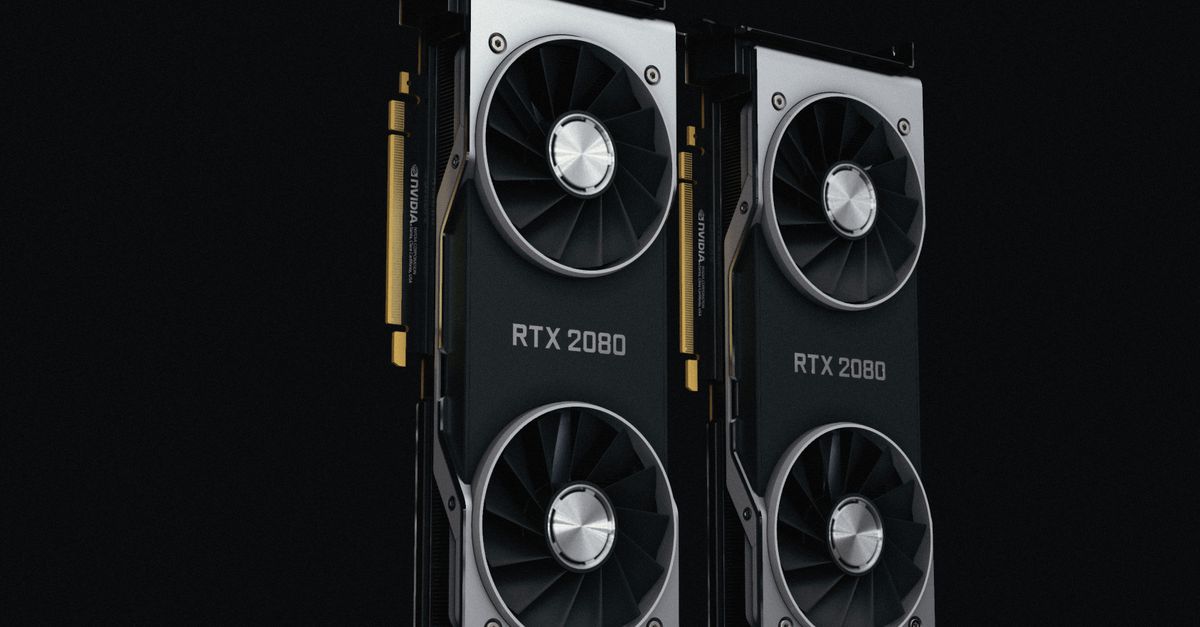
While marketing materials often emphasize photorealistic rendering capabilities, the engineering utility lies in its physics accuracy. The software supports ROS 2 (Robot Operating System) integration, allowing developers to transfer control logic from simulation to real robots. However, the hardware requirements are non-trivial. To run Isaac Sim at the fidelity required for humanoid training, developers typically need workstations equipped with high-end GPUs, such as the Nvidia RTX 4090 or professional variants like the RTX 6000 Ada Generation.
In the Indian context, the cost of this hardware is a significant barrier. A single RTX 4090 card currently lists between INR 180,000 and INR 220,000 on the open market. Professional workstations capable of sustaining multi-GPU configurations for large-scale simulation can exceed INR 500,000. Consequently, many smaller Indian robotics startups rely on cloud-based GPU instances rather than local on-premise deployment. This introduces latency and data transfer costs that must be factored into the total cost of ownership.
Isaac Sim is not a magic solution for the "sim-to-real" gap. While it reduces the risk of hardware damage during early testing, discrepancies in friction, sensor noise, and actuator response remain. Manufacturers must validate simulation parameters against actual hardware performance before deployment. This validation process requires physical hardware, making Isaac Sim a tool for acceleration rather than replacement.
Isaac Lab: Reinforcement Learning at Scale
Isaac Lab is a newer addition to the ecosystem, designed specifically to simplify the development of reinforcement learning (RL) algorithms. It builds upon the Isaac Sim framework but focuses heavily on the data pipeline required for training agents. Unlike general-purpose simulation, Isaac Lab provides pre-configured environments for tasks like dexterous manipulation and locomotion.
The software includes a library of RL environments that are optimized for parallel training. This allows researchers to train hundreds of robot instances simultaneously. The documentation highlights partnerships with various robotics companies that have utilized the framework to test control policies. However, the bar for entry remains high. Training large-scale RL models requires significant compute hours, often measured in thousands of GPU hours.
For Indian manufacturers, access to these compute resources is often mediated through cloud providers such as AWS, Azure, or dedicated Indian cloud service providers. The cost implication is substantial. Training a humanoid locomotion policy can require hundreds of thousands of dollars in compute credits. Consequently, the "shipping hardware" metric here shifts from the simulation machine to the training cluster. Without access to large-scale compute farms, the application of Isaac Lab is limited to smaller, less complex tasks.
Despite these costs, Isaac Lab offers a standardized interface that reduces the time-to-market for RL policies. By abstracting the environment setup, it allows engineers to focus on policy optimization. This is critical for humanoid robotics where the control space is high-dimensional. Nevertheless, the claim that RL can solve general-purpose tasks without further fine-tuning is premature. Most deployments require a transition phase where simulated policies are adapted to real-world constraints using imitation learning or teleoperation.
Project GR00T: Generative Foundation Models
Project GR00T represents a shift from traditional programming to generative AI in robotics. Announced by Nvidia, this project aims to train foundation models on robot behavior data. The premise is that by feeding video and sensor data from diverse robots into a large language model architecture, the system can learn to generalize behaviors across different hardware forms.
Currently, GR00T is in the research and development phase. Nvidia has released technical details indicating that the model learns from video demonstrations. However, there is no shipping hardware or deployed commercial product that fully embodies GR00T’s capabilities as a standalone brain. The software stack supports the ingestion of this data, but the inference engine required to run a GR00T model in real-time on a robot’s edge device is not yet standardized.
The hype surrounding foundation models often obscures the latency and reliability issues inherent in AI inference. For a humanoid robot to navigate a dynamic environment using a generative model, the inference must be deterministic and low-latency. Current implementations rely on cloud inference, which introduces connectivity risks. If the network connection is lost, a robot relying on a cloud-based GR00T brain could become non-operational.
India’s connectivity infrastructure varies significantly across regions. While major metropolitan hubs have high-speed fiber, rural or semi-urban industrial zones may not. This makes the reliance on cloud-based generative models a risk factor for deployment. Manufacturers must implement edge-compute fallbacks to ensure safety and continuity. As of late 2024, there are no public case studies of a GR00T-powered robot operating autonomously in a commercial environment outside of research labs.
India Context: Hardware Costs and Cloud Access
The adoption of the Nvidia Isaac ecosystem in India is heavily influenced by the cost of compute hardware. While the software itself may be licensed or open-source, the compute required to run it effectively is expensive. A typical workstation running Isaac Sim with full rendering capabilities requires an RTX 40-series GPU. As noted, the landed cost in India for such hardware, including import duties and GST, ranges between INR 200,000 and INR 300,000 per card.
For companies aiming to deploy fleets of robots, this cost scales linearly. A pilot deployment of ten robots with onboard compute units could require a hardware investment exceeding INR 30 million, excluding the mechanical and sensor costs. This reality filters out many startups that rely on speculative funding rather than hardware sales.
Cloud access offers an alternative. Nvidia’s DGX Cloud and similar services allow developers to rent compute power by the hour. In India, this is available through partners like AWS and Azure. The per-hour cost for an A100 or H100 GPU instance can range from INR 150 to INR 300. For a training run lasting 100 hours, the cost is INR 15,000 to INR 30,000 per run. While accessible, this model requires careful budgeting to avoid runaway costs.
Another critical factor is the supply chain. Nvidia GPUs are subject to global export controls and supply constraints. Delays in hardware delivery can stall development cycles. Indian manufacturers must plan procurement lead times of 12 to 16 weeks for high-end GPUs. This contrasts with the rapid iteration speed often promised in software marketing.
Conclusion
The Nvidia Isaac ecosystem provides a robust framework for advancing humanoid robotics, but it is not a plug-and-play solution. Isaac Sim and Isaac Lab are valuable tools for reducing hardware risk and accelerating RL training, provided the necessary compute infrastructure is available. Project GR00T remains a research initiative with significant technical hurdles regarding latency and edge deployment.
For the Indian market, the path forward involves a hybrid approach. High-fidelity simulation should be run on-premise where feasible, while large-scale training leverages cloud resources. Manufacturers must treat Isaac software as an enabler rather than a guarantee of autonomy. Until the sim-to-real gap is fully closed and edge inference for foundation models is stabilized, physical validation remains the final gatekeeper for deployment.
As the hardware matures and costs stabilize, the ecosystem will likely see wider adoption. However, current claims should be graded by shipping hardware and pilot deployments. Until then, Isaac remains a powerful development environment, not a fully realized commercial product.
✓ Key takeaways
- •Hands-on view of Nvidia Isaac Ecosystem: Simulation, Lab, and Groot in Practice inside our Nvidia Isaac library.
- •Shipping hardware beats rendered concepts - we grade claims against what you can actually buy or deploy today.
- •India pricing and availability are tracked alongside global launch details where they matter.
References
Related articles
More in Nvidia Isaac →

